- 01How DJ Dan's obsession with a DJ in a converted Seattle church — turntables hung from rubber bands to absorb the bass — lit a fire that changed the course of his life
- 02What the Seattle underground punk and dance scene of the late '80s looked and felt like, and how it fed directly into West Coast house and rave culture
- 03How Dan accidentally made one of his biggest records — "Needle Damage" — from a drunken mishap at a gig, and why Carl Cox called it huge when Dan just thought it was a joke
- 04What it's really like to play through the grief of losing your mother on Christmas Day, your brother the day of a Puerto Rico booking, and your sister to cancer — and keep showing up
- 05The story of how DJ Dan built his own label not for commercial reasons but as a library of music he was proud of — and how that philosophy shaped every signing decision
- 06What Plump DJs' Lee told DJ Dan the first time he visited San Francisco — and why it captures something irreplaceable about the city's music community that doesn't exist anywhere else
- 07How DJ Dan ended up in a private room with Martin Gore of Depeche Mode, and why the story of what happened next is exactly what you'd hope for
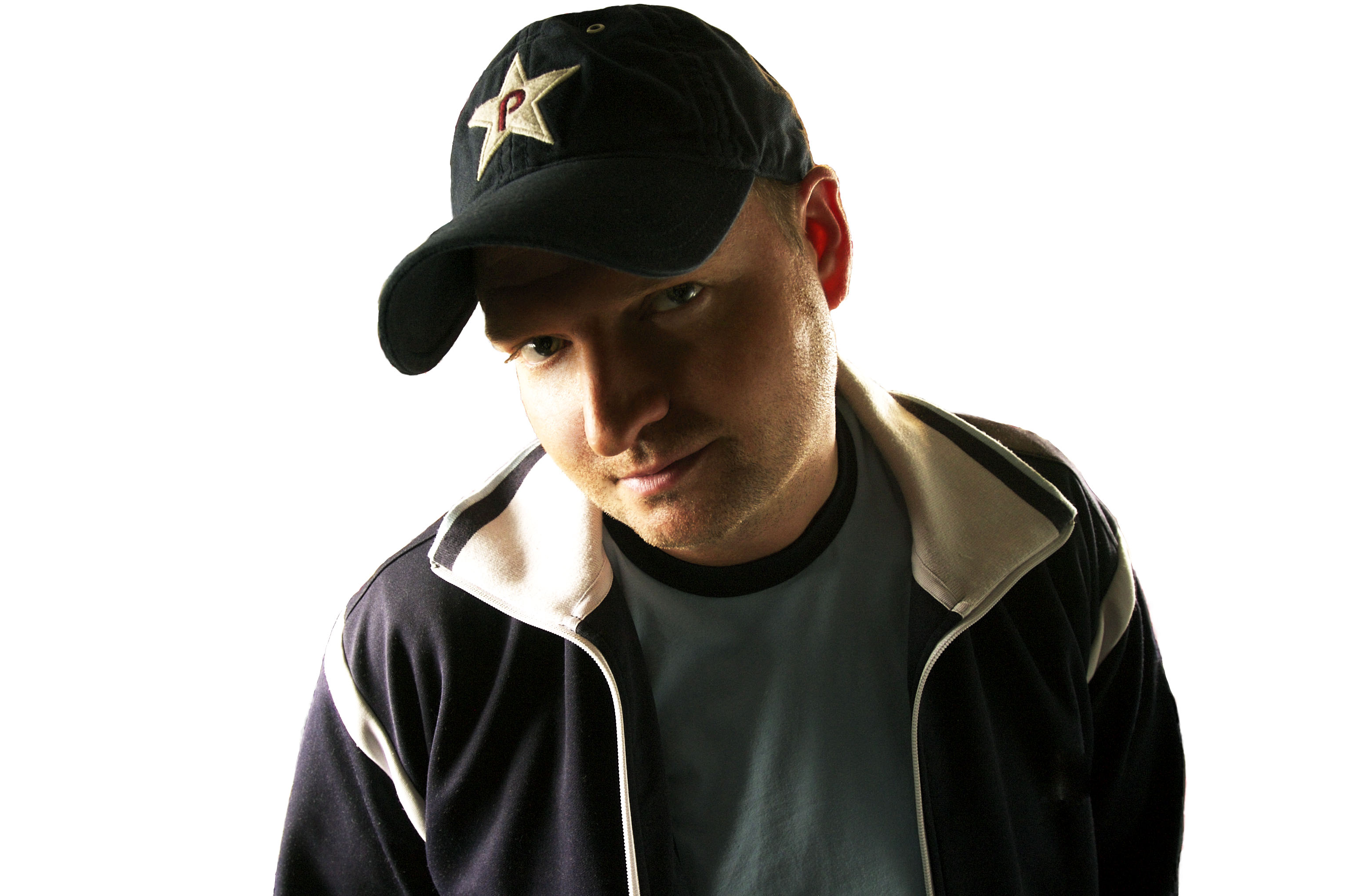
DJ Dan is one of the most respected and enduring figures in American house and breakbeat culture. A stalwart of the San Francisco underground scene since the late 1980s, he built his reputation as a resident and touring DJ known for the technical precision of his mixing and his ability to move between house, breakbeat, funk, and disco without ever losing the room. As founder of In-Stereo Recordings and a key figure in SF's legendary warehouse and outdoor rave scene through the 1990s and 2000s, Dan helped define the sound of West Coast electronic music.
Beyond DJing, Dan is a prolific producer and label owner whose catalogue spans releases on XL Recordings, Moonshine Records, and his own Stereo imprint — a label he built as a personal library of music he believed in, not a commercial enterprise. Tracks like "Needle Damage" (remixed by Carl Cox) and his Moonshine albums cemented his production voice: funky, referential, and not afraid to be a little absurd. He remains a fixture of the San Francisco scene and continues to release and perform.
Growing Up & Early Obsessions
I just want to start off with your love of music and what was it like growing up? What was music like when you were a kid?
I grew up with eight brothers and sisters, including myself and me and my little brother, the youngest. Most all my brothers and sisters were into classic rock — my sister used to listen to like ELO, the Cars, that was as close to electronic as it ever got. I was very lucky because my parents and my nieces that travel the world recognised that I had a passion for music. And so every Christmas they would buy me, you know, since I was like three years old — if my nieces were travelling in Germany, they'd pick me up a new turntable. When they were in Japan one time they brought me back this turntable that was all smoky plastic and you could see the inside, the makings of the machine. It was probably my favourite turntable. I just became standard — somebody in the family would buy me a new turntable.
I was more in tune with punk stations. And especially when disco got big. Everyone knew that my favourite thing was records so I'd get new records and I was the only kid in the family that wasn't getting into trouble because I was in the corner of the room jamming out to like Chic or the BGs.
I remember very distinctly a couple of times in my life where I heard something that pretty much changed the course of my music loving nature. One was listening to Hungry Like a Wolf by Duran Duran when I was 11, which then got me on synth pop — Depeche Mode, Erasure, Pet Shop Boys. Another one was going to Tower Records and getting Beastie Boys License to Ill and Run DMC Raising Hell on the same day. Do you have either a particular song or — it sounds like you were into disco — was there anything where your head exploded and life was never the same?
Strangely enough the first record my parents ever bought me was Raindrops Keep Falling on My Head. But the record that really changed my life was Chic Le Freak. I played it so much that my parents had to give me two more copies because it would just wear out. And then the other favourite of mine about that time was Boxy Get Off.
It was actually a funny incident because my mom and dad did get separated and my sister was visiting one day. She's like, "Danny, the neighbours are complaining about your music again. You're never going to make a career out of just this donch donch donch, repetitive beat stuff over and over." And I think about that moment and just laugh hysterically. How wrong they were. I eventually put her through nursing school. So.
The Monastery & Learning to DJ
A friend of mine — because I was very much into the new wave and punk scene in high school, it was in Olympia Washington where I graduated. I graduated and got a plaque for being the biggest new waver of my senior class. It was either blue, pink, or orange mohawk, whatever. It changed by the day.
That got me into going out to the clubs. There were punk clubs that would also have like dance music nights — everything from funk, hip hop, disco to high energy. Eventually going out to these clubs, I started watching DJs. I would sneak out of the house and I went to this club called The Monastery in Seattle. And the Monastery was epic. It was an old church that they flipped into a dance club — they had airplane seats in one area where you could watch old movies, booths where people were doing all kinds of things.
And there was one DJ named Randy Schlager that played in the main room. He had three Technics turntables because the bass was so heavy in this church — he had them hung from rubber bands. And he would be speed mixing and just looping different parts of Blue Monday back and forth and remixing on the fly. And I would just sit there and watch him for hours and I became obsessed.
So I went home and I managed to rig my cassette player to my turntable and the centre console thing. I managed to rig those together to play at the same time and try to match the beat. And then my friend bought two turntables that did not have pitch control. Eventually Randy also went to a club called The Underground in Seattle, which is where Donald also started working after Randy left.
I had this dream. It was literally a dream in my head that I could actually mix these records properly if I could control the speed. So I called my friend — his family was quite well to do — I said, listen, we've got to get turntables that you can control the speed.
They weren't the best turntables but they had the knob for the pitch control and within a day I learned how to mix. And then after that I was obsessed. I was mixing excess records with Prince's Kiss and just trying to see how I could reinvent sounds through mixing. I just became completely obsessed.
My record collection — I have everything from early disco to punk records, to early hip hop, to high energy records. High energy came out as a result of disco becoming uncool — it was kind of in between disco and dance music and house music. It kind of all came together like a zipper. And then when I went to college for fashion design, I really started going to the clubs more. I'd watch Randy and he would play for eight hours, seamlessly, going through all these journeys musically and colour-wise and energy-wise. He really taught me how to take a room and choreograph it. Almost like being a conductor.
Mix Tapes & First Gigs
I always said I'm not going to let my love of music interfere with my college. You know, looking back — ha. What I would do is when I was in the mood and had a fresh collection of records, I would make a mix tape. It was my ritual of meditation. I'd make a mix tape and as soon as I was done with it, played it for my friends. If they liked it, I'd dub it off for all of them. Couldn't come up with clever names — it was like "House DJ Dan, House Volume One, House Volume Two." I was DJ Dan, which I never named myself, but that's what they called me.
I was just doing it for passion and then a club opened in Belltown called the Belltown Club. These guys that were doing a magazine called Disco Text were really into supporting what I was doing and they would come to the clubs in Olympia. One time they were like, "They're looking for a DJ. You should try out." They gave me a night — it was like a Wednesday night. Wasn't the most successful night, but it got my feet wet.
Then I remember one time Donald Glaude was playing at The Underground and he goes, "Get on — I'll give you a half hour to play." I played for half an hour and I was so nervous. I skipped the record across — my hands were majorly shaking. And he just came up on the mic: "Hey, Dan's an amazing DJ. He's a star now — give him some love." The crowd cheered. It just gave me a lot of motivation. Once you get slapped on the back like that by yourself, you just want to make sure you're perfect.
Fashion School, New York & the First Rave
I went to New York and applied to many companies like Calvin Klein, which I got the job. Perry Ellis, I got that job. I did very well in fashion design school. I graduated top of my class and I learned couture. My teacher never gave me a single compliment, but she told my mom I was the most impeccable student she ever had. She said: "You need, with anything you do, to learn to be impeccable."
Back to New York, then I get a phone call from my friend Tracy in LA. She was: "You need to come to LA. It's just like New York." So I go to LA. Going on interviews in the fashion industry — nothing like New York. Dingy warehouses, labour prices. Very depressing scene. Then I went out one night with my friend Doug and this promoter started talking to him and looked at me: "What do you do?" I said, "Well, I make mixtapes." He came over, said, "I really like your style. Your sound needs to be updated a little bit." He took me record shopping and hired me for his next gig — with Ron DeCore, Barry Weaver, Doc Martin and myself. It was a rave that lasted three days in downtown LA with rats crawling everywhere.
From that weekend on I was booked every single weekend. For the first five years of my career I felt extremely guilty for not going into fashion design. Five years of me bashing myself going, "How long can I do this?" And then finally I stopped and I was like — if I could have studied music and that was available as a career, I would have studied music back then. I learned discipline and follow-through through fashion design. And then I applied all of it to music.
It was right when the LA rave scene was blowing up in 91. I was booked every weekend and every single set was like — is this going to be my last? But because I didn't really care if I succeeded or not, because it wasn't technically my career, I would throw everything. I'd throw pots and pans in the mix. Speeding up hip hop lyrics on the wrong speed, mixing them over techno. You had nothing to lose. That was what really gave me the confidence to be sort of punk rock about it and take chances.
My first manager was Linda — she used to work at Warner Brothers. She was handling bookings for me and Ron DeCore. Also about 92 we started an after-hours called Nodos, which went on for years. On the side she was also looking after Elaine Jorgensen for Ministry and Depeche Mode and everybody through Sire Records.
Rodney King, Moving to SF & Finding Purpose
Then something happened in LA. The Rodney King riots. I was standing on top of my friend's apartment and the entire half the city was on fire. I went and played a gig and my friend comes up and pulls out a gun: "Anything goes down tonight, I have your back." I looked at the people at the party and everybody's paranoia. And I thought — this isn't why I started doing this. I started doing this because I love it and I love for people to come together in a loving way. So I packed up my stuff and moved to San Francisco.
Me and Kevin and Hector formed Funky Tekno Tribe and Organic. Musically I went a different direction — stopped playing hardcore rave techno and started playing house and breaks. It was a massive change in my life.
For the first five years there was a lot of being a renegade and thinking, "I'm doing this for now but it's not going to be forever." Then it was probably about seven years in where I just sat there and thought: I love this. I knew I had staying power. As soon as I relaxed on that, I looked at the crowd and I was like — my God, I am so incredibly blessed.
The biggest compliment I've ever gotten is that they met their husband, their wife on the dance floor. I've always felt like my calling in this lifetime was to bring people together. I come in early, take a look around at the room and think — what kind of a story can I take them on? I look at darker acid records as being blue, disco records are orange. How can we go through the colour spectrum and the energy spectrum and just keep the whole dance floor dancing with each other. It becomes like a ritual. I feel like I'm a conductor.
Reading the Room & Building Trust
In similar terms I think about the ecosystem. When you're rising as a DJ, people are just getting to know you. They get to know you and trust you. Then they're anticipating your playing. Now we're getting this feedback cycle — they're grooving on it and you're going to take them somewhere.
I really get a kick out of freaking everybody out. Almost a point of tension where everyone is scared or unsure if it's going to work — and then it does, and it works ten times harder. I think with anything you want some sort of shock value. The thing I've been very lucky with is that the crowd has learned to trust me. They know to expect maybe one or two big shocks. Because they're like, "We have our trust in you. We're going to follow you through this."
One of the highest compliments I've had — I was playing an early set and this guy came up. He always had this like, "I don't like this kind of house." But he said, "But I like what you play." That is a huge compliment. It's like introducing somebody into a new type of cuisine. You trust this person's taste in food and art and you take a chance with them.
Production & XL Recordings
I actually started producing — the first track I ever worked on was with Simply Jeff when I was living in LA, called Bunk to Fried Party. His friend who engineered it worked at Capitol Records and we mastered it in a basement in Capitol Records. Still one of the loudest records I've ever had.
Then the next one was when I moved to San Francisco. Jim Hopkins from BPM Records walked up to me: "These guys want to do this project where you put 20 stems together and you can make up your own versions of the track." So I went home and started going through my records, seeing which stuff worked. Jim had a stack of records, pulled out his 303 and SH-101 and we started sampling all my records — these favourite parts. We made 20 loops. We were just messing with ourselves and thought: this can actually be a track. It turned out to be Electroliners, Loose Caboose.
I made an acetate of it and played it at Deviate. The second I put it on and mixed it in, we watched the crowd — they're going crazy and we're just both shaking. "I can't believe this is happening right now. I think we have something here."
Then Jim put it out on Twitch. My agent at the time Paul Morris was best friends with Richard who owned XL Recordings. He's like, "Richard wants to license Luz Cabuz to put out on XL in the UK." The same label that the Prodigy is on. Jim and I were scratching our heads like, how did this happen?
Needle Damage & Martin Gore
In 99 I wanted to buy a house but San Francisco was unaffordable so I started looking in LA and Pasadena. Moonshine Records approached me to do a three-CD deal. At first I didn't want to do three. Paul was like, "Moonshine wants to meet." I said no — because they'd gone in magazines saying how DJs who make mixtapes are stealing from the industry. But we actually got together, talked, and all realised we were on the same page.
They wanted me to work with their engineer Dave. I said, okay, but you've got to use my MPC. It has a natural swing to it, a natural grit and funk. It was a time when I was starting to play more Daft Punk and disco house with breaks and getting a lot of flack for it. So I said — I basically want to take all the genres and smash them into one.
There was an incident — I will not name the DJ — but this DJ was so messed up that he knocked the needle across the record and the crowd cheered. So I said: when we smash up all these sounds, we're gonna have the needle ripping across the record for the groove the whole time. And so we made a track called Needle Damage. Carl Cox heard it: "My God, this is a huge record." I'm like, "This is actually just a DJ tool. It's kind of a joke." I played it at one of the How Sweet It Is parties and it went off. It sold 120,000 copies worldwide. Carl Cox remixed it. Carl Cox also put it on his record label.
Right before I left San Francisco I was playing at DV8. My friend Hector had gone to the Depeche Mode concert. I didn't realise he knew Martin Gore. All of a sudden I'm playing a track off the Black Celebration album — it was only two minutes long at 33, so I'd play it at 45 minus six and just loop it over and over. Here comes Hector with Martin Gore.
Martin looks in the booth and I go, "My God, I am so sorry. I'm totally fucking up your track." He's like, "No man, this is actually really cool. I kind of like the way it sounds." Then they set us up in a private room downstairs. And Martin Gore sang to us — half an hour of classic country and western songs about death. And we played pool. Afterwards I was like: did that just happen? Depeche Mode was my favourite group in terms of new wave. He was so cool and sang to us privately.
Building the Label & Bowling with Daft Punk
I started my own label about 22 years ago. I started it because friends would hand me their tracks all the time and I would love it but refer it to another label and they would always turn it down. I thought — I'm going to start a label where I can put out whatever I want. It was about the library that I saw myself being proud of and the DJs that I wanted to support. It still is about that.
Usually a label gets known for a certain sound. If I did a track that sounded more tribal and techie I'd take it to Toolroom or a label like that. But I made an album called Disco Funk Odyssey which is still one of my favourites — that was perfect for my label. And another album called Future Retro I put out on Network because it was a bit more alternative.
My label was about five years in and I've always had flooding issues at my house. Daft Punk were actually renting a house in Toluca Lake. My friend Radik called me — he was handling the distribution of all my vinyl. He called: "Hey, I'm in LA. Meet me at the bowling alley." I'm like, "Right now? I don't want to go to the bowling alley." He's like, "Just trust me."
I get to the bowling alley and he introduces me to these two hippies. It was Daft Punk. Here's Thomas and Guy. And I'll tell you what — I first started throwing like a girl. I hadn't bowled in 25 years. But watching and learning, I started kicking really well. We hung out, did Dance Dance Revolution. And right before we left, my friend walks up and goes, "My God, have you heard that new Daft Punk album? It's a disaster. It's like they took these samples and didn't do anything to it but put a kick drum over it." And I'm just looking at him like: please shut the fuck up. Radik is looking at me like, yes I did.
Playing Through Grief
The times that were the hardest for me — the first one: my mom was everything to me. My mom was my hero. She passed away on Christmas Day and I had a New Year's gig in San Francisco. My mind just went blank. I was in a fog. I remember playing my set and my records fell on the floor and I just looked down. I didn't even know what to do. My friends picked up my records: "You definitely need to take a little time off."
It does get better. Then another time my favourite brother David had passed and I got the phone call the same day I was supposed to play in Puerto Rico. I called my sister and she said, "Yeah, do your gig and just come back." And then I lost my sister to cancer. That was very, very hard. I took her advice: "Take some time off, reassess what's important for you." Started taking better care of myself, started meditating, to heal. Because it does get better.
There was one time in San Francisco — still fairly recent after a loss — I was in the back room just crying on Hector's shoulder. I said, "I don't think I can do this." He said, "Yes, you can. You're going to go out there and do it for the people and you're going to be great." Something just took over. I stood up straight. I walked out there and just fell in love from everybody. I poured everything I had out through my heart. The room got a healing. That's why I really realised — music is healing. Period. It's the very thing that got me through.
I actually never really drank alcohol for at least six years into my career. Then it became tradition to get a shot before I played every time. Taking time off after my sister's passing, eating better, taking better care of myself — I just found I didn't want it anymore. I don't need it. Once you identify why you're doing it — to numb out — you're like, okay, that's why. I don't really want it. All I really want is something to hold in my hand, which is usually water. A lot of DJs do it because they have social anxiety. I identified it and learned it's not for me.
Gear, Music Acquisition & the DJ Mafia
What's your preferred setup these days? Do you use controllers? Do you prefer vinyl? And with AI and all these new technologies coming, where do you see yourself going with gear?
I still prefer to play on the 3000s and the V10. I do have a Pioneer controller that was sent to me to try out. I played on vinyl a couple of weeks ago and I was so nervous I didn't think I was going to be able to pull it off. But I played seamlessly and I realised — my God, I actually prefer playing vinyl now. But now that I'm going to go back to that...
When you're at home, you can take all the chances you want. There's a big difference when you're playing at home versus DJing and you have five people not dancing, just staring at you. So it is very important to mix at home and to record your sets. Because what you think might be translating one way may not be right.
As far as your music — when you're prepping, what's your music acquisition? Obviously you produce and make your own edits, but how much of your own productions and edits versus promos from labels, versus Beatport?
I like to call it the DJ Mafia. There's about four or five of us that will talk once a month and review the hundreds of thousands of tracks we've gone through. Usually all of us will have bought the same record that is just 100% solid. But other friends will take it and re-edit the hell out of it, remove the cheesy parts — now it's playable. And then share new productions. It's nice to have stuff that nobody else has. We owe it to the people to play stuff that isn't something they can get right away, to introduce them to stuff that hasn't been released yet.
I'm very weird — if I produce a track, once it comes out I'll play it maybe twice and then I stop. I know that Dylan Rhymes told me the same thing: he doesn't play his own music. It's so weird. There are certain records I look at and think — this is such a special one. I don't know if it's that moment. It's like that special diamond ring a woman will wear on a certain night.
San Francisco Is My Soul Home
Favourite city you ever played?
Favourite city I've ever played and still to this day is San Francisco. I mean, it is — I may live in LA now, but this is my home. This is my soul home. And I've played many, many clubs here.
When Plump DJs were in town and Lee was hanging out with us afterwards. I was saying something to him about having a monthly at Fabric and playing around the world and asking what the scene was like in London. And he just said — and this was his first time here in the States in a year — "Mate, you don't have this." There's just something that bubbles underneath the ground here that you don't get anywhere else. With all the Burning Man camps and the infrastructure.
I remember when they were building Fabric — Craig Richards and Lee Burge were the first ones to ever bring me in to play. We went in there with hard hats on, walking through the planks. Craig's like, "This is where the dance floor is going to be. There's going to be speakers under the floor." We went into the different rooms trying to visualise what this club's going to look like. Then two years later I went back there to play and I was like — oh my God. But yeah, it's a different vibe from here.
Hall of Fame Records & What's Next
Your personal listening — how much do you listen to electronic music? What else do you listen to?
I pretty much always only listen to 80s New Wave in my car. At home I have a whole section with turntables and it's just Duran Duran, Depeche Mode, the B-52s. That's kind of my space to ground myself in something other than G-Haus.
Duran Duran is my all-time first concert I ever went to. I still have the collection of Japanese 45s.
I have no idea why I have three copies of the Rio album... Actually I know why. Because there was the UK version, then because of MTV the second album came out but Girls on Film from the first album got popular in the US. So they remixed for the US market — My Own Way and some others. Different track listings. Very different.
Do you have like a Hall of Fame — favourite songs you'll still go back to every once in a while?
I still play Nervous Acid and I still play Plastic Dreams. Those are two of my very, very favourites.
What is a piece of music that you recently heard that you would want to call out? Something exceptional.
As a composition I really, really love the last Weekend album. I loved how he put it together, loved how he talked about his father. It's pop music but he took a lot of chances. It has a lot of new wave, a lot of synthesisers. To me it could have come out at any time. Very classy sheen to it. I was very inspired by it — not thinking that I would be. I generally pick one and hold onto it for about six months.
Just working on a couple of new tracks — not totally finished or polished, but I've got a couple of new things I'm going to play tonight at Public Works. Just want to thank everybody for supporting me for so long and believing in what I do. Because it is true passion and true love. And I am grateful for that.
Well, my pleasure to have you here today. Cheers.
Cheers!