- 01How Lee's first record as The Invisible Men launched his career at age 20 (02:03)
- 02The sample clearance story behind "Exodus to Paradise" and the Photon Inc vocal (02:45)
- 03How The Freakazoids brought authentic old-school electro back in 1998 (03:30)
- 04Why "Future Sound of Retro" became Lee's breakthrough on Finger Lickin' Records (04:10)
- 05How Pete Tong's Radio 1 exposure led directly to the New Order "Crystal" remix (05:00)
- 06The origin of San Francisco's Breakfast of Champions party (05:50)
- 07What Lee learned from Uberzone by watching, not being taught (06:50)
- 08Why Lee wouldn't change anything about his older productions (08:45)
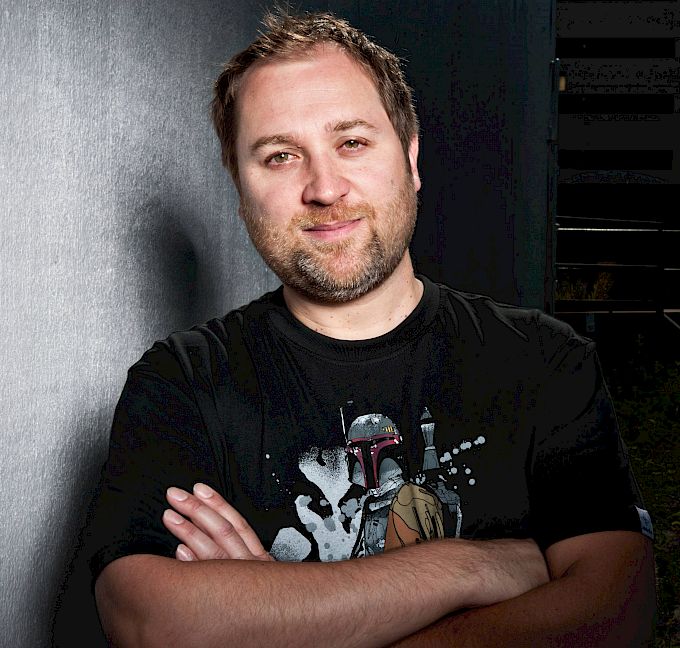
Lee Coombs is a UK breakbeat producer and DJ whose career spans over three decades of electronic music. From early hardcore and rave releases in the early 1990s through his breakthrough on Finger Lickin' Records with "Future Sound of Retro" (1999), Lee became one of the defining voices of the UK breakbeat scene. His remix of New Order's "Crystal" (2001) — commissioned by Pete Tong at London Records — cemented his reputation on the international stage.
As The Freakazoids with Nick and Lanks from Shades of Rhythm, Lee channels his love of early 1980s electro into a project that spans two decades. His Breakfast of Champions album (2004) brought together key collaborators from the Finger Lickin' and UK breaks world, and indirectly spawned the legendary San Francisco party of the same name. Now based in San Francisco, Lee continues to produce and DJ while running his own Thrust Records label.
Deckard's Listener Message
Hey everyone. I just want to take a minute to thank all of you who have tuned into A DJ's Journey so far. Whether you've been listening since episode one or just joining now, I truly appreciate you. I also want to share — this podcast is very much my own journey. I was definitely learning on the fly. With each episode, I'm growing, evolving, becoming a better host. I'm learning not to let perfection get in the way of doing something I love.
It's been amazing to share this passion with all of you who are enjoying these dives into DJs and producers who I love and respect. I love reading the comments, those who have spoken to me directly. I appreciate every comment, suggestion, and bit of encouragement. It's all helping shape this podcast to be something even better.
I'm learning a lot about the common threads with those who I look up to and what it took to get them there. I've heard some great stories along the way. I've got some great guests coming up, including Krafty Kuts, as well as Sporty-O and many more planned. Definitely stay tuned. And finally, if you're enjoying this podcast, I'd love your support. Please like, subscribe, leave your comments. It's a community effort. Your engagement means the world to me. If you enjoy it, share it with friends. I really appreciate all the feedback so far and I want to keep sharing this and keep growing it. So thank you.
The Invisible Men to Exodus to Paradise (1991–1995)
And now for a new segment on A DJ's Journey — Crate Digging. We take a deeper dive into Lee Coombs' catalog from the early days all the way up to current and get some anecdotes and stories about the productions and albums and remixes that have helped shape his career. So now let's get into it — Crate Digging with Lee Coombs.
The Invisible Men, "Self-Indulge," 1991.
Yeah, that's a big tune for me. That was like my first big record. Had a record out in the world and made me feel like a DJ and a producer. This is early days, 1991, I was 20 years old and the record industry was very old school at the time. It was all based on selling units and getting a little percentage of each one of those units. And dealing with some people that were kind of sharky in the industry. Maybe you would, maybe you'd hear from them again. Maybe you wouldn't.
But the music — it was a very exciting time. We used to call it hardcore back then, but it wasn't really that hardcore. It was like a lot of breaks, a lot of positively uplifting type sounds, a lot of bleepiness, a lot of rawness. And that's what that record is. So check it out, folks.
Exodus to Paradise, Rocket Remix, 1995.
That was a good one. Again, a bunch of samples that we put together and wrote a bassline for and wrote a piano riff, which ended up being a real anthem piano. It's a real — in England, they like their uplifting pianos. And I did too for a time. But I saw it as a moment in time. But we found a vocal, which was from Photon Inc "Generate Power" on Strictly Rhythm.
And I can say that because I actually had to pay him money after the fact, because their lawyer called me up and said, you've made this record with our vocal on it. What are you doing? And I was just a kid again, just like — okay. So I paid them their money and we sold loads of records and it was a bona fide club anthem.
The Freakazoids & Future Sound of Retro (1998–1999)
The Freakazoids, "Attic Futura," 1998.
Yeah, that was the first record that I did with Nick and Lanks from Shades of Rhythm. And we went in the studio, just trying to make some real authentic old school electro. We wanted it to have the same feel, the same sound. And that's what came out. And that's a record that people still come to me for in Miami, places like that. There's a little bit of love for the Freakazoids in Miami, which makes me happy. It's nice.
Lee Coombs, "Future Sound of Retro," 1999.
That was my first big tune on Finger Lickin'. I had a track before that and it was good, but this one was like — it was a real moment in time. Fast paced, heavy breakbeat track, rolling basslines, lots of piano with a chord change in it, which not many people had chord changes back then. And Pete Tong picked up on it and he played it on his radio show for nine months, I think. It was like the background music for when he did the club listings, telling everybody what the good clubs were. Yeah, that was awesome. That was like the best thing that could have ever happened back then.
New Order Remix & Breakfast of Champions (2001–2004)
New Order, "Crystal," Lee Coombs remix, 2001.
That came directly off the back of "Future Sound of Retro" because Pete Tong was the A&R guy for London Records. And that was what New Order was signed to. And the record came out and he was tasked with getting remixes and he offered it to me.
There is a little story behind this because I saw it as my opportunity to do my own version of a New Order track in the same vein as "Blue Monday." It had the same elements. It wasn't the same record, but it had the same elements. And I was like, my God, I'm going to just pull all my best nostalgic influences together and make this remix. And it actually worked. My plan came together. And then that's what kicked everything off.
My favorite title of all years — Lee Coombs, Breakfast of Champions album, 2004.
Yeah, that was a good one too. I mean, that's a body of work right there. That was me collaborating with all my production buddies at the time. All the people we talked about — Meet Katie, Dylan Rimes, Andy Gardner from Plump DJs. That was a good one. Jem, Jem Panufnik. Finger Lickin'. And that album — yeah, that was the next evolution after those remixes and the Perfecto album. And it got me a lot of traveling type work.
And did that name tie in with Breakfast of Champions party here in San Francisco?
It did a little bit. I've played the earliest Breakfast of Champions. I moved here in 2005. I assume there was a tie in. I was doing them when they were at Club Whisper. It was great. And it just seemed natural. Justin Rushmore actually thought of the idea of calling it that because he came over and we all went to that party and I had a pretty epic time DJing there. And it just all made sense.
Uberzone, Freak Jam & Break Free (2009–2022)
Lee Coombs and Uberzone, "Right Now," 2009.
Q is one of my mentors and inspirations, technical genius — Uberzone. If you were into breaks of the two thousands, you know who Uberzone is. I got friendly with him and I used to go visit him and we used to write music and we made some pretty substantial stuff. Probably made three or four tracks with him, but above that, I learned so much from being with him and he didn't teach me. I just watched what he was doing. And that kind of elevated me into the next level of production by hooking up with Q.
Editorial note — absolute belter of a track.
The Freakazoids, "Freak Jam," 2019.
"Freak Jam" — that's just a homage to Beat Street, really. That was me, Nick, and Lanks. We just did it over the internet. We're just making 1982 electro. At that point, just doing it for the love.
It felt like a full circle, almost.
It is a full circle. Yeah. Absolutely. Like going back to the first one — this is the vibe. Same vibe. Sounds great.
And finally, Lee Coombs, "Break Free," 2022.
That's just a current production. I feel like it's got a little bit more depth to it than some of the early stuff. But it's not like a record that was huge, because in this day and age, there's so much music that comes out. It's very hard to get anything noticed in a bigger picture, writing a worldwide hit. It's almost impossible these days. You've got to do your super gimmicks on the internet to get noticed like that. But it's a record for my network, for my fans. It's good. It's gone down well.
Looking Back — A Moment in Time
Follow-up question. When you listen to music like this now with everything that you've learned — do you go back and listen to some of your older things and have you ever gone back and wanted to remaster it? Or do you hear things with, you know, I would do it different. Obviously the gear's all changed, but do you look at it passionately like, no, it was the best I could do at the time and I'm good with it? Or do you think maybe you could go back and do things differently?
Well, that was what I did with the Freakazoids album, "In Freaks We Trust." I remade some of the older stuff and it ended up sounding completely different, which gave it a new life and that's fine. But now I go back to the original stuff and there's nothing I would want to change. Nothing at all. Nothing. It's just a moment in time. That's what it is.
And as you said earlier, that's you being your authentic artist.
Yeah, totally. Yep.
Awesome. All right. Thank you, sir. Nice.