- 01How Sporty-O went from Atlanta hip hop and owning a SoundScan record store to dance music stardom
- 02The LA chapter — MySpace Records, MTV, Jamie Kennedy, and writing songs in Jimi Hendrix’s old studio
- 03How a favor for DJ Lethal led to his first dance records with AquaSky — and changed everything
- 04The Keith Mackenzie connection — a MySpace DM that became “Guest List” and a 15-year partnership
- 05The V2 rave in Utah where the crowd sang his song back to him and he decided: “I want to do dance music”
- 06How “Let Me Hit It” became a viral phenomenon — 15 million Spotify streams and a billion on TikTok
- 07Building Tequila Rage Face Gang and securing a Create Music distribution deal
- 08From vocalist to DJ — debuting at Electric Forest and mixing bass house with breaks
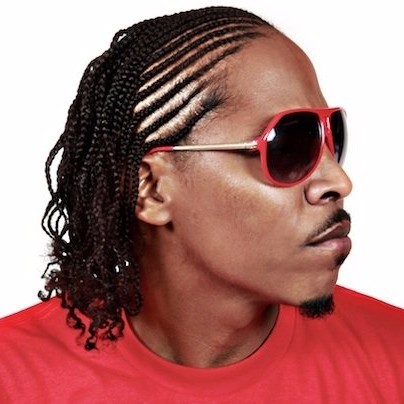
Sporty-O — the International Wingman — is a vocalist, MC, producer, and now DJ whose journey from Atlanta hip hop to electronic music is one of the most unique crossover stories in dance music. After owning a SoundScan record store in Atlanta, moving to LA for a MySpace Records deal and MTV work, and accidentally recording his first dance tracks with AquaSky in DJ Lethal’s studio, Sporty-O became one of the most prolific vocalists in breakbeat and bass music. Tracks like “Guest List” (with Keith Mackenzie), “Apple Bottom,” and “Let Me Hit It” (15M+ Spotify streams) are dancefloor staples worldwide.
Now based back in Atlanta, Sporty-O runs the Tequila Rage Face Gang label (with a Create Music distribution deal), produces his own music, and has added DJing to his arsenal — debuting at Electric Forest with sets that blend bass house, breaks, and dubstep.
Atlanta Roots: Vinyl, Hip Hop, and the Record Store
Alright, I am Deckard. This is a DJ's Journey and I'm happy to not have to rename it this week for my guest, the international wingman, Sporty-O. How you doing?
What up brother? I'm doing well. How are you doing today?
I'm doing great. It's good to see your face again. A couple of times just a couple of weeks ago and then for Breakfast of Champions on New Year's Day. So it's a pleasure to see you multiple times.
Yeah, feel like we're just, yeah, I feel like we've caught up more in this past year than in the past few years. I'm excited to, though our paths are crossing a lot more often now.
Right on, right on. And we'll touch on this later, but yeah, we will touch on your DJing. And I didn't have to rename it to an MC's Journey this week, although, you know, I had thought about it and either way excited to have you on. You're definitely tied in and known in electronic music circles and beyond and hip hop circles as well. So I'll just dive right in. What was music for you like when you were growing up?
Did you grow up in a musical household?
Yeah, absolutely. My father, he died when I was really, really young, but he had all these just vinyl records that he left. I mean, 500, 600, 700 records like Grover Washington, Miles Davis, The Crusaders, just all over the board. Just as being a kid and you being curious, started listening to vinyl like that. That's just sort of how I got really into music. My mom, like most guys, we listen to what your mom's playing on Saturday morning while we're cleaning the house or doing chores. So music was just always in my life.
Eventually I just, my older cousin happened to leave a rap tape over at the house one day and it was Eazy-E's first album and I had never heard such a sound that excited me so much. Ever since then man, just been able to, I was pretty young man, I didn't even know what some of those words meant, I just knew I shouldn't say them in front of anybody.
But yeah, since then music has just been a big part of my life, man. It sure has. And just as natural as breathing is listening to music for me.
Yeah, mine was definitely getting a hold of Two Live Crew's first album. I'm like, you know what, my parents don't like, it's not like they're putting my CDs on to listen to them, but like, you know, just even the cover of that one. I'm like, you know, let me just put some other ones above that. So at a certain point, I mean, I knew that I was, I had an appetite for music, you know, much more so than my older brother and my parents.
I knew I had a big passion for it. How did that come out for you as far as like, you know, playing instruments or how early, you know, did you actually start rapping or writing your own lyrics?
Well, I'll tell you what, I was just in love with the musical persona of Michael Jackson and Prince when I was a lot younger. I was really one of the first, those two were the first musicians that I can just remember. You know how when babies stop and look at a commercial and they can't do anything else? That's how they had my attention. And I just really wanted to play the guitar like Prince, so my mom she sacrificed and got me guitar lessons. That's really just initially how I started being just more proactive as far as just like getting involved in music. And that just eventually progressed into, you know, like the late 90s and early 2000s when sampling like old records and the SP 1200 and MPCs were like a really big deal. And I got myself an MPC 2000 and started playing around with drum kits and sampling and man that just sort of, that's how I really got involved initially in hip-hop just producing because I didn't know anybody that can make my whole pizza. You know what I mean?
Did you have other people you were collaborating with, other people that were either friends or people you met that were kind of mentoring you or were you mostly just kind of doing it in the bedroom?
Well, yeah, well, I initially started in the bedroom and, you know, I'm from Atlanta and the one thing about hip hop here like Outkast was obviously one of the breakthrough acts here in Atlanta and their production team that put up their first album was Organized Noise and it was very well known here how they incorporated and got their sound from bringing in live musicians. So my friends that played in the band at school, that was like my first attempt in like incorporating live music and what I was doing. So I would round up studio time like 15, 20 bucks an hour and bringing my friends that were musically inclined. At the time we sure thought we were putting together masterpieces. I'd like to go back and hear some of those records, but honestly I feel like with anything, practice and repetition gets you better and just starting at that level of trying to do something different, I feel like has brought me to this journey of having such a love for just a wide scope and a wide variety of music.
What was your initial style? When you were trying to make music, was it hip hop of the time? Or did you have a wide influence of different sounds?
Sure, I did. My family, I'm born and raised in Atlanta, but my family is like from the Midwest and California. So we had an uncle that had a record store in South Central Los Angeles at the time that was quite popular. So he would send his son, which was my cousin here in Atlanta, would send us all these mixtapes of just music we have never heard of, DJ Quik, Brother Lynch, just like all these old school West Coast artists. I was into Southern music as well.
My music was sort of the reflection of that, just listening to a wide variety of music, including oldies, and just trying to incorporate some of that soul into it. It was really hard for the people that I was playing the music for to really nail down, like, this is the kind of music that you're making, because I was just making music and talking about things. Product of my environment, absolutely.
Product of all your influences. Right. And so did you have a goal already at this point? For me, when I really started DJing in 1999, my goal was to become quality wise, you know, not so much on where my DJ career or life would go, but I wanted it to be as good as the best guys I was hearing. That was the bar that I set for myself and whatever happens along the way happens. Did you have an image in your head of, I'm going to go down this road of music and here's what my goal is?
Yeah, actually I did. My moniker for several years in the dance world has been the International Wingman. But before that, when I was doing strictly hip hop, it was actually the International Businessman. And I really wanted to, I was just really impressed and just blown away by the independent musicians at the time, your Master P's and some of the guys from the Bay Area like E-40. I was just blown away by these guys being able to put out their own records and not have to chase record deals. And in Atlanta, that was unheard of. Everybody, you had to sign a record deal because we were not in New York and we were not in Los Angeles.
I had this really cool old school car at the time and I sold it to a friend of mine and I took the money and I opened up a record store here. It was awesome because I love records. It wasn't just vinyl, I was selling CDs at the time, so I was selling. I was one of the 10 independently owned SoundScan stores here in Atlanta.
Yes, it was sweet. I sold CDs and also sold mixed CDs of all the very popular DJs here. Atlanta was really bubbling at the time and I was trying to get my records to the popular club DJs, strip club DJs here and mix show DJs that were on the radio. But it was different now that I had a record store because they wanted to sell those mixed CDs and I was one of the 10 stores that could report SoundScan numbers.
So that was my goal. I was able to accomplish that and yeah stayed open for seven years until I got an opportunity and things got weird with the CD world. But that was my goal and I was able to accomplish it and I met a lot of contacts and I was able to just learn more than just being an artist but being like a businessman because unfortunately, the music business is not all studio and shows.
Yeah. Well, that's one of the things that I'm finding out. You're my 10th conversation so far and I can't, I'd have to go back and add them up, but I'm guessing at least half of you worked in a record store or owned a record store. Krafty Kuts, I didn't know he had a record store. And a lot of people I've talked to, one way or another, be it record stores or distributors, seeing different parts of the business, so as you're going about your creative world, you're also getting this knowledge of, here's how you actually meet people and network and understand how the business works.
Absolutely, it's almost like you're learning on the job. A crash course. And yeah, it helped in the long run. It certainly did. It really did help in the long run.
As you were beginning to make music and perform, at what point did you actually start gigging? Did you start off like house parties and then move up, or what was your progression? And what kind of year did you really start performing out live more?
Well, once I had the record store here in Atlanta, I was still doing just hip hop at the time. But I was starting to get into going to dance music shows here because I just like I said, I've just always had a wide variety of friends. I've always had an ear that was open to just different sort of music. So I started gigging. I would have to say that was probably maybe like 2002, 2003, after meeting just some DJs that would come to my record store, finding out Atlanta was just such a melting pot. So there were just a lot of popular club nights here and opportunities.
And a quick question. So being a SoundScan store, to my knowledge, that means the results of your sales from your store are going to be a little more influential. Essentially, your store is kind of a tastemaker, right? Because some of the charts are based on those numbers.
Absolutely, yeah. With SoundScan, especially with the independent store. You're in these places back in the day like Camelot, Blockbuster, Turtles, you know these chain stores. They scan the barcode so those records count toward your numbers for going gold or platinum or how many albums that you're selling.
People were chasing these big distribution deals, going from trying to transition from an independent record label to getting a distribution deal on a major. Or these artists that were just selling their CDs and they needed to prove like, hey, 30,000 people have bought my CD, but how can you do that if you're not a SoundScan store?
That's interesting, because then I'm assuming that means mixtapes and things are actually getting tracked, right? When you'd hear about this mixtape that was making waves, I was always like, well, how would anyone ever know that? Because they're so underground. That makes sense to me now.
Some of them were. Yeah. And a lot of hip hop artists from here got their breaks like that. Ludacris, he actually used to be a radio personality here and he put out his first project independently. T.I. initially had a big deal and lost it. So to get back and to become the artist he was, he released a mixtape on his own. Young Jeezy, same way. I mean, it was like the blueprint for separating yourself from I want to be a musician to I am a musician and I'm a walking business.
So when did that kick in for you? I assume at some point in there you start putting out your own mixtapes?
The LA Chapter: MySpace, MTV, and Jimi Hendrix's Studio
Absolutely, that was really the purpose of me opening the record store. That's why I opened it. I just wanted to separate myself and, you know, sort of like the 48 Laws of Power. You want to have something to offer someone that you want something from. You can't just take, take, take from the game. You got to give back to the game. So I made friends with the locals in that area. Put out a really strong mixtape. I had a couple good features, I was able to track the sales on it and I got a big break to go to Los Angeles. I got signed with MySpace Records at the time who was distributed through Interscope. I got offered a TV show opportunity while I was out there being the music coordinator for it and as well being on the show. It was directed by a gentleman named George who his first big show was the Real World on MTV.
Yeah, that's how I got my break man. I kept the record store for about a year after that, but it had pretty much served its purpose. I packed up and moved to LA and that started a brand new chapter of my life.
That's awesome that you get another job while you're out there. Go out there for one thing and get another job while you're there.
I was able to support myself. They were paying good, like 65 bucks an hour just to sit around and listen to cool music and people asking my advice, like is this good music to put in there? Absolutely yeah, whatever you guys want.
No, I've often thought, hey, if anyone wants to pay me to give my taste in music, which is what I do in my DJ sets, but if there's anyone else out there, music coordinator role, always thought that would be like a dream job.
Man, it was great, man. It was like right at the start of like reality shows back at Laguna Beach, Rob and Big. This was like right during those times, before reality TV was like what it is now.
So a lot of shows appealing to younger crowd too. So they're looking for people who understand current music.
Absolutely, and have no hip, but not just in one lane. And it was really, it was a great opportunity and the doors started to open from there for me.
I was in my mid 20s, kid was young. I was right at the climax of just being a young man and just starting to get a little hair on my face and just realizing that I'm not a teenager anymore. It's time to go into overdrive.
When I got off the plane, they took me right to this great big house on the corner of Sunset and Fairfax. And the first person I met, whose show it was, his name's Jamie Kennedy. He was in like Malibu's Most Wanted, some other big movies. That was the first guy that when I got off the plane, he was there with Fred Savage from the Wonder Years. They were like playing pool and that was like my hello LA. This little guy and Jamie Kennedy was kind of tall. I'm like, well, this is cool, man.
The show, what was really cool about the show is Jamie Kennedy and his friend Stu Stone, they were sort of doing a reality TV version of him being Malibu's Most Wanted like in real life. He was trying to get a hip hop record deal and every episode was him approaching like a different set of hip hop artists. The first episode he approached like Ice-T and Coco. Wu-Tang was on the show, like Paul Wall, Snoop Dogg. So many cool people were coming to the show all the time.
He needed to have songs as well. So I wrote those songs for him. And then I also had to like rap them for him because I couldn't give him the piece of paper like, okay, there's the rap, you know. So I would have to rap them. And yeah, I was really hands on with the show and because I was the business side, I came from just being very well informed about the business side, publishing, owning masters and things like that. It ended up very profitable. I had a good voice as well. So I turned that into being the voiceover for commercials on the show, which turned into some more opportunities on MTV and even a Big Red chewing gum commercial.
I was out in Los Angeles for seven years, but about half the time I was doing the television shows. The other half, once I secured that record deal with MySpace, we moved into a bigger studio once the TV show sort of ran its course. So me, I was working with a gentleman named Justin Trugman. We had our label together. We got a bigger studio with Stu Stone, who was part of that MTV show, and DJ Lethal, who is the producer and band member of Limp Bizkit.
Just having access, Lethal had all these cool vintage equipment, just anything you could think of. He's been collecting music equipment since probably the late 80s. And he was cool with this guy who customizes MPCs and just has all this vintage equipment. So I really was able to dive into the studio. There was a lot of rock guys coming around, Cypress Hill was coming around. We were actually in Jimi Hendrix's old studio, that's what we were renting out, right off Sunset, right across the street from Hollywood High School. Just cool stuff man and that was like my everyday.
Yeah, you were kind of when we were just discovering what going viral meant.
Guest List and the Dance Music Conversion
Yes, exactly. And to be honest, that's how I met Keith Mackenzie through MySpace, he just randomly hit me up on MySpace. MySpace really opened the door for me. I was living in LA, Keith reached out, and that's how our relationship got started. And then AquaSky was friends with DJ Lethal and they were coming to LA one day. Lethal, you know, he's been a band member of two multi-platinum groups before he's 40 years old. At that point he was just chilling. He bought Tupac's old house. He wasn't doing much every day.
AquaSky came into town one day and Lethal calls me and said, hey man, there's these guys from London coming in today. And he's like, I've kind of been partying the past few days. I'm not really in shape to see these guys. I'm like, well, cool, man. I'm always at the studio. What do you want me to do? And he said, if you'll just work with them for me, I'd appreciate it. So AquaSky gets there, Brent and his buddy were there. I went in, covered for Lethal, made friends with Brent and they played a couple records and I ended up jumping on a couple records and those were the first two dance records I ever recorded and they ended up doing quite well.
What year was that?
That might have been 2007 and they probably came out like 2008 or something like that.
So just a very fortuitous chain of events there. It sounds like this kind of thing would have happened to you one way or another. You were setting yourself up, but it doesn't sound like you were necessarily tied to any one outcome.
No, you know, I feel like just having your ears and your heart open, you know, and to be able to receive whatever blessing God has for you. You can't be just so focused on what you want. You can mess around and miss something that's meant for you. And fortunately, I wasn't just so concerned on blowing up and being like the next Jay-Z or something. I just love music and whatever aspect that I could be involved in music that would help my family out and help me continue to do music, I was up for it.
So that was all around like the same time. Like 2006, 2007. I think I cut the records with AquaSky first. I think I cut two records with them first, but then either around the same time or just after that before those records even came out, Keith and I did Guest List.
Guest List. Because I was looking through some of my tracks and I do have quite a few. When I go into my Traktor and look up Sporty-O, you're in there quite a bit. And yeah, I think Guest List was the first one. That was 2009 I have for release date on that one.
Right. Yeah, Guest List came out and I actually hadn't ever met Keith. We were just MySpace buddies. I did the record, completely forgot about it, going on just doing shows, jumping on tours, really focused on hip hop. And Keith hit me up.
I was doing hip hop tours, mostly West Coast stuff at the time because I was living on the West Coast. Things that were coming like southern artists that would come out on the West Coast, I would jump on those tours. I got to meet T-Pain before he blew up. He had this song with E-40 before he really, really blew up. And I just remember that because he's such a big artist now. And when we seen him that day, he had a lot of personality, had like the blonde dreads. I was like, that guy right there has got something.
I got to perform with Three 6 Mafia in Long Beach at the Vault the day after they won an Oscar. That was really cool. Just cool stuff like that, I just would keep falling in all the right places at all the right times.
You've got the stories, though, which is what counts. Were you aware? So you said you're kind of minding your own business. You had done your part with Guest List. Because I'm in the Bay Area, and anyone who loves breakbeat, this is a great city for it. And I mean, that song was tearing it up that year. We'd go out on weekends or after parties and you're hearing Guest List play. So it's like, man, I don't know who this guy is.
Okay, all right. We got some American representation here. This is cool. So, did you have that moment? I'm curious about being part of hip hop and then being part of club world, they're a little different obviously.
What made dance music click for me was here in Atlanta, the roller skate scene is just like part of our culture. You're 10, 11, 12, 13, you're roller skating and booty music, like MC Shy-D, Kizzy Rock, Kilo Ali — that stuff is like from here in Atlanta. Just the tempo and dance music, it's always been something that's just as popular as Outkast was.
Yeah, so that part of it was in me. When I was able to hear those records, Guest List or those records I did with AquaSky, I just had to click my brain into, ah, yeah, I can do this. Some vocalists have a hard time catching the beat, but that's how I sort of locked in with it. And being in Los Angeles, I wasn't just trying to make gangster music. I was trying to make good records that make people dance. Then I heard that Gorillaz record “Feel Good Inc” with De La Soul and that was one of the first records that just randomly caught my ear. And I was aiming to make records that gave me that same good feeling.
The guys Brandon and Jeremy from V2 out in Utah, they were throwing a big rave at the time. This was very early in their career, it's huge now but it was still huge then. I had never seen anything like it. And Keith Mackenzie flew me out and I did Guest List and the crowd knew the song better than I did. And I'm like, man, this is all I ever wanted. I'll tell you what, I left there, it changed my entire focus about my music career. I made the decision leaving that show that I wanted to do dance music. And I just completely threw myself in after that. Hip hop was on the back burner for me.
I cut a couple of tunes with D.Kline and Dustin Hulk and we did Apple Bottom.
Yeah, which was another huge one.
The blessings, I was just like, man, I'm cutting these records and they're doing well and people know them and I was getting booked. With hip hop, I was really working hard and kind of forcing myself on tours and walking away with a little money. But with the dance music, people were responding to the records so well and people knew the records. Even living in Los Angeles, they're like, Sporty-O, you've got this record — and they don't know one hip hop record. Yeah, it sold me.
Just the acceptance of dance music fans. I was able to fall in line with the culture and I loved it because at the end of the day it was all about what I was about, just unity and spreading love and good music. Good vibe.
And I think what you were able to do with your voice and both working on your own songs as well as doing all these features, you're really able to share your sound via your collaborations as well. And I think some of those songs with Guest List and Apple Bottom, they're catchy. Your voice sounds great in that pocket with electronic music.
I took the work ethic of artists that were constantly putting out music. The mixtape circuit was really popular about this time on the hip hop side. You had guys like Lil Wayne, Dipset, just dropping these mixtapes with hundreds and hundreds of songs. And because I had access to the studio like that, I didn't want to give that up. So I was eager to work, especially now that I had this newfound love and a newfound tempo.
And it got me further away from things in the hip hop side that I didn't really enjoy. I love hip hop music and I love hip hop culture. The urban culture is just a part of me. But there's pros and cons to that. And I was able to take everything that I love about hip hop, including the work ethic, and apply it to being able to work with all these producers from all over the world that I had never heard of. With dance music, I didn't know what I was gonna be sent sometimes and it just, I feel like every time it was able to bring out a different part of me.
I wasn't producing at that point because I wasn't really familiar with the dance music side of production. I wanted to be authentic with dance music. So I needed to immerse myself in the culture so that I would be able to channel the energy that people are feeling at the raves, at the clubs, or when they're just together. So I really focused at that point just on strictly writing.
I was finding and learning about where the hook was and where the verse was. I didn't know what a drop was initially. I didn't know the difference with breaks and house. I could hear it but I didn't know the terms. And dubstep started to rear its head at the time.
Keith helped me a lot. Just being able to bounce something off of someone that I trust his opinion. I know that he had my best interests at heart.
One thing that I learned at the time, some of the best records that I did from a vocalist standpoint, the song was completely different than when they gave me the initial track. From a dance producer's perspective, I feel like we are able to come out with a better end product and produce better around the vocals. Now when I'm working with vocalists and I'm producing around them, I just try to give them something that will get their creative juices flowing. I'm like, I hope you're not in love with this beat because I'm definitely going to change it.
Building the Wingman Empire
I was honored to have Keith on my fifth episode, the Keith times two episode. And he speaks the same way about you. He's just like, yeah, that's my dude. So when did you first start gigging together? When did you go from actually like, we're two guys who talk on the phone and send each other music, to actually playing together, going on tours together?
It was probably maybe about a year after Guest List came out. We went to Miami together for the first time. He's telling me about Winter Music Conference and Ultra and all this cool stuff. I met Nick, DJ Chris B, my guy, a lot of good Florida people, Justin Holton, that whole crew, DJ Shakey. Just a lot of good dudes. Having that week and some change just being with the guys and gigging constantly in Miami, you're building that love, building that bond.
11-11 was starting to catch fire at the time and everybody's contributing. I met Whiskey Pete from Los Angeles. Connie Icahn from the Bay Area. We just had a big family that was from everywhere and the records started taking off. Apple Bottom came out and started doing very well. Guest List was just on fire and we got some good remixes. So right after that, we just hit the road. We had an 11-11 tour and I just thought it was the coolest thing in the world. Going to so many different cities and seeing the dance music side of them.
I've been well traveled. But just seeing that side of it was such an experience. Being able to do that at the very beginning of my career as far as dance music was concerned, it just sold me on it. It put a fire under me to just keep putting music out.
Any opportunity I had to do a record, I was down to do it. As a matter of fact, Let Me Hit It — Keith brought the Audio Stompers to me, said you should work with these guys. They sent the music. I don't want to say I didn't like the music. I just didn't understand it. But a lot of the music that was being brought to me at the time was crazy because I just never heard music like that. Fortunately, I did that record and it's the most streamed record that I have. It's got like 15 million something streams on Spotify. It's got like a billion streams on TikTok. Jason Derulo and the Jonas Brothers just did a viral challenge to the record last year on TikTok.
The song is called Let Me Hit It. It's just the most popular song. It used to just go viral with all these Japanese animation videos. So like my mom or my older family, my aunties, when they're trying to tell people, yeah, my son does this dance music stuff, they'll pull up their phone and Google and the first thing that comes up is Sporty-O, Let Me Hit It. And it's like, oh no, why couldn't the song be called God Bless You?
But you know, it's just, hey mom, it's just about a zest for life. Like, let me hit it. Well, that's awesome. So at what point in there did you start Tequila Rage Face?
Things were just going really well. I was having a lot of releases on D.Kline's label at Rat Records at the time, a lot of releases on 11-11. D.Kline hooked me up with Tim Healy. Tim Healy had a group called Felguk, a Brazilian electro house group. I did a record with D.Kline and Tim Healy first and then we sampled the old Knight Rider theme song, a really good house record that never came out because we couldn't clear the sample. But I ended up doing a record with Felguk which ended up being a huge song.
Electric Daisy Carnival, when they were still in LA — as a matter of fact it was the last time they did Electric Daisy Carnival in Los Angeles. They used the song as their trailer theme. They booked us both, Felguk and myself, on the main stage at EDC. I had never seen anything like that before. From doing 500-capacity, thousand-capacity clubs, your festival here and there, 10,000 people — but this thing, I had never seen anything like that before.
It opened my eyes to how big of a business dance music was. And it got me back to my roots of, hey, don't forget, you're a businessman. Let's figure out a way to do what you were doing prior to coming out to Los Angeles. So that's where Tequila Rage Face Gang came from. Because I was putting out records at such a high rate and I understood with dance music, you don't have to sign to a label. You can just put songs out where you want to.
Tequila was like our thing. We sort of, you always try to have something that everybody can relate to. We were pushing the party boy thing, good times, cool times. When we take a shot, you make that face like — well, that was the rage face. So that's where it came from, just the name. I just wanted to have an outlet to be able to move at the pace that I wanted to move at. So yeah, that's how the record label started.
So from there, and you're still releasing on Tequila Rage Face, yeah?
Absolutely. As a matter of fact I just secured a joint venture deal for Tequila Rage Face Gang with Create Music. Create is doing a lot of good things with dance music right now. A lot of major artists — they just bought Deadmau5's entire music catalog. AC Slater has got a joint venture with them right now.
I work with a conglomerate here in Atlanta of guys. They're very focused as well. That door is definitely open if they want. But the reason I really like working with them is instead of taking from the game, they give back to the game. They sort of followed the blueprint of what I did and they're doing the same.
Full Circle: Atlanta, COVID, and Learning to DJ
What got you back to Atlanta? So you were in LA for like seven years? Did you go back to Atlanta from there?
Yeah, I moved back to Atlanta. I'd seen that movie and the time had ran its course and I felt like if I stayed there it could have just turned into me searching instead of finding. I had found what I went there to get. And the price of living on the West Coast is a lot higher. So it was better for me to come back home. I got a son, I took him on full time when I was able to come back home. Fortunately touring allowed me to be more available.
Became a full-time dad and I was, you know, being on the road and seeing so many cities and people, I meet people, I take the time out to talk to them. I could talk to paint while it dries and walk away with a great conversation. That's just who I am. And with that, I was able to make a lot of contacts. So when I came back to Atlanta, the businessman in me, I started throwing shows here as well, since I had the contacts from being on the road so much. So I was able to continue to network and basically do what I was doing with having a record store in the urban community — I was able to do that here in Atlanta by throwing dance shows.
That helped me obviously release more records and meet more people and meet managers and agents and club owners here. So yeah, it was really awesome to be able to just come full circle with the business and the music just on the dance side of things.
I had that moment for myself. I've been part of Space Cowboys for a while. So being a part of promoting parties has always been part of what I've done. But in my head I was more DJ — DJ who also promotes. And it wasn't until coming out of the pandemic and having our Breakfast of Champions on New Year's Day, after gnarly weather all week and then magically the skies clear, that I had this pure feeling of being a proud pop almost, seeing how people were reacting. I really appreciate what you're saying because I am a promoter. I am helping promote this scene, giving people a chance to come and lose their mind to great music.
I was very pleased to see you advertising being booked for Electric Forest. So I didn't have to change the name of the podcast for you. You're an MC, producer, DJ. Tell me about your continued evolution and where you're getting to currently and looking into the future.
Well, during COVID, things slowed down a lot. Everyone had to get a little more creative or just put things on pause. And during that time, my inner circle was like, hey man, you should really take this time out now to focus on the back end of music. So I started making my own music. I understand production from hip hop. We didn't work on Ableton back then, but it's just like the difference between an Xbox and a PlayStation. It does the same thing, I just got to learn the buttons. So I started tinkering around because I had the time.
Then I started thinking, why don't I DJ? Because the challenge I faced was finding where I fit in. Dance music changed a lot. It became this multi-billion dollar business now. And my contribution to dance music is just a lot different than most people that's involved. I never took bookings where I'm like the MC host. That's not what I was doing. So I was very challenged at trying to convince promoters that I'm not just a rapper that's going to freestyle. I have a catalog that's probably longer than everyone booked on the show.
You're kind of breaking the paradigm a little bit. I can think of lots of songs I have that have a featured vocal, but I can't think of very many vocalists where that's their thing and they would have a catalog of songs to perform a full set.
I've always respected the DJ and I stayed away from it for so long because I respected the DJ so much. Even coming from a hip hop standpoint, the DJ is an instrumental part of our shows. But I said, there's no reason that the drummer can't play the guitar. There's no reason that the guitarist can't play the keyboard. So I said, there's no reason that I can't evolve. There's no reason that my stage performance can't evolve.
So I made the decision. I want to continue to evolve as music does and as dance music has evolved. Not only will I focus on producing and rapping over what I'm producing, I want to evolve my music sound, I want to evolve my stage presence. I've been working really hard with some of the guys down here tutoring me. Keith's been helping me. And I bought my XDJ RX3 from my buddy Ricky in New York — Defcon. That's my guy. If it's coming from him, I know it's pristine condition. I would buy a baseball card from that dude.
So you pulled the rare double duty. Space Cowboys brought Ricky — Defcon — to play and you and Keith were scheduled to perform together and you both had the last sets of the night, going from like seven thirty to nine. And Ricky had said he wanted you to come over for one song. And I was like, I'm really sorry but you're going to both be on stage at the same time. And you pulled it off, running between stages.
We pulled it off.
I've never seen anything like what you guys do out there. That Breakfast of Champions was, I was so happy to be a part of it. That was awesome. San Francisco has such a vibrant energy and you guys really brought it.
The Next Evolution
I have a new single out that I produced. It's called Blue Lights with a friend of mine, Gio Iacuento. That's out on Tequila Rage Face. It's actually the lead single for my new EP, which is called Symphonic Resistance. It's four songs all produced by myself. You'll hear my voice on one of them. And it gets pretty crazy — from UKG to trappy dubstep to tribal trap. It's something different. The EP is sort of a sneak preview into what I have in store for the dance community in the upcoming years. It's me just behind the boards as a producer.
One thing I never understood about our dance music community is sticking to one genre. In hip hop, it's not like very distinctive musically. But in dance music, there's even different types of house music. Bass house, funk house, hardcore dubstep, trappy dubstep, breaks, trance, hardstyle — you just have so many things that you can do.
I found some styles of music that I really like: drum and bass, obviously breaks, UKG, trappy dubstep and bass house that I really love. And I guess you can say if you want to say I'm laser focused on all those, that's what I'm laser focused on.
Something I realized as a DJ, and it took me probably 15 years before it dawned on me — how to quantify what my sound was across different genres. Like, this is my through line. This is why I can go from house to dirty house, space house, get into breaks. It's because my brain, when I'm picking music, it's with similar qualities. And I had to learn to trust myself to go, yeah, I can go from here to there and it's not going to lose people along the way.
That quality that you're mentioning has worked for me in going from vocalist, producer to now DJ. I did two sets at Electric Forest and I mixed bass house and breaks together all one night, my Friday set. And I was just blown away about how well it mixed together and how people didn't even notice. You've got some people that are crazy about breaks. But if you don't just tell them this is breaks, they would never know. It's the same tempo. It was awesome.
I was so nervous. I haven't been nervous like that since probably I was a teenager. Literally butterflies in my stomach. I brought four different flash drives. I don't want anything to go wrong. And sure enough, Saturday set, for whatever reason my playlist wasn't on all four of those flash drives. I had that DJ breakdown and Keith's like, yeah, welcome to DJing man.
Here's what you need to do. Put a backup of that drive, and two, smart playlists are your best friend. Make some smart playlists so if your main playlist isn't there, you're armed with your whole catalog. You can at least go there and not be in a blind panic.
We were at Electric Forest with Keith and Essential Freaks. And Zach from Essential Freaks was like, hey man, don't worry about it. Did you update Rekordbox before you did this? I'm like, yeah, it asked me to update it so I did. He's like, that's probably your problem. The 3000s haven't been updated. And everyone's so calm and I'm like sweating bullets.
Saturday I did an all bass set at 145 BPM. That's where my love for my personal music is right now. But obviously people know my voice from breaks and house stuff. So the Saturday set was really important to me because I wanted people to hear where I'm at.
But sometimes those restraints or obstacles can force you to be more creative than ever. I remember my first time playing End Up in San Francisco. I couldn't get my controller output to work. I pivoted on the fly and played an all-2006-electro set from CDs. And people were like, dude, that was sick. And I'm thinking, I was about ready to panic because I'm playing four or five year old music.
I love hearing things like that because I'm learning. I feel like a freshman in school again. I'm just learning. And it's so enjoyable.
So last question. How do you see this changing your live show? While you're DJing, are you going to also be DJing and rapping?
That's what I want to grow toward. As this year winds down and we head into 2026, I was just really focused on not train-wrecking and getting in good solid mixes at Electric Forest. But I've been working on repetition. My goal is to be able to come out from behind the decks. I bought myself a cordless mic that I travel with now, and be able to do some choruses or a verse here and there and go back and mix in and out of songs. I just feel like it would add something new to dance music.
Especially somebody who's built up this catalog and been doing it for years and is very known in the scene. To add this dimension, that's pretty cool. It gives you lots of runway in front of you on how to evolve.
Man, it is. Just to be even more creative. Just get to continue to evolve. As the music business and the music continues to evolve, the demographic continues to evolve. Some people age out. You have the new generation aging in. And we who have been in it for so long find a way to continue to stay relevant and interesting to both sides of the spectrum. I think that's only natural, just to find something cool like this to set yourself away from the pack.
Well, I look forward to hearing your future releases. I look forward to seeing you here in town again sometime soon. I loved having this conversation with you, man. It's been great. And I look forward to talking to you again soon.
Absolutely man, take care. Thank you for having me and peace, love and happiness brother.