- 01How Steve Raskin's early bands and influences evolved into Thunderball and Fort Knox Five
- 02The role DC's funk and go-go scene played in shaping the Fort Knox sound
- 03What it's really like to tour the world as a breakbeat and funk DJ
- 04How Fort Knox Recordings was built as a home for funk, breaks, and party-starting bass music
- 05How the crew has navigated change, loss, and legacy while keeping the dancefloor energy alive
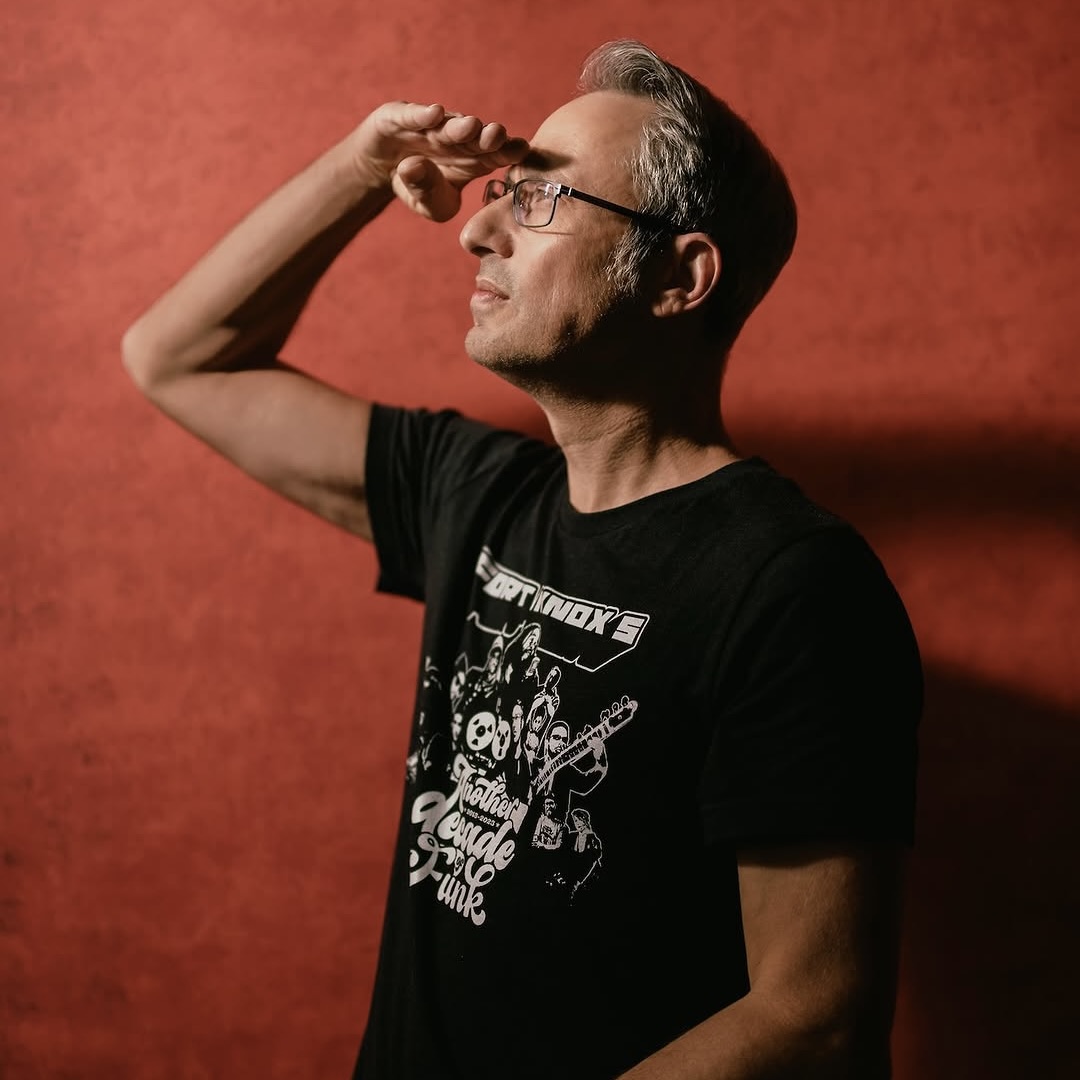
Steve Raskin is a producer, DJ, and visual artist best known as one-half of Fort Knox Five, the DC-based funk and breakbeat outfit behind Fort Knox Recordings and a long list of festival-tested anthems. From early band days through major label deals, Thunderball, and the rise of Fort Knox Five, Steve has helped shape the sound of modern party-funk and breaks.
Drawing from DC's rich funk and go-go tradition and the community-first ethos of the early American rave scene, Steve and the Fort Knox Five crew built one of independent electronic music's most respected labels — releasing music that moves dancefloors from Shambhala to Burning Man and beyond.
The Funky Roots of Steve Raskin
All right, welcome to another episode of DJ's Journey. I am Deckard, your host, and I am very happy to have a friend and a long time friend and DJ on events together and a fan of your music. is Steve Raskin from Fort Knox 5.
So good to be here. I'm glad we're finally getting this done.
Yes, you were one of the first people on my list. It took us a little while, but I'm happy you're on today.
Yes. Me too. Me too. What are we talking about?
What are we talking about? Well, we're gonna jump in the way back machine and find out how you got to be so damn funky. So what was music like for you growing up?
Growing up in DC was really interesting because there were really no, you know, there wasn't a lot of radio stations that played either underground music and stuff. we really had to sort of be present and experience what DC had to offer. And what DC had to offer when I was growing up was punk rock and go-go. I feel like those two elements really have shaped me and continue to shape me to this day. So I grew up, you know, listening to, DC had a thriving hardcore scene with Minor Threat and then Fugazi and all that stuff. And eventually I became really part of that scene, but that was more after high school, high school, after high school. But in high school, Go-Go was always playing funk music and Go-Go. And I just absorbed the whole thing. And for those who don't know, Go-Go is not the,
you
the sexy girls dancing, pole music. It's indigenous to DC, which is sort of like a percussion workout version of James Brown. Most of the songs are eight to 10 minutes long. They're meant for a live experience. Go Go was played at my prom. It's part of my DNA. And I think that sort of element of dance and funk.
Okay.
What?
it's still permeating to this day.
I actually honestly wouldn't have guessed the punk, but I guess that every kid kind of has their different ways they branch out and find the edges of what they're into, yeah.
Well, it's funny because I think the punk thing, because, you know, DC was, we're sort of in the belly of the beast and all arts in general are a reaction to something or maybe a reflection of something. DC had, the punk movement really was the ideology of, if you want to start a band, start a band. Don't wait for somebody else. If you want to have a show, put on a show. learn all these things. You my first shows were, you know, probably 13, 14 years old. Me and my friends, you know, we would go to the, the VFW halls, the rec halls, and you'd sign up for a Saturday afternoon or whatever it was. And it would be all ages shows and we'd play our music as well as we could. But that ethos of the punk rock in DC really sort of shaped the idea that you can do anything you want to do musically. Like there are no parameters to it. And DC's punk scene especially was, you know, we're not talking just thrash, get about in the mosh pit. You know, they were always very thinking. I call it, it's like thinking man's punk rock, whatever, you know? And that sort of ethos really allowed us to not only start Fort Knox Five and before that Thunderball, but you know, I started my own design firm. I started, we started our own record label. All of these things are an extension of the punk scene, but the fun and the funk. conduit of, you know, just wanting to wanting to make people move, want to make people dance.
Were you, so did you like, mean, jumping back even before then, like where you were in elementary school or, or, know, junior high, high school, were you like playing instruments? you?
Yeah. Yeah. I was, I took, started with piano, like most people do. I think my parents signed me up for piano lessons. I was, I was doing all that stuff, but I never really, I sort of cheated back then. I kind of wish I'd really learned how to read music. Now it's sort of, it was so always a guideline. I had a good ear. I could memorize things really well. And so from piano,
Right.
on my 13th birthday, my friends and, you know, all my best friends, they, we all decided we were going to start a band. And so one of them got an electric piano. One of them got a drum set, one got a guitar and they were like, you're on bass. I was like, cool. So I took, I, I, from piano, I'd learned bass. and we actually had something that I would recommend to anybody. We, we learned, we would have band lessons. the guitar teacher who taught my friend. took us all in and he would be like, this is your part, this is your part and this is your part. And so from an early age, we learned how to communicate through our instruments. I mean, we were all learning our instruments, but at the same time, it's like, you we're doing smoke on the water, we're doing, you know, jumping jack flash or whatever it is. You're learning how your singular element becomes part of the bigger picture. Yeah, so from there, I taught myself guitar and in high school, was doing these sort of punk bands. But for me, my real interest was when cassette four tracks came out. I was obsessed with this. Even before that, I would take those old cassette where you have to do play and record at the same time. Yeah, and I would sit there and I was like, wow, how do you make music by yourself? I would sit there and...
yeah, yeah, yeah.
play drums on a little notebook, record it and play it back and then play a little guitar line and then a little bass line that I'd sing on top of. by the end it was like, you know, so much noise from bouncing the tapes. But that was my first experiments with recording and idea of being able to make music that sounds like a band, but you can do it yourself. That's always been a part of my...
Musical Beginnings and Early Instruments
you
exploration with music.
Were your parents also musical or were they just like very were they encouraging or were they just very very tolerant of you know, do your thing?
They were really encouraged. Yes, yes. My parents were, they encouraged the art side. Neither of them pursued any art stuff, but my dad's mother, my grandmother, Grandma Anne, she was the matriarch of the family, a very prolific sculptor, painter, mixed media. so we always joked about how it skipped a generation, but my parents always encouraged it. My parents, my little sister actually, went on to becoming, to follow music too. She was gonna be the bass player in the band Belly through different things. And she was part of like the Boston indie punk scene. She was in a band called Scarce, traveled with throwing muses and flaming lips, but that's part of her story. my parents, with us growing up, they would come and see our shows. We were terrible. But they would be there in the back of the shows supporting, know, wearing all black to try to blend in.
Yeah, alright.
I'm still trying to get my parents to get getting my parents to one of my DJ shows, know, like I'm like, you know what? I need to make it happen, you know?
Bye, y'all.
Yeah, well, you know what? To this day, my dad still will call me up and be like, ask me something or whatever, especially when I was living in DC and I'm like, I'm busy. And he's like, you don't have a job. I was like, yes, I do. But that's just his little dig. think he's, you know, I know, I know secretly he's proud that somehow this artistic musical journey is still going on after all this time.
Ha
Right, right. you're, hey, John, you're, Steve, hey, Steve, you're still, you're still like not, you don't have a real job yet.
Yeah.
Sorry, I dropped out for a second. You there? Yep.
no worries. No worries. Yeah, I gotcha. I gotcha. So did you, so let's see. So you were, you mentioned, I think you mentioned like, like kind of graphic designer, record label band, like what, what was kind of the order of you? And I think maybe you and I have talked about this before, but what was kind of the order of things? Like, did you go to college? And if so, what, did you go to college for? And then how did, how did music and how did all this like coalesce together for you?
Yeah.
And what year was this also?
Um, Oh, are we going to really date ourselves right now? Yeah. Okay. So, so, uh, late 80s, late eighties, early nineties, um, college, graduated college, uh, went to Rhode Island school design. Um, I was lucky enough to, I don't know, for some reason all through high school, junior high and stuff, I always knew that music and art was something that I wanted to follow. Um, and.
Well, just what's the era? What's the era?
Education and the Art-Music Connection
you know, looking back at it, I'm like, I have no idea what, what the, you know, what sort of merit they saw that got me into Rhode Island School of Design, which was a very prestigious, you know, art school. But all the while, while I was doing art and actually, let's see if I can actually show this here. In school, this was, this was my medium. I did linoleum cuts and printmaking. And after college, I did a lot of stuff.
Okay.
I don't know if you can see it well, but I did a lot of illustration for magazines, newspapers, know, crazy stories. A lot of these are illustrations for magazines and newspapers. But all of this is sort of intertwined, right? So I graduated college, decided following this career in illustration, but all the while music was just under the surface. And so... While I wasn't playing actively in bands and stuff, I started using my design skills to do album packaging, to do music related packaging. I had a lot of friends in the DC music scene and as their projects were getting bigger and bigger, they were like, we need some album stuff designed. And so I started designing album covers. I did one for this band called Edsull. And then people had seen what I had done. And then I started getting more and more work from there as, one does. And then I eventually joined the band Ed Sol. So then I became, it was doing music and design. I ended up doing a lot of stuff for Bad Religion. All the DC punk bands, were, there was a huge connection. And then obviously the more I was touring the country with my indie punk band Ed Sol.
Red.
I met people, people would be like, we want you to design something for us. so I had a very early nineties. I had a very healthy career traveling, doing punk rock, indie punk and designing album covers. The band eventually got the attention of Sony relativity records and all the, is in the, in the early nineties when everything was sort of getting scooped up. And as our friends bands.
Yeah, big.
we got signed to major labels, then eventually we did too. And we took,
Right. Yeah, alternative music was really like pumping back then.
Yeah. And so all during this time, you know, designing records, playing this indie punk stuff, we eventually get signed. We take our entire recording budget. go to, we're such Anglophiles that we decided to go to England to record our major label album. And they gave us too much money for an artsy indie band. We were never going to become, you know, I think they thought we were sort of in a flaming lips kind of vein, which we were. I always described it as flaming lips meets sonic youth. Little smashing pumpkins in there too. And we took the budget, we hired the Rolling Stones horns to come and play on the record. We hired the producer who did Oasis. I mean, it was was opulent. It was extravagant for us. And it just so happened that during that time at the recording studio was right next door to Cream, the super club. So, you know, this is in the heyday as electronic music and was sort of shifting from underground disco and house to, you know, these big clubs, Ministry of Sound. And so it happened to be that the recording studio was next to Cream. I remember the owner of the studio was like, you guys should go and check this out. And I was like, we're not going to go to some dance club, whatever, you know, we're too cool. Anyways, we, long story short, we go in and you know, they had to, you know, the giant room. And I was like, this is amazing. Everybody, you know, these big no neck guys would say, you know, come up and give you a hug. was like, what is going on here? and then I stumbled into the jungle room. And I remember walking in here and being like, This is like an electronic version of Bad Brains, right? It was like punk rock so fast and had this like, was like funk and punk at the same time. I just immediately, it was like, whoa. And again, this is early nineties. After that recording session, my friend and I, we would go back to England maybe every three months and go explore.
The Rise of Edsull and Major Label Experiences
Right. Right. Right.
Yeah.
the up and coming musical scene. I saw the Chemical Brothers when they were still the Dust Brothers. saw, you know, propeller heads play in a living room at the Blue Note. I saw, I like all these things where I was like, this is it for me. Like I really felt like this, I felt that it was sort of an extension of what we were doing. And so the group, the long story short of the group was we get back, the record comes out and then a year later,
Right, right.
Relativity becomes a hip hop label, so we're dropped. by the time I was in my, you know, I'd sort of done the whole arc of what I wanted to do with music. You know, we toured the country, went to Europe, we did the major label thing. And I was like, what now? I'm like, what now? And so then I, along with Sid and we started just experimenting with electronic loops and stuff. We started buying some early sampling gear, the Kai S900.
Transition to Electronic Music and Thunderball
Right.
And I don't know what we were trying to make from the get-go, but it was sort of a, I joked it was like a DJ Shadow down tempo mixed with the jungle influence that we'd seen. And we just sort of played around for maybe a year, maybe two years. And that's where Thunderball came from. And...
Right, right.
Is that where Thunderball came from then? Okay.
It just so happened that during this time when the band had gotten dropped, so it wasn't doing the indie stuff anymore, I was experimenting with this electronic music and I dove back into designing album covers again. And it just so happened that through a mutual friend, I was introduced to Thievery Corporation who were starting, had just started. This is probably 98 by now, 97. They were started, they just started their project. They put out two singles, 2001, Split Odyssey and Shaolin Satellite.
Right.
And our mutual friend who ran a thrift store was like, you guys have like the same sensibilities. I was obsessed with like late sixties, early seventies cinema and like photography. And so was Eric Hilton. And we just started talking and he immediately, we bonded and I started designing the records for Thiefery Corporation and 18th street lounge records.
Right.
Right, right.
by an extension, I ended up playing my music for Eric. Just to, I was just curious. I just was like, what do you think about it? And I remember Eric saying to me, you know, I really was reluctant to hear what you were doing because we click. I like your design stuff. did. And he's like, I just didn't want to tell you that it's bad. He's like, but I like it and you should put out music on our label. And that started the whole next chapter of my electronic.
Yeah.
music existence.
Okay, then we go Thunderball and 18th Street Lounge. Is that already going at that point?
Yeah, so 18th Street Lounge Records was the label and it became a real haven for, you know, we were, we sort of pioneered this, you know, the, down temple left field along with, you know, I mean, on the West coast, had Ohm Records. We had Kruder and Dorfmeister in Europe. was this whole scene was sort of coming up. And it was kind of nice that we, you know, we sort of represented the East coast. We were like the hub of this.
Yeah.
Yeah.
Oh yeah, yeah. It was very distinct, coming from myself, I had been DJing for just a few years at that time, down tempo was still something relatively new to me. I was really, I liked dance music, whatever it was, breaks or progressive or house, but yeah, there was this...
eventually naked. Yeah.
Fort Knox Five: Formation and Vision
Yeah.
Yes. Yes.
what and why is all this music coming from DC? know, like what, you know, and so it was always like really fascinating to me. And I think that was my first real understanding about how, you know, the music scenes can really be communities, right? And, you know, there's this, this interplay of you're kind of all a part of this, you know, energy and, you know, what that scene is about. So, yeah.
yeah.
And I was gonna say, again, part of the DC punk thing, because Eric from Thievery also grew up with the same music, same experiences. And one of the things about sort of like, you know, instead of going and shopping around your record to some other label, and I'd already experienced the getting burned by a major label thing where you're like at somebody else's whim to put out music and... So we kind of were like, well, instead of looking outward, we should look inward. eventually Eric and Rob both started like, I cited like collecting like-minded people. Ursula 1000, know, and Nicodemus and, know, who was doing turntables on the Hudson. And we, we eventually had this, you know, for starting this in the U S too, because it was so.
Yeah.
Right. Right.
especially when we were starting, we toured mostly in Europe. For the first couple of years, would say early 2000s, I would be in Germany, Austria, Switzerland, England, because there was a scene already, there was an infrastructure there and there really wasn't in the US. In the US, you'd play DC, Philly, New York, San Francisco, Seattle. I don't even remember.
Right.
Yeah. Yeah.
definitely did not play LA back then. know, Austin, Texas, we had a little, little, little blip. But yeah, that, that whole scene eventually, you know, started getting bigger and bigger. the natural extension, like you were just saying is like, you're gravitated towards dance music. And I found myself
Right.
looking for other things that I wasn't making under the Thunderball umbrella. So when I was DJing out, I was like, well, I wanna make people dance. And so I wanna have things a little bit more uptempo. And so I started sort of branching out. Now, meanwhile, this also overlapped with me meeting John H. And so while I was doing the whole down tempo scene, I also had one foot in the ray of doors.
Right.
Yeah.
Cause I was like from the cream experience and that jungle stuff, I was really interested in what was going on in dance music land. And so I was sort of leading, I feel like I was leading a life. Yeah. Where one was super dressed up. we would, know, we had this, the whole thievery ESL 18th street lounge music thing was always funny to me because we always pretended it was like.
Right.
The dual life.
we were sort of doing a, we created a world that we wanted to be in, right? And so they even had their club and like everything was like styled and you know, we would, especially in Europe, we'd be playing these like, you know, classy clubs and stuff like that. But meanwhile, I definitely, my heart, I don't wanna say my heart, cause that doesn't mean, but it was enthusiastically into the ray of scene.
Right, right.
Yeah.
Right, right.
And especially in that time, we're, you know, late nineties, early two thousands, so much good music going on. So much experimentation, like whether it's, you know, groove groove, our modest style stuff or DJ Dan, you know, simply Jeff. mean, like we were, we were hyper aware of all that. Big beat. Yeah. Fell in love with big beat as soon as it started. And John and I had met, through our.
Right. Yeah. Well, yeah, and had big, big bead and, you know, yeah. Yeah.
the rave culture in DC. And eventually we started making music. I was making music as far away from Thunderball as possible. We were doing sort of like early tech house stuff on this label called Red Menace. And I don't know if you remember Red Menace Records. Yeah, it was a New York label. Like we would go down and do, you know, winter music conference and stuff. I wasn't doing, maybe I'd do like one sort of like
Right.
I don't remember.
Yeah.
you know, rooftop event with Thunderball. And then I do these dirty dark clubs playing with John. And so we had our project was called John H and Rascal. And then we had Thunderball. And then there was all this stuff in between that I just loved to play that, especially the big beat stuff, the breaks. For me, it was, it was especially in that time. Jungle might've brought me in, but breaks was what I loved my breaks. I remember, you know, hearing
Right.
entire state of consciousness for the first time at cream blew my little brain and I was like, what, what is this? I don't understand this. It's one note, one note music that just like.
Yeah, you're like, how is anyone allowed to play this like screechy acid and why is it so damn good? Yeah.
And why does it work? Yeah, why does it work? Yeah. So, yeah. So we had these two projects going on and then the inevitable was that we sort of crossed the projects. so Thunderball comprised of me, Sid, and then later Rob Myers, who's now touring with Thievery Corporation as the sitar guitar player. And I should also say that...
Yeah.
The Breakthrough of Fort Knox Five
Sid was my roommate in college, so I brought him down to DC. He's originally from Ohio. Rob was my best friend from high school. We used to play in bands together, and the three of us actually had played in the band. Sort of skipped that over before the indie rock thing called Citizen Adam. So we've all been a part of music going on 30 years now, which is crazy to me. So bringing my, you know, my...
Right.
Right. Yeah.
My friend from high school, my friend from college, and my friend from the rave scene, we all came together. And that was the start of Fort Knox 5 and Fort Knox Recording.
Right. And then, and that must have taken off pretty quick, at least from what I can remember. My first memory really of Fort Knox 5 came, so I was in Seattle at the time and we go up to Whistler and it's about, you know, this is like, I moved to San Francisco in 2005. So this is like the 2002, three, four, five era. And I remember going to, geez.
Yep. yeah.
GLC.
was GLC and Tommy Africa's and and John John was playing he was gonna play on a weekend we were up there and just my DJ buddies up there were like gotta go see that you gotta go see John H gotta see this and they that had been a really Whistler the Whistler scene it's very nomadic and it was very funky house oriented
Tommy Africa. So yeah, exactly.
So you would see all these guys and they were, know, tats and long hair and they looked like, they almost looked like they, they wouldn't have been out of place like LA, you know, like sunset rock scene. And then they would come on and play this like smooth or funky house. And I was just like, okay, okay. And then literally, you know, it must've been 2003 or four.
for sure.
yeah, Bumpy house. Yeah, yeah, yeah, yeah.
The next year we went up there, know, like skee-sees and started going up to the clubs when we're up there and all of a sudden everybody's like playing breaks. And it just like, it just happened like in a wave.
Yeah. Well, was really quick. I think our first Fort Knox single was 2003. And by 2004, we were like a fixture in Canada already. It happened really fast. But it was also because we sort of set off, you know, part of our idea with when we started Fort Knox, it was going to be an all vinyl label.
Right, right.
It was always good. We we were, held out as long as possible in this, in the CD, in the digital realm, probably to our detriment. But you know, when we first started those first singles, we had a very really clear idea of sort of doing this homage to seventies funk, but sort of it was like, it's like a hyper real version of it. And we sort of borrowed that sort of, sort of from the thievery model too, where it's like, It's retro, but it's like hyper real, right? It's not, it's not supposed to be vintage sounding. It's supposed to be vintage influenced, right? And so from the, from the get-go, that was the idea was Fort Knox five. And the idea was to have it be multi-genre, but breaks and funky breaks was sort of the crux of it from hip hop, reggae hip hop breaks all the way through. We wanted to be able to do it all and not have to be sort of pinned to one genre.
Right.
And that was sort of an extension of, you know, having to do one particular thing for this project and another particular thing for this project. When we started it, it was like, we're just going to do fun, funky music. It didn't matter what genre it was. If nothing was off limits, we could have done like polka if we wanted to, as long as it, as long as you wanted to do it and like, you could sell it to the rest of the guys, then we would do it.
Right.
Right. And how did you break, you know, what was the breakdown of who's actually doing what, you know, with like coming, you know, you've already done the band thing, so it's no, you know, it's nothing new to you. But moving into kind of this new sound for you and with a new configuration of people, you know, was there, I don't know, you know, did it click pretty quickly or did you guys have some friction growing pains or no?
No.
yeah. No, no, think it always clicked pretty quickly because there was always like, maybe a clear delineation of how, how we created music. I've always been a principal producer and the human interface from the computer. That's, that's so, which, which, yeah, which is to say, you know, you know, somebody will bring something in and be like, you know, early on we'd,
Human interface, I like that.
We're like, okay, well, we're going to do our version of Fatboy Slim and here is Ski Whiff doing their version of it. And here's, you know, crack and smack. And so we would sort of like pour it over and dissect it and be like, okay, well, here's, here's what they're using. They're using all these samples where we decided from the start that we would never use anybody else's music and make money off of it.
Yeah.
Okay. Right.
And that was the thing that always differentiated us. People would ask all the time, well, where's that sample from? I'd be like, it's not a sample. Mind you, we did use stuff from like music sample library, sample CD stuff where, you you'd buy a thing of like sax lines and stuff like that. Sure. We use those things, but we never appropriated anything from any existing music. And if we did do that, we never released it as Fort Knox 5. We always did it under the moniker of DC's finest.
Yeah.
Right.
It was kind of one of the things that we took pride on. But in the context of writing the music, you know, we would go in and be like, Sid was very avidly collecting synthesizers and doing more interested in making the sounds and stuff. I never had the temperament for that. I'm like, I just scroll through. I need a piano sound. I need this. And I just call up a sound.
Right.
would be in crafting sounds and finding cool stuff. And then Rob, since the day I met him, has always been the most prolific guitar player I'd known. And then as a backward story, the reason that he ended up joining Thievery was through, sitting with Eric one day, designing some Thievery stuff. I remember him actually saying, You know, we really needed somebody who can play sitar and I pointed to Rob because he had just come back from India studying with Ravi Shankar as teacher. And the rest is history. The first song they ever did was Lebanese blonde. anyways, that as an aside, that's an as an, as It's not a bad little moniker. Yeah. But as an aside, so Rob could play anything string, you know, um, uh, Sid, so we all kind of came together and, and John and I sort of brought the DJ element into it.
Yeah. Right. Oh, that's not a bad start there. Yeah, yeah, yeah.
And one of the things that I always said, John, I miss him terribly now, mostly when I'm working on songs, because people are like, well, you what did John do? And I remember telling him one time I was working on a track and he's sitting right next to me. And I was like, are you going to participate? You're going to say whether you like it or not. And he said something to me, something to the lines of, I'll tell you when it sucks. Because.
Yeah.
Because John had a knack for, you know, finding good music. Like he really like would dig and scour. He always found the best vinyl and he had an understanding of how, how dance songs were made and what was needed, you know, you know, so we all brought our little skills into this and together. we would work on things and like I said, no idea was a bad idea. And especially the leading into before we started releasing something, I think the first four singles are so different from each other. Like one is kind of like, you know, funky live breaks and then another one has, you know, reggae samples in it, reggae feel to it. Yeah.
Right.
So, but it really came to a head once we dropped Brazilian Hipster. And Brazilian Hipster would kind of put this idea of mid-tempo funky breaks that wasn't down tempo. You know, we were borrowing, you know, freely from bossa nova meets breakbeat. Yeah. And so it kind of was the tie over from the Thunderball stuff.
with... Right. Yeah.
Bossa Nova meets Breakbeat. Yeah.
mixed with the funky stuff that we were listening to.
And so I know, like, so in that instance that I was talking about, know, John was DJing on his own that night, Whistler. What was it like for you guys as a group putting out music? are you, you know, so when did you actually start DJing as well? And did you have this like individual, you know, you're part of Fort Knox 5, but you're DJing. Did you, you know, DJ together? You played as a band? All of the above?
Mm-hmm.
we did. Yeah, we did it all of the above, all of the above. Actually, when we first started, we had the idea that Fort Knox 5 was going to be a live performance. And then we always joked, you know, in early days, the fifth member was always reserved. four of us, but the fifth member was anybody that we were collaborating with. The whole idea of the project was collaboration. Whether we brought on a vocalist. like our friend Mustafa who has since passed away, but we met him because he was the doorman at the club that we DJed at. And we would bring people on board percussion and the idea that this was gonna be a live band. And we pulled it off like the first, I think the first year we probably did just as many live shows as we did DJ shows.
Right.
sort of saw us as a band. And at that point, there weren't many people who were doing this live electronic thing. You know, we were, I feel like we were sort of pioneering it in a weird way. know, there was stuff that was sort of splintering off from the jam band scene. And then there was also stuff that was sort of, you you'd have like live percussion with house music and...
Right.
Right.
a live saxophone and stuff like that. And there was like these sort of popping up, but it wasn't, especially with what we were doing, you know, and then obviously some of the UK guys, mean, even like seeing propeller heads with the live drums and the keyboards and stuff. And I was like, we can do this. It's kind of cool. Like doing dance music live, but with an electronic element. And, but we sort of, yeah, well,
Right. Right.
Right. And the versatility, like keeping it so fresh for you guys and your audience.
And you know, so again, we were younger, so we were overly ambitious at the time too. But we had all these projects overlap each other. So Thunderball was still going, but Fort Knox 5 was just the, and Fort Knox Recordings was really a test for us. We never really expected it to, it was gonna be just our pet project where we could do whatever we wanted to do, whenever we wanted to do it. And then it started snowballing faster than we expected to and actually landed with more of an impact than we expected it to.
Did the label, did you start like self-releasing at like the same time? Okay, so, so, so, same time, okay.
Establishing Fort Knox Recordings
Yeah. Same time. We started the label and the group at the same time. was what Fort Knox 5 was, Fort Knox Recordings was the vehicle to release Fort Knox 5's music. That was, that was, and that was all our plan was early on. We were just like, we're just going to be, this is going to be our little home. So we don't have to shop it around. We can do whatever we want to do. We can make music that we want to DJ. You can make, do all this stuff. It really wasn't anything more than that.
Right, right.
Yeah. And you guys, and I mean, I think of it anyway, is you guys are kind of synonymous along with some of these other names you've mentioned, like Ursula and Skiwiff, like the Funky Breaks sound.
Yeah. Yeah. Well, I think we were sort of, I think we were trying to blend the, like the West coast breaks, icy breaks, the Florida breaks and sort of bring that with this sort of mid tempo sensibilities of ski with and crackens back and crafty cuts and you know, all these, all these guys who are like sort of bringing those elements. was like, we, we're going to do, we're going to do a blend of the two. Right? So have this real like super breaky breaks, but live instrumentation on top of it. And I think that's what, what we felt where we're bringing uniquely to it. And then, but your, your question though, originally was all of it, the, the, the Canada thing and especially British Columbia and Whistler really from the moment that we played for the first time. I think it was in 2004.
Right.
must've been 2004, we played our first three shows in Canada were, and by the way, we used to bill ourselves as Fort Knox 5 versus Thunderball for our DJ sets because all the promoters had enough money to pay for two artists, but they would only give us one fee for one name. So early on, we were just like, I was like, you're gonna be Fort Knox 5, I'm gonna be Thunderball, and we're gonna play together. And now we each get paid for the show.
Okay. Yeah.
Right.
That was our little cheeky, how we're like, oh, we're not gonna lose money on this tour. We're gonna actually make some money. So our first show was in Calgary with the small town DJs because they ran a record store called Hi-Fi, not Hi-Fi, Giant 45. Their club was called Hi-Fi. And they had reached out to us and saw that we had booked one show in Vancouver. We were gonna play a rave in Vancouver.
Right.
Right, right, right, right.
And they were big fans because Pete and Mike had reached out and said, we sell more of your vinyl than anybody else's. Like they had a whole rack of Fort Knox five vinyl. so we played, Calgary met small town DJs, flew to Vancouver, played this rave where we met Vinyl Richie and Check, who were very much a part of the Canadian West coast break scene. Then our third show was in Whistler where we met
Right, right.
not the alien and the rest of the, you know, I think the librarian might've been there too. like immediately those first three shows in Canada introduced us to all the right people. And they were, they vouched for us to come there and then we rocked the house. And then before we left, well, and then they were like, then they basically were like, you have to go play Chambalala and we're gonna get you a show there.
Right, right.
And then you're just good.
And then the rest is history. We kind of became a part of the BC music scene and influenced this side of the world, which is kind of crazy for me now living here to see how, what we started in our basement in DC has had such a influence, especially where I am now.
Right.
Right, right. Well, it is, and it is so beautiful up in that part of town. they, and you know, the one thing I know that I always experienced both just as going up to Whistler and experiencing that, and as a DJ, because at the time, you know, I was still trying to make my name in Seattle, you know, but I kind of got, we had some connections up at Whistler. They were good enough to give me and my buddy some spots up there and kind of like what you were saying. Like, hey, if you go up there and you crush your set, they're all of a sudden like, okay, great, you're coming back. Now you're in our group and now you're coming back here. And so, yeah, that was my experience was then not really even having a home in Seattle as far as DJing until a good buddy of mine created C-Sound Lounge there.
Yes, exactly. Yes. Yeah.
Right, right.
that was, that was after I moved to San Francisco, actually right around the time I moved 2005. But, but yeah, going to Tommy's or GLC and you know, like that sound you're talking about. And I've still never been to Shambhala. but that's like on my, you know, I've been to Burning Man 13 years. So I'm like, you know what I need, I need to make the shift and go up to Shambhala.
Yeah.
Yeah. I think you would be pleasantly surprised at how much music and the experience. I think you would definitely love it.
I think I would love it. Yeah. What was the first year you guys played Shambhala?
The Release of Radio Free DC
I think it was 2005. I want to say it was 2005, but I was trying to do the math. It's, you know, there were between COVID taking off. was like, last, this past year, I was like, has it been 20 years? But then it hasn't been 20 actual performances, but yeah, I think it was 2005. I'm pretty sure.
Right, right. And what was the first year? So you had Radio Free DC come out in 2008. So what was that whole era there? You're just still building on kind of what you kicked off around 2003?
Yeah.
Yeah, it was funny. we, that probably should have been our second record because we just kept releasing singles. And then by the time we started getting into the recording session that became Radio Free DC, we had already done a track called Radio Free DC, which actually didn't make the album because it was, didn't, it didn't fit with the rest of the narrative that we were, we were doing. So that was a bit of ironic things, but you know, Brazilian hipster and all those early singles, they weren't on that record either. They were like those, things that sort of a lot of groups would have sort of done, you know, here's all the songs that we've pulled out and then written a couple more. And I sort of felt like they'd already come out. We had done a couple of compilations called the New Gold Standard, where all those tracks, not only had they come out on vinyl, there'd been remixes of them from like, Dr. Rubber Funk, got all, you know, Ski Whiff, like we got all the big names to remix our stuff. It had already come out. I didn't feel like I wanted to repackage the things. I kind of really wanted to do this whole album. And one of the things that had always stuck with me was the avalanches since I left you record where everything had that sort of DJ effect where things were just blurred the edges and really was obsessed with a lot of Foley at the time. And so I wanted to make this radio tuning concept. It had been done before, but it was really more of just a vehicle for doing, for us sort of yelling from Washington, DC. was our, it was us, you know, broadcasting our, our ideas. And I wanted to, I remember thinking that we were like, We wanted to make a record that was both listenable and danceable. that was, and you know, that, that record still to this day, you know, I, I'm very, I'm really proud of it. allergies had, Roy had done, you know, one of those flashback things for, computer music magazine or music, music radar, whatever. And, I did,
Right.
did a nice little piece about it and it was kind of nice revisiting it so many years later. To this day, I think there's still so many tracks on it. I mean, I still incorporate Funk4Piece. I incorporate acapellas and stuff from that album a lot into my shows and stuff now.
Right.
And were you, so I guess continuing on, you know, at that point, what was the, like, you know, did you, are you still going with Thunderball at the time as well? Are you still, now you're like kind of going full on Fort Max 5?
I think Thunderball, well, Fort Knox 5 had really like, you know, know, yeah, cemented and you know how, you know, you have to strike while the iron's hot, right? So we started pouring more stuff into Thunderballs. The musical releases slowed down while Fort Knox 5's increased. However, I was still going and doing the shows as Thunderball playing, you know, traveling with like crack and smack and.
Cemented.
Yeah.
in Holland and doing the shows in Europe while John was doing the shows in Whistler. So we were kind of like doing things. I remember, I just saw it recently, you know, we would do New Year's in two different places. And so it'd be like Fort Knox 5, Steve, we're asking Fort Knox 5, John H. Fort Knox 5. And John really became the face of Fort Knox 5, which I couldn't have been more happy for.
Right.
Right, right.
when we were, really stepped into not only his role as the ambassador. And if you ever had met John back in the day, John remembered everything. He remembered, I always remember faces. I've been like, we've met before. And, but John would know when, where he'd connect people, he'd connect music. He'd be like, you know, he probably single-handedly
Right.
put CDs or music into the hands of everybody. And then, you know, I'd get to a club I'd never played before in like Montana. And, you know, there's, there's one of our mixed CDs playing as like at bar time or whatever, you know, I mean, same thing, you know, in Whistler. mean, every, every place I would go to, especially during those years, there would be Fort Knox five mixtapes.
Right.
Right, right.
playing, everybody had a mixtape. It would be in everybody's car. It was like, you know, and that was all John. And the big push was when Gwen Stefani had asked for Fort Knox 5, somebody had gotten one of our mixtapes to Gwen Stefani. you know, again, this is John's like constant handing out stuff. I think it might've gotten to her manager and they were putting together her first solo tour.
Yeah. Right, right.
Her album hadn't even come out yet, I think. And was like, yeah, what you're doing is exactly what we want before the show. You know, especially that back then we were mixing rock and roll, 80s, nostalgia, new, it didn't matter. We were same thing with our music, crossing genres, playing a little bit of everything, something familiar, taking, know, ELO songs and putting a beat on them. Like we were in a sort of a freeform mashup state and
Yeah.
Yeah.
Yeah. Right.
That had gotten there and that was what they wanted. And so they were like, I was like, this is a huge opportunity. And they're like, but we only have room for one on the tour bus. And I sent John on that. I was like, John, have to go do this. And, you know, he's got to do things that I still haven't done. I haven't played Madison square garden. I haven't done the Rose bowl and all of these things, Hollywood bowl and all this stuff. And like by the end of that tour, I think what year was that? 2006.
Right.
Right.
Burning Man and Legacy
He had really become, know, grown out as Afro. He sort of, he was the, not only the physical embodiment of what we were doing musically, but the ambassador for it. And I think that's an important part of the story because musically, you know, the DJs knew who we were, but, and you know, people, certainly people who saw us, but it was through this sort of like,
Yeah.
Yeah.
or John John would like after the show anybody who was a big fan hand off a CD stickers he he yeah he he became the ambassador he was the brand ambassador you know and
Right.
Well, I was just going to say, I was looking back at some of the history on Space Cowboys side and seeing where we've interacted before. And there's the at Burning Man 2007, he played on the Univog, Space Cowboys Univog, which for anyone who doesn't know, it's our, I'll flash a picture up here and put a link to the set we have. it's still, I think to this day, was one of our most played sets that we put out.
Where you overlap, yeah.
yeah.
Because yeah, people just love that sound and especially in that era where You know, the, the breaks were still going big. Electro was about ready to, to play right around then kind of, kind of taking off pre, pre EDM. And so like, there was this great mishmash of breaks and funky breaks and, know, just big beats and just lots of different things in this do there. And, um, you know, I'll, I don't want to jump forward too much, but that it just kind of led me to, um, what am I?
Yep. Pre-EDM,
Yeah.
No, yeah.
most proud or favorite parts of Burning Man was the first time with Space Cowboys where, because I had my different sides. I had my more kind of electro or breakbeat side, but I also liked playing down tempo and chill stuff. yeah, we all have our different facets, right? And in the Cowboys, we made a saloon and...
Yeah.
Yeah, as we do, right? I think any good DJ should have different facets,
most of our gigs were gonna be away on our art car on the Univog, but I came up with the idea, like, well, we've got a saloon, why don't we do a day party? And I'll invite Fort Knox 5, Ali B. I know there's at least one other person I'm totally blanking on right now. Yeah, I can't not remember who it is, but basically it's that, you know, it was like.
From that era. Yeah.
breaks that were a little warmer, a little fun, you know, like, we're gonna play this at two, three in the afternoon, and we're not here to like blow the doors off the place, we're here to just put a great vibe on it. Yeah, and that's totally fine if you want to, but know, yeah, no shaming on that, but I still just remember that day of, you know, John, hanging out with John and his wife and...
Right. Nobody, nobody needs to hear dark techno at two in the afternoon. That's time. Sure. I'm not shaming anybody. No shaming.
Yeah.
and just getting to spend the day with just two really cool people and spending the day at that gig. And then we went off to a, it was an opera ski party that Vinyl Richie and Aces Camp were part of. Yeah. So it was just like, this is awesome. My world's whistler, yeah, world's colliding. I just, could have made me happier having that experience.
yeah.
Yeah, and ace. Yeah. Yep. Yeah.
Colliding, yes.
Yeah. Well, I was going to say, and I don't think it really is jumping too far into the storyline, but the Burning Man angle is another thing that was like, we always joked, John was always like, you got to come. I was like, always said, you know, Burning Man's just not big enough for the two of us because, know, I was tongue in cheek. Everybody calm down. no, but Burning Man was, yeah. Yeah, exactly. Don't, don't, don't cancel me.
you Yeah, yeah. Hey, yeah, burner's like, what, what?
John, we would spend the summer touring and doing these festivals and then John would go, you know, to the burn. that also is a pivotal part of the Fort Knox story, right? And so in the same way that, you know, you know, represented us in clubs and stuff, bringing the Fort Knox sound to the Playa, especially during those years, you know,
Yeah.
John would, John would be playing on, you know, Burning Man radio for everybody coming in. Everybody would be listening to like people knew and the Burning Man community even bigger. Like talk about, know, because there's so many facets of, you know, people who are there, you know, there's a, you know, people outside of our, our little bubble of who knew who we were before knew Fort Knox five and a lot of those old Burning Man, space Cowboys one.
Yeah.
Right.
I think the Burning Man radio one, there might be a, there's a couple of those. They're still some of the most played sets that are up on SoundCloud. Even after, you know, we're talking about 2007, right? 2008, nine, whatever. It's like, that's a long time ago. Music has changed a lot since then, but it still has a, it still holds up and there's still a sense of nostalgia about it. But it was because the music even at the time was sort of
Yeah, yeah.
Yeah.
Yeah, it still holds up.
capitalizing on nostalgia before it. It's all just like repackaged nostalgia with funky beats, you know? While sort of using contemporary music as an influence too, you know? Like he'd be playing MIA just as long as, you know, right alongside, you know, some mashup of Beatles, right? And like that's cool. That's sort of what made the Fort Knox sound. But that's...
Right, right.
Right, right.
Did you get out to Burning Man with John or no?
No, that's the, the, the, the, I went to the burn for the first time, bringing John's ashes there and 16, yeah, 16. And it was, it was, it was when I needed to be there, you know, it's funny. Yeah. Funny, just anecdotally to be able to be there, bringing John back.
Yeah, 2016? Yeah.
Yeah.
to somewhere that he was so loved and seen and such a part of. And people that I didn't know who were his friends became my friends. And then from there, I went for the next several years before COVID and kids and everything. yeah, it became my world too. But in some ways, yeah.
Yeah, well, and I think that's when, yeah.
I was going to say in some ways, I. that it didn't overlap. I didn't step into his shoes, but I stepped into maybe the path that he was. blazing.
Right, right. Well, and from my own experience, you know, having got to spend a little bit of time with him, not a lot, but, but, seeing the same thing you saw, right. which is he was a great front for it. And I can still picture him in it. had, like you said, kind of the frizzy hair and he's like wearing a headband thing.
Yes.
you just said when he started doing his little Afro puffs, that was the thing that got me.
Yeah, yeah. And, and just, you know, sunglasses on, you know, and just having a great time. And then I think, you know, the time where you and I met was actually around that time with you and, Jason queued up, going out there. And then I don't know approximately how long, but you know, yeah, you kind of had that. I don't know, probably, you know, just to have that, that journey to, kind of play together, you know, as well. And. you know, probably just going through a healing journey for the, for the both of you.
Yeah, that's, so if we're, you know, the way after John passed, well, we'll backtrack a little bit. So when we, I was saying, you know, as Fort Knox got bigger, we started not having to do Fort Knox five versus Thunderball anymore. The fees got better and Thunderball wasn't really being active anymore. And so we would start traveling as Steven John from Fort Knox five and, we, we would do the traditional back to back, you know, and, know, early on, think we were doing like, you know, every 15 minutes we'd switch and then it got to be five for five, four for four, three for three, two for two. And then, you know, based on our impatience, we started playing on top of each other. And, it was really, I think it was more of the impatience on John's part, if we're being honest, because we would do, we would do our three for three, right.
Yeah.
John would mix, bam, bam, bam. He'd do three songs in three minutes. And I'd do three songs in like, I don't know, nine minutes. Yeah, whatever. I'd let the songs play and he would just be breathing down my neck. was like, dude. And so finally we started, it kind of started off as a joke where, so I was like, you're not going to let me in. So I just, we would take the third deck and I just start playing acapellas on top of it.
12 minutes, yeah.
And that really started this four deck thing. we, it, that sort of became a blueprint for a bunch of people, funk hunters still do it to this day, small town DJs, ski tour, although they're back to back to back more, but this sort of DJ duo kind of thing. And it was great to, we, was great to travel around like that. And we, we were doing, we were doing something I always felt was unique.
Yeah.
too, because each performance was interpretive, right? I mean, we certainly had routines, but, you know, I had a pot full of acapellas, top loops and effects, and we would switch out the music, you know? And so we do song, instrumental, acapella on top of the instrumental, that way we could play Fort Knox 5 tracks on whatever set we wanted to.
Right.
take some early dirty, you know, like some tech house track and just drop, you know, funk for peace on top of that, playing it at plus 24 or whatever. didn't matter. Um, and you know, we would, you know, I, I had a little drum trigger so can play, play these more like loops. And it really had a live element that I personally liked that we brought back into our stuff. And so when John passed, um,
Right. Right, right.
first person I thought of was Jason queued up to do this live four deck routine stuff with me. And definitely part of the healing process, John and Jason and I all came up in the electronic music scene together. Jason was slowly releasing stuff, I was queued up. We'd started putting out his stuff on our label. He had moved from DC out to the West Coast and yeah, we spent the bulk of 2015, 2016, traveling and playing together. And it was, it was good. I certainly needed it. And I know he needed it too. And from the get-go, I, you know, I didn't want it to be, Jason's replacing John in Fort Knox 5. I wanted to make sure that, that it was, that he was getting the,
Yeah.
the, the awareness of his name and that his participation. So it was Fort Knox five then queued up and it was important to me to, to make that happen. And promoters definitely understood that, especially when they were like, I think, right. You know, I was like, no, no, no. So, and that was, you know, it took, it took a while for me to get my DJ feet.
Yeah.
Yeah.
back together. Just get my bearings as also to decide what I you know, coincided with a lot of things, you know, I'm
Right. Just kind of get your bearings, I guess, right? And, and healing from, yeah.
What? Right. Well, and you lost a musical partner and a friend. So you had to. Yeah.
I lost my barometer. said, I lost my musical barometer. And then when that story I told earlier about knowing when music is done, that's a part of it, right? So I was having a hard time writing music, which I'd never had a hard time writing music before. I was very prolific. I was having a hard time DJing. just didn't, I couldn't find my feet. And after a little while I started, you know, I mean,
Right.
Navigating Change and Loss
I had some music stuff that was sort of in the hopper and, reached out specifically to do more collaborative kind of pieces. And so, I, cause I think I still needed that, that element, you know, and even though Siddons and Rob were still a part of Fort Knox five, was a different, it was a different, collaboration that I was looking for. along the way as the DJ. side of Fort Knox five sort of took over. Rob basically started touring with thievery full time and still does to this day. Sid went back to doing full time graphic design stuff and still does a lot of that to this day. And, you know, it's there, there's still all a part of it, but in the end it's become a different, it's evolved from where it started. And that was the, think that was the hardest part after John losing John, it was.
Right. Yeah.
Yeah. Yeah.
re stepping into the face, being the face of it, feeling like I knew where I wanted to write music. What did I want to do? I had a lot of reflection of, what now? know, part of it was, you know, was this the end of the story? And, you know, we, we same thing that had happened with my indie punk band. I'd done everything that I expected to do. Was that the end of the story? And I just wasn't ready to.
Yeah.
Right. Well, and you and I can remember a few things and I'll definitely post some links here. I can't remember if it was 2016. I think it was probably that year. We had you and Jason come play for Halloween at our Go ship and just.
to stop the Fort Knox story.
Jason, yeah. Yeah. Yeah.
I think, I don't know if you guys were like the closing on that stage, but all I remember was huge stage, tons of people, and you guys crushed it. Crafty Cuts, yeah, yeah, yeah, yeah.
Yeah, yeah, I want I think we had to go on after crafty too Yeah, which is which is you know in a warehouse that really I remember that show well that was fantastic But John had played ghost ghost ship before as a solo
Yeah. Yeah.
He played either the first or second year, maybe the second year we had on Treasure Island. Same thing.
Yeah.
Yeah, what was the New Year's one too? What was the New Year's one that you guys did? Yeah, yeah, well, breakfast of champions. because John was out there representing with you guys. so, yeah.
Breakfast at Champions.
Yeah, representing. Well, and that's what I thought was so was, you know, again, you know, kind of viewing this from adjacent, you know, and getting to know you a little bit and like, you know, I've heard your name and I know you're part of Fort Knox five. But yeah, you know, just just being part of that. it's it was. touching and it's always just helpful for everybody. You everybody who's who has had John in their life on some level, you know, you sense it, right? It's like, here was this guy who was a real just ambassador for, you know, for funk for Fort Knox five for just, you know, kind of like this dude was just alive and just a really, really great guy to be around. So, in meeting you and seeing, hearing you talk about kind of losing your, your barometer and all this, but
Yeah.
You know, I still, you know, this is just a personal memory, you know, but when I saw you at Funky Town at Burning Man, which was like this, you know, camp that's obviously, you know, very funk related. And I was really stoked to just, just get a gig there. You know, it was like my first gig that I played there.
yeah.
And it happened to be on like, you know, started relatively early my set and, but I have like really put a lot of work into like putting songs together. And it was a brutally hot day on like a Thursday. And it's just one of those days where you go, you know what? I have no idea if there's going to be anybody here or not, but I don't care. I'm just going to, I'm just going to do my thing and.
Yes. Do you. You do you.
And then across at this table across from the dance floor where there's not really, there's just kind of some people milling around, hanging around the camp, maybe having some early drinks or something. And I think you guys were getting your, painting your nails, I think. And I remember my buddy Rick was there and I couldn't tell who this, and I think it turned out to be you, but you know, like, then after maybe an hour into my set or something, you kind of come jogging over and I'm like, it's you. And you're like,
Hmm
Yeah. Yeah. yeah.
Keep it funky, brother, you know? And I was like, ah, you know what? Like sometimes that's all you need to kind of keep things going is just like, for the 15 people here, if they love it, that's good enough.
Dude, honestly, some of my, you know, I think that's kind of what it comes down to. Like, you know, you can play a show, no one's paying attention, but like you still play, like I go into it every single time being like, I just want to have fun. Cause I like, I'm, I'm, I'm, I'm the fan. Like I want to be, I want to, I want to be like, you know, sometimes it's like a magician when you know the secret, you're like,
Yeah.
Yeah.
I know what's going to happen. And it's that excitement. Like you're excited to show it. Because I know what I would if I was the fan out there, the one fan, I'd be like, does anybody else hear this? Mind blowing.
Yeah.
Yes. If I'm being a little cheeky with my friends, you know, at a house party or something, I'll kind of like, I envy you guys. And they'll kind of, what, what? go, I go, cause you're out there listening. I'm in the booth. You guys get to really hear it.
Yeah. Yeah. Yeah. I've been known to leave the booth, go and dance, and just come up to somebody and be like, anybody know who's DJing? I know. It's so stupid. you know. But I mean, you know.
I can go back.
That's awesome Well, yeah, but you know, it comes from the place of actually, know being DJing and doing music for years, you know, there are certainly times where you can your excitement level might abate and and you know surge and so, you know being being a fan also I think is actually
Yeah.
yeah.
The Joy of DJing and Being a Fan
it's a great thing for everyone else who gets to listen, because it means you're still engaged and still enjoying it, having fun. So you've also, I wanted to ask you as well about, you do the Funk the World series. And so I just want to ask you also about the curation side.
Yeah, for sure. Yeah. Yeah.
Okay, yeah.
Are you like, you know, how, in terms of the, you know, over the years, was that a, you're all doing a little bit of like kind of artists and maybe not development is the right word, but you know, researching, you know, getting songs, you know, picking what should be on the label and all that.
For sure. mean, the label itself, you know, if we're going to go back to when, when we first started, nevermind the music side of it, right? The label also divided us into our strengths, right? So John was, he would always be doing like licensing and basically reaching outreach. Rob sort of spearheaded graphic design production. We would do design together, but he would execute. Sid would be doing, we all kind of had our roles, right? And the A &R side of it was never the intention. The label, like I said, was started as solely as a vanity label for us to just do our thing, not expecting anybody to, you know, just to trickle. You know, we can put out things whenever we want to. And then all of a sudden, as things started taking off, and then this is also in conjunction with us doing the live band. as we started bringing in other musicians from our DC scene, those musicians all had their projects too. And so like our friend Javi, who played percussion with us, he was the Congo player for Fevery Corporation. It's gonna sound very incestuous. We all played on each other's records and stuff. But the live instrumentation, Roots and Zee, who were the original reggae.
Yeah, yeah.
uh, Raga Singers for, uh, Thievery Corporation, uh, had a band called CI. Um, Javi who played Cungas had a band called Empress Arias. Um, it, it, it became a natural thing for us to start putting our friends' projects out. And because the label itself was so loose in, in the type of music that people expected from it, we could put out Latin electronic music.
Right. Right.
Right.
and reggae music and funk music, and then eventually bringing on All Good Funk Alliance and some of our other DC friends who are doing stuff more along our lines, Jason queued up and then all these other things. And so it really became a home for our family, our musical family in DC. And then... Some longer distance friends would become part of the family too. Obviously Ursula 1000. Alex has been a long time friend of mine and we would put out some of his stuff too. And then our friend Omega Man in Australia became part of the family. But for the most part, it's still to this day just a very small, we never looked to sign anybody.
Right.
We didn't have the infrastructure or the desire to be like Ohm Records or anything where we're just like, or even, you know, jalapeno or whatever, or bomb strikes. It's like, we found ourselves reaching out to the DJs and the people who we admired to come and do remixes for us. And that was sort of our cheeky way. It's like, we can get a...
Yeah.
Right.
you know, we can get a Stanton Warriors remix and we can get an a skills remix and a crafty cuts remix and it crack and smack. We can, we can sort of do this and then vice versa. Then we would do it for their labels or wherever they had a home for. And it was a nice way. Like I said, to this day, it's sort of, you know, last couple of years ago, we ended up 2023. ended up celebrating 20 years of doing the label somehow and going back and
Yeah.
Right.
culling through this, was like, man, there's a lot of good music on here. There's a lot of music, you know? I'm like, I needed to, at some point I should actually count the number of individual tracks that are on the label at this point. you know, it's, you know, there, there's certainly other labels, even like Funk Hunters have their label Westwood and stuff where, you know, they're, they're building new acts and they're signing things and
So yeah, there's a lot of good music. Yeah.
Right.
The Magic of Burning Man
Especially now that John isn't here, there's just not enough, there's just not enough, not enough time in the day to, do it properly. And I would never want to put out somebody and just sort of like half, you know, half bake a release. You put too much time and soul into making music. Nobody should ever just. Whatever it, you kind of want somebody to, to, to cherish it. And which is why to this day, you know, like, you know, we're, have a.
Right.
Right.
We don't have a fixed release schedule. just kind of like, you know, I think our last two releases, Jail Funk from Germany had reached out. He always wanted to do a version of Jingle and Jangling. So I sent him the parts. Takimba, a good friend from, Maxwell Cuddy from Portland, doing some excellent remixing now, reached out to do Spirit of 75. I mean, these are the kinds of things that are, that I'm really interested in. I think the catalog.
Yeah.
still has legs. And like I said, I sort of re, I love the idea of taking almost back to square one where we're sampling ourselves, right? So it's sampling ourselves, you know, it's like.
Yeah.
Well... And then it's funny too. Yeah. You mentioned that and, know, and that's like, this is where DJ controllers have gone, right? Is the, the STEM separation. And so I, I, you know, I've been kind of salivating at that. I still have like an old controller and I've been, it's a tractor. So, and tractor's a little behind the times on that, but kind of exactly what you're saying is like, I kind of salivate when I go, God, I can, I have, you know, 25 years of DJ tracks that I could start making fresh for myself and my audience.
yeah, stems. yeah.
Yeah. Yeah.
by, I have this idea to kind of remix it on the fly or take this acapella or... I mean, it's been there the whole time, but it's just the ease of being able to do that now.
Yeah. Oh, the ease of it. then, some people are doing it amazingly. Like I, you know, I, I, I'm watching in terms of live performance, I'm, I'm sort of pre, pre isolating my acapellas and be putting them on grid and stuff and putting my cue points in so I can play it. But at watching some of these people who are doing it in a live scenario, we are like, Oh, conflicting. You're just like, turn off the music. I'm like, wow, this is, you know what?
Yeah.
Yeah.
you don't have to mix in key anymore. Look at that. You know, if it's not working, just take it out. You know? Yeah, there is some, there's some really interesting fun stuff that's going on right now for sure.
Right, right. Yeah, yeah.
And I did want to ask you, being a big part of that DC scene, and we talked a little bit obviously about Whistler and BC, but what was it that moved you, moved you there permanently? That's a pretty big move.
Well, it took falling in love and meeting someone as what happens. I feel like it's all been a part of my journey too. At that crossroads, losing John coincided with meeting someone. And it wasn't until 20, this was over a period of time, but DC was, I found myself being wanting to be on the road more and not wanting to be in DC, a bit, a bit escaping DC. had, I would go sit in the studio and I'd have writers block. just couldn't do, I could not do anything. It was really frustrating. And I think, you know, I'm not, I'm certainly not a fatalist about things, but you know, you, you take opportunities as they come and see, see your pass as they come.
Yeah.
everything led me to leave DC. And whether it was going to be for a short time or a long time, I didn't know. But it was the first time since early 90s when I'd come back from college that I was like, I was such a part of the DC scene. it was the first time that I felt like I wanted to be somewhere else. eventually my journey from DC to BC, you know,
Yeah.
came to fruition and then I ended up living in Whistler. And again, know, a lot of this, we played here so much that people already felt that I lived here. We were playing in the Sea to Sky, Whistler, Vancouver area so often that, you know, a couple of times a year you'd run into people and they're like, oh, you where you been? Like, I don't live here. So when I finally did move there, I immediately jumped into a scene where
Hahaha
Yeah. Yeah.
Yeah, right, Yeah.
I had friends, plugged right back in and like, you know, one of my leaving, leaving DC where I had such a, a hardcore group of friends, musicians, collaborators to then go somewhere else where I had the same kind of support group, just, you know, in the next chapter. And, you know, here we are now.
It's kind of plugged right back in, yeah.
10 years on from that moment. So I've had a decade, you know, I've only been here since 2017 but it feels like the last 10 years have been in this world and where I needed to be and you know, the side note of it is that John lived in Squamish when with his wife Pamela and I remember years and years ago
and where you need it to be. Yeah.
You know, I'd be working on something in DC and he'd be in Squamish. That's probably 2010, 11. And he'd be like, we should just move to Squamish. And I said, there's no way. Why would I ever move there? I mean, maybe Vancouver, but you know, whatever. It's just a sleepy little logging town and that now I live here. So you never say never. And John's up there definitely being like, I told you so, you know.
Yeah, yeah.
Yeah, well, you know, and as you're finding out the West Coast is the best coast Sorry, sorry East Coasters. Don't kill me. Don't kill me It does
The West Coast is definitely the best coast. Yeah, you know what, don't cancel us. As an East coaster, I have to say that we, even from the early days, always had, we felt more at home with the West Coast scene. And we were certainly like inspired by, know, Jurassic five and like the whole Bay area, like the funkiness of the Bay area with the hip hop was, big influence on us too. to sort of be, you know, considered an East Coast output of that, that was always a very flattering thing too.
Memorable Moments from Festivals
Nice. As we're wrapping up here, I have to ask, and I'll put you on the spot a little bit, but any stories from Shambhala or Burning Man that are...
Okay, go.
I like that.
absurd, amazing, surprising, shocking, funny, humorous, any of the above.
my God, there's so you know, there's a million of those stories. I mean, how many, how many are, how many are fit for public consumption? I don't know. Well, yeah.
I know, I I hate to put you on the spot, just, know. Well, that's for you to decide. I got one from Kelly Reverb that I'll just summarize it. He went to his first Burning Man this year, and he and I have kind of become, you know, fairly good friends. really helped me out on this podcast. He's kind of been encouraging me.
Mm. Mm.
also make awesome, I played a lot of Kelly Reverb, the funky breaks, like that was some good stuff.
Yeah, yeah, yeah, yeah, that's how I reached out to him initially it was I had I was looking through my vinyl and I went I thought that old that you know that the Yeah, fine ladies only. Yeah, he did another mix of that in the past year and So when he got back from Burning Man this year, I just said okay, you know, it's kind of same question I just said, you know, look you've been around since the 90s. You've seen some you've seen some stuff but You know anything that really jumps out at you and he guy and he just goes well
Yeah. Is that for fine ladies only? was that like? Yeah. Yeah.
There was this camp that had like a nude sauna and then they had like a cool off area. And so his original gig was kind of wiped out by the weather. They asked him if he wanted to do a makeup gig. And so basically he was like in between the two. And so as he just said, you know what, just keep your eyes above, eyes above waist level, go do your business. And here's all these people around me that are like just hanging out naked left and right and enjoying the playa.
Yeah. Yeah.
Well, I would say, you know, it's so funny because Burning Man is definitely like, you know, be careful where you look kind of thing. Or if you do look, you can, you know, just don't linger, you know. No, I was going to say my, you know, my first year at the burn, when you start realizing that the burn is magical. Kaylee, my wife had been there a couple of years prior. And so
Yeah. Yeah, you don't know what you're going to be seeing, so yeah.
we were biking across the playa and I was like, she's like, I'm really hungry. And I was like, we don't have time. I'm going to one of my gigs. was, you know, going somewhere. was like, it's somewhere I had to be like Burning Man time, my set, I gotta be at my set, right? And we were having this thing about, you know, she's like, I really got to get something to eat. And I was like, we don't have time. And literally in the middle of nowhere, guy becomes biking right up to us and being like, it's like a...
Yeah, yeah, yeah, yeah.
bikes past us and stops, opens his umbrella and he's like, hot dogs, cold beer, get them. And I was like, what are you talking about? Like literally, so we bike up. I was like, and she goes, and that's why Burning Man is magical, right? That's it. then, my, one of the funny stories I'll play off of the Kelly Reverb story, which is one of the gigs that I ended up settling into for the years that I was at, Burning Man was playing at,
Ha
Yeah.
Bronner's foam dome, their shower camp. And my time slot was the closing gig, last shower of the weekend, of everything, right? So I got to close it out. first time I played there, we rolled up and I was like, I don't think I can DJ naked.
Yeah.
I just don't know if I can do it. know, I mean, everybody's naked, you know, whatever. like, shouldn't be a big thing. I was like, I think I gotta wear shoes. Like, or something. I just felt really weird to me, just DJing. Yeah, a little too vulnerable. And I'm, so I'm playing and all the friends show up and it was way too much information. I literally, I was like, you know what? I took off my glasses because I needed to see in the distance.
A little too vulnerable or something
and everything became a nice blur. And then I could play my DJ set. And then I ended and everyone left. the last two people left there besides Kaylee was Alex and Alison Gray. And Alex says to me, goes, you been in the shower yet? And I was like, no. So I took a shower, me and Alex, you know, that was the way I wrapped up my first Burning Man. So there you go. Yeah.
Nice. Nice. I love it. I love it. Thank you. You've been very generous with your time.
know what? I'm so Keith, I'm so glad we got to do this. like, honestly, don't get me monologuing. We could probably go on for another hour. We'll do part two at some point. Yeah.
Yeah, at some point. Yes, absolutely. And very much looking forward for anyone around the Bay or you want to come to the Bay for Halloween, Space Cowboys throwing our Haunted Mansion party with none other than Fort Knox 5 and DJ IC. So.
and the Space Cowboys crew.
and the Space Cowboys crew. We will be throwing down funky breaks, house, all good stuff. So love that we've had you multiple times in for shows and looking forward to this one.
Me too. Space Cowboys has really been like a home. Before we go, I think I need to show one last thing here, which is I have John playing a funky town with me.
every day. Yep. Can you see it?
We're hold on hold on the camera. there. gotcha gotcha. Okay. yeah, there we go
Wearing his little hat. Okay. yeah, sorry.
Wait, wait, scan to the left a little bit. there we go, there we go, now we got it. Okay, that's awesome. Yeah, so Funky Town, for those that don't know, Funky Town would put out like a scaled down, yeah, Lego model. I don't know if they do it every year, I think, some years.
Yeah.
A leg, yeah. No, no, think, yeah, and they would do all the, they do, like, there was all the, all the friends of Funky Town. So Janky Barge, you know, they'd have all the stuff. I'm pretty sure the Unimog was one of the Legos as well. Yeah. Yeah.
Yeah. Yeah.
Yeah, all right. Well, I think I have some pictures. So I'll put up, I'll see if I can add some B-roll material here so people can see some more of those pictures from Funky Town. All right, thank you, Steve. Much appreciated.
Perfect. Awesome. 100%. See you soon.