- 01How Lee went from raiding his nan's record collection to putting on some of the UK's first big beat breakdance nights in 1994/95
- 02The Plump DJs/Freestylers connection — how Matt Cantor's 1210s, Fresnova Records, and the early big beat scene brought them all together
- 03What it felt like to debut Scram as a dub at Field Day Sydney in front of 20,000+ people — "trembling putting the needle on"
- 04The electro era shift, the Spain breakbeat scene, and why a new generation is picking up where the originals left off
- 0525 years of Plump Night Out — the Australia tour, UK dates, new music on Walsh 83 Records, and why Lee says "I found what I'm supposed to be doing"
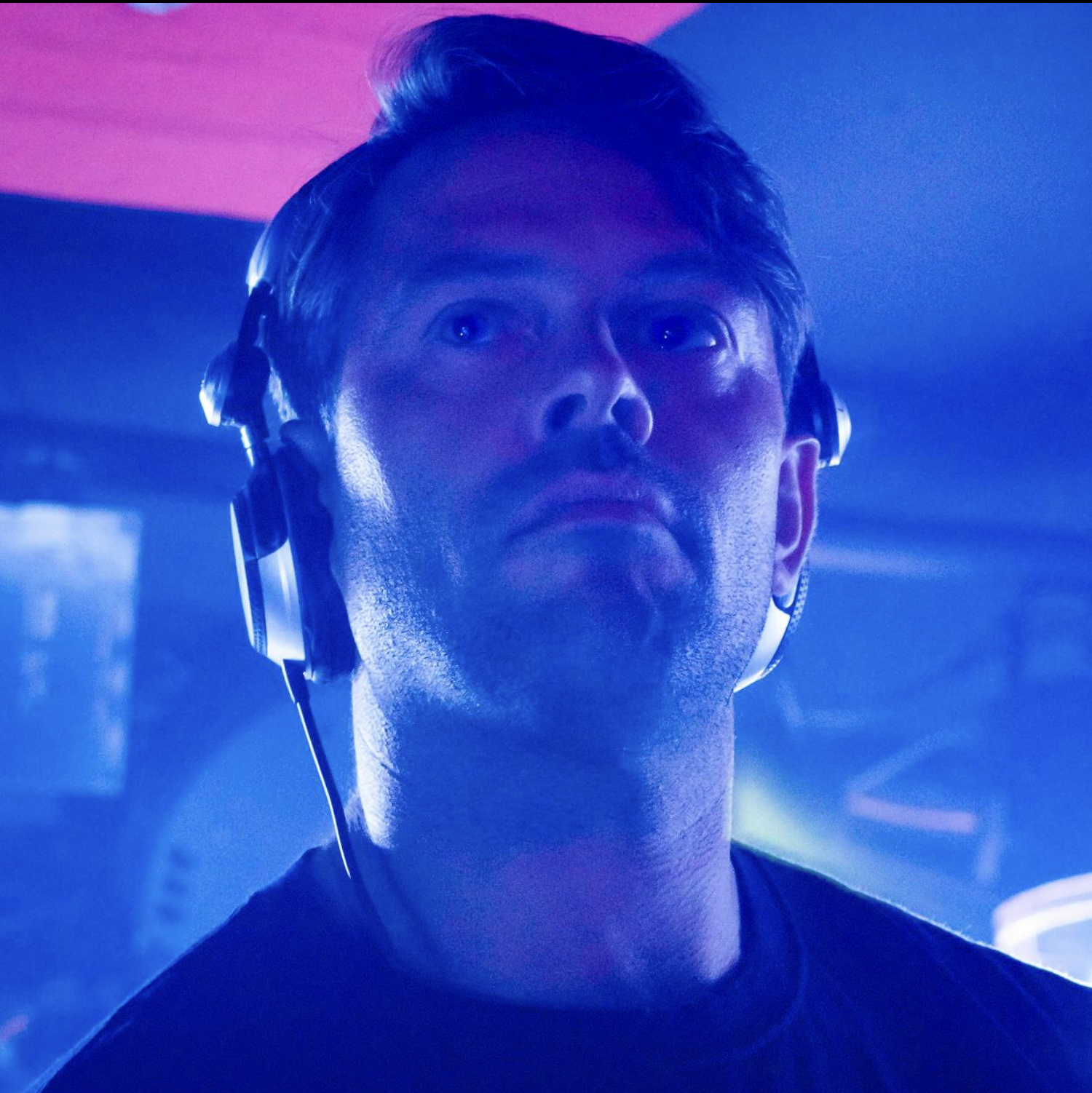
Lee Rous is one half of Plump DJs — the UK breakbeat duo behind A Plump Night Out, a string of Finger Lickin’ Records releases, and a global touring career that took them from Field Day Sydney to Coachella. Lee learned to mix on Matt Cantor's 1210s at university, put on some of the UK's first big beat breakdance nights in the mid-90s, and helped build one of the breakbeat scene's most enduring brands.
In 2026, the Plump DJs are celebrating 25 years of Plump Night Out with an Australia and UK tour, new music including Night of the Baku on Walsh 83 Records, and a creative partnership that's still going strong — Andy on production, Lee road-testing tracks on the road. As Lee puts it: "I found what I'm supposed to be doing."
Lee learned to mix on Matt Cantor's turntables at university. Matt went on to co-found The Freestylers — and the Plump DJs/Freestylers connection runs deep through the Fresnova Records orbit. Hear Aston Harvey's side of the story in Episode 14: The Freestylers.
Nan's Record Player to the UK Breaks Scene
What's up everyone? Welcome back to A DJ's Journey. This is an exciting time for the show right now. Over the course of the show, we've been documenting the story of breakbeat culture from the inside, the people who built it, the DC funk underground with Fort Knox Five and soon to be explored further in an episode with All Good Funk Alliance, the UK breaks explosion with Simon Shackleton, Lee Coombs, Jem Stone, Krafty Kuts, The Freestylers. And now we go deeper today in that UK thread. I sat down with Lee Rous, one half of the Plump DJs. This year is the 25th anniversary of A Plump's Night Out. And what I love about Lee and the Plumps, they're invigorated. They've got new music, they've got energy, they still have gas in the tank. You can feel it. We're going to get into all of it. The early UK break scene, how A Plump's Night Out became an institution, what keeps the creative fire going after two and a half decades, and where the sound is headed. And I'll say this, if you've been following the last few episodes, stay locked in. In the coming weeks, I'm gonna continue to map out the UK break scene, including one of the biggest names in all of electronic music history. You don't wanna miss them. Let's get into it.
Hello and welcome to another episode of A DJ's Journey. My name is Deckard and I am thrilled and honored to have one half of the Plump DJs here. Lee, welcome to the podcast.
How you doing, Keith? Thanks for taking the time out.
Thank you for taking the time. It's been quite a while since I've had the pleasure and it's always been a good time every time there's been anything Plump DJs involved, so happy to have you aboard.
That's really nice to hear that we've got that brand consistency.
Yes, 100%. Okay, so let's dive in. Same question I ask everybody to start with. What was music like for you growing up? What was music like for you as a child in your household?
We were quite kind of music oriented family, albeit no one could play any instruments. But big appreciators of soul music from my mum's side. And my dad liked his rock and roll. So I took soul and Motown on one side and then rock and roll on the other really. And then my dad used to sit up late with his big speakers on listening to deep rock. And then we used the same system for the parties at home. There was always quite a lot of parties at home. And I suppose that's where I got my sort of love, initial love of music really was from enjoying it with my parents.
What bands or singers who stood out for you that you can really remember from back then?
My dad's side, was a big fan of Pink Floyd and ELO and also Crosby, Stills and Nash. Quite a diverse mix of music really. And then my mum really brought sort of Diana Ross and the kind of soul legends into the household. And then sort of followed with some disco as well. So yeah, that was quite key. I got, my nan gave me a really old fashioned, very old fashioned early record player, which you could stack up loads of records on. And I used to just raid my parents' record collection, just stack all the tunes up and play them over and over again. Yeah, was a real fun childhood. I really have a lot of fond memories of music and laughs.
So no instruments in the house. Did you find yourself gravitating towards it into your teen years? I really got to be a music fanatic and I had kind of dreamed of being more of like an FM radio DJ. What was your inroads, when did you start heading towards DJing or making music?
Oddly, I played a part of a DJ at my school play when I was like seven or something like that. And I didn't even know why at that point that I was attracted to that role. I then kind of went, really wanted to play the classical guitar. So I learned to play the Spanish classical guitar at school. And that just pulled me more into music really. But I was kind of slightly pushed away from it because it just seemed from my parents' perspective like a bit of a hard career to get their heads around. So I was very starstruck by my dad and he was trained to become an architect, a draftsman and worked in design and engineering and I just followed suit really. So I was kind of reunited with music again in my later teens, mid teens when I started raving and then when I went to university. So yeah, it was kind of a renaissance of sorts in my teens.
What years were that? When you started getting into raving, what era was that?
I must have been sort of 17, 18. Before then I was really into the hip hop that was coming over from the States at school. Used to write graffiti in my, all over my school books as many people did. And pretended to break dance where we could.
This is an ongoing theme, talking to Coombs about that as well. And he mentioned the same thing, like getting out the cardboard and people learning to break dance. What year was that around?
It's sort of like late 80s, early 90s really when I started getting into the earliest rap which was coming over from the States. Rappers Delight. And then just through friends. One of my best friends still, he was big into hip hop and basically showed me Public Enemy and that blew my head off.
And then another mate of mine was a local hero, hip hop DJ, an enthusiast and he showed me he had some belt drive turntables and showed me the way on those. Then at university, I made a friend called Matt who ended up being, well, it's Matt from The Freestylers. And he was rare in his community because he was the guy with the turntables and he had some 1210s and let me learn to mix on those. So I really owe these key characters a lot really.
That's pretty amazing. So you were tied in with the Freestylers in a sense. Were you starting, like for me, I know when I started hopping on the turntables, I wanted to be proficient at least. When I heard from other DJs, I felt like I didn't want to play out until I could at least get some semblance of that quality behind the decks. What was your path like? Were you playing in the bedroom, did you start playing house parties, did you start playing out in bars, clubs, dances?
I managed to get some money together to get my own 1210s. And after practicing for two summers on Matt's decks with too much of his annoyance, I ended up playing at a mate's birthday party. And I think it was just at that time I was a bit lost. My career had fallen apart because it was a recession. I couldn't get the work I wanted to. But then I was getting loads of sort of green flags every time I did things that were related to music. So every time I played records, I was getting really good results. And every time I did anything with musical instruments, I was picking things up very quickly. And I just thought that I could be on to something here. And I started working as a runner at a record label, Fresnova Records, and performing on stage with Strike, which was Matt's previous band.
Matt and Andy, Andy Gardner, the other half of Plump DJs, Matt and Andy had got together and made this tune that went to number three in the charts in the UK. So I was driving them around in my car and pretending to play the keyboards on stage and just immersing myself in music. And my parents let me go and live with them for a bit because they realized that I was onto something. And then I started putting on my own nights really to try and make some money. I was putting on breakdance, hip hop breakdance events where we were playing music for break dancers. And really we had scratch turntables as well as two 1210s for mixing and programming the earliest Big Beat artists from all over London. And I used to do the warmup, I used to bring the lino as well and help out on the door and do the promotion to put the event on. So I was right in at the deep end, not really earning any money as such, but taking some from the door. I used to make sure that the break dancers got paid more than me, because that's the only way that I would have it at the time. There was only a small amount of money in the pot.
That was my kind of policy really, was to be last in the line for a long time until we started earning a bit of money and then things went from strength to strength from there.
So that was like kind of through the acid house days as well then, right. And for myself, my music background was all over the place. It was pop, alternative, a little bit of rock, a little electronic and then it kind of started fusing together in the nineties. Fatboy Slim for me was the one that really kind of solidified everything. And then I discovered, well, I decided in '99 I was going to start DJing. And so that's when I really, for me, Finger Lickin' was huge because there was this conglomeration of, wow, almost any record I got off the label is a banger. And so I am curious, if you can indulge me a little bit more on that. I'm a huge Big Beat guy and it kind of saddens me a little bit that a lot of music from that time was really pre-digital era. So if you don't have it on vinyl, there's this section of time where I feel like a lot of that music is not archived very well. So tell me a little bit more about that Big Beat era, maybe even before things took off for you.
Finger Lickin' Records & the Big Beat Explosion
So we were, before then, we were fully immersed in, well I was fully immersed in house music. I suppose from the love of disco as a kid. And also the fortune of meeting Matt and Andy, Matt at university, and their success with their house act, Strike, and me working at that record label. It was a real, you know, just summers of love really and lots of hedonism touring the country performing at the biggest clubs in the country at the time as Strike, as a pretend piano player or keyboard player. But what happened was the music at the time in the charts and a lot of the music started becoming really too hands in the air really. It lost its edge, there was a saturation of this handbag house that was a draw to us at first, but then there was just too much of it. We felt a need for more edge, more heads down, more innovation in the music that we wanted to listen to. And the tunes we were finding we were most drawn to were early breakbeat records being dropped in house sets and the early works of the Chemical Brothers, the early works of Fatboy Slim.
And the knee-jerk to that was putting on these break dance events and creating our own kind of environment because we weren't getting what we wanted out of the environment that we were enjoying at the time. So I suppose our first event we put on was in 1994, 95, and that was really, really early Big Beat era. And in many ways, Fresnova had just started. There was Bolshi Records, there was Fatboy Slim's label run by Midfield General. And as I say, early Skint Records. But yeah, we just immersed in that. We had a hip hop edge to what we were doing, even playing instrumental hip hop records at double speed just to try and add fuel for the break dancers. And it was a natural progression then to make music, dance floor music around breakbeats.
As a yin to the yang, and there was loads of other people around the world at the time, like yourself, experiencing that same thing. And I think you get that quite a lot. You get a kind of collective consciousness, but it's basically a kind of opposition to the narrative that might be saturated in some way. And you get that cycle, which goes kind of 10 years and you get a circle of over about 20 years, where things start coming back again. Like this great example at the moment, you've got breakbeat coming back again fully now, 20 years after its heyday in the mid 2000s. And things have always seemed to have gone like that. They do that in fashion too. But yeah, that early year of Big Beat was so fresh and like you say everything on vinyl. Record shop culture, in its heyday in many ways. And just before people had started producing loads of stuff digitally with soft synths software, more computer-based music really. And it was a really lovely analogue period of dance music that I'll fondly look back on.
So when did you, I'm trying to think, I remember I went to Ibiza in 2000 and I remember there was a Bar M compilation. This might be the first time I can remember you guys. I don't know if you remember. I can't remember what song it was.
Probably Morning Sun or something like that if it was an Ibiza compilation. I don't know that we were featuring too heavily.
It was a sunny day mix kind of thing. But you guys mixed in because it was a breakbeat, but it was funky. Did you have a song Galaxy, something Galaxy in the title?
Yeah, it was War Galaxy, which is a record by the band War. Galaxies of real favourites of ours. We got a chance to remix it and it was one of our first remixes really. In fact, our first proper professional remix was that or Here We Go by the Freestylers. But yeah, I can see how that would fit the right tempo. 126, 124.
So for me, I was more of a breakbeat guy, but I'm going, this is interesting. You've got your Basement Jaxxs and whatever, but then you've got the breakbeat side, and you can nicely mix the two in together. It doesn't have to be quite so siloed. So I am curious then, going back to you and Andy and Matt, at what point did you go from DJing to actually getting in the studio? And when did you and Andy become a real thing, and how did he break off from Freestylers?
So he was working with Matt on the Strike project and then Matt started working with Andrew Galea and Aston Harvey who were in Soul Brothers and Aston obviously Blapps Posse originally and their history goes way back. And then Matt started working with those guys and he was making music as Bowser and as Cut and Paste with Matt on Fresnova Records. And everyone was really just experimenting, working with each other and just experimenting with new ideas. And there was no real framework to what we were doing in terms of we weren't having to conform to too much of a narrative other than the music having breakbeat as a sort of fuel.
I'd experimented doing some work on a Fresco All-Stars EP with my friend Chris who taught me first DJ, really to teach me how to play records. Matt had some other one-off records on this EP. And I'd also worked with Billy Berez as well, who's working with Stanton Warriors at the moment. Billy from Lock Up fame. And I did a record called Dat Brat. We'd formed an act called Dat Brat and we had a record on the Rough Technique album, which was on Fresnova as well. So we were all really just trying to find a moment to get in the studio and put something down and calling ourselves different titles. And it was a real kind of rich time.
And we had some of these backroom shows, our first shows, we were having a chance to play these tunes and at some times rubbing shoulders with the big dogs because the Chemical Brothers and Fatboy Slim in the early part weren't big floor acts at all. They were playing backrooms as well with us. And it was a really interesting time, hearing those guys playing our records and us playing theirs. And yeah, was a wonderful era for music and then discovering people like yourself and other DJs around London that were playing breakbeat and had their own breakbeat nights.
And it was like we'd get a call from Bristol, "we've got our own breakbeat night, you've got to come up and play," and we'd go up there and play and they would come down and play with our night. And none of us were on money, it really wasn't too much of a thing then. Just getting a few handfuls of people in the back room of your pub was big. So that was a great era.
Being in America and getting things like Chemical Brothers, the Heavenly Social, and with Fatboy, Big Beat Boutique, from my side it was like, wow, I wish I could go out on any night and find music like this. I'm having to scour the internet. Local DJs really weren't playing that except maybe you'd run into a side room at night and there was a breaks guy. At least until I moved to San Francisco, and that obviously was a big game changer for me in this whole scene. So it sounds like there was a lot of collaboration. Was this still the late nineties you're talking about?
I suppose it was like mid 90s was the kind of start of all of that and then we progressed through to the start of the event side of things, us putting on these small breakbeat nights, in the mid 90s era. And then that built in success and we were all spending more and more time in the studio. And I suppose Freestylers broke through then, I think '97 when they broke through with B-Boy Stance. That obviously affected all of us because suddenly the focus was on Fresnova Records and Freestylers were travelling all around the world. And those break dancers that had turned up to a small breakbeat night in the back room of a pub were now on a massive stage in front of 60,000 people at Glastonbury.
Suddenly there was that Big Beat explosion which happened in a very short period of time. And then Andy and I, well I was doing very well. I started DJing under the name of Lee Fresnova and I was getting my first abroad shows and DJing up and down the country at these gigs. And Matt was doing very well with the Freestylers and Andy wanted to DJ more and I wanted to get in the studio. And I was programming Andy to DJ some of my parties and we were friends anyway, we'd already known each other for years. And one of us said, "let's pool our resources, you share the studio and I'll share the gigs," and so we started doing that. And we needed to call ourselves something and Plump DJs seemed like a good name at the time. Whether it was or not is another question but we liked it.
I think it stood the test of time. And there's something about it that's a little cheeky, but also the "plump" part is like, your sound is big, so it fits. A little tongue in cheek. It's worked out well.
Yeah, well, thank you. I think that was our main thing really. We definitely had enough of any kind of pretentiousness that we'd encountered in the music industry before that point. And Plump DJs, everything was fat, Ph this, fat that. And I suppose that was driven really by all our love for Fatboy Slim's work and the cultural side of that. And we were like, well, we're not fat, we're Plump. And we liked the tongue-in-cheek aspect of that and the onomatopoeic nature of the word. We got some opposition from it initially, which is fair enough, because a lot of our friends were putting on their own nights and they were like, "can't you call yourself something a bit cooler than that?" And it was funny, we stuck with it and then it kind of stuck with us really.
At what point was it, was there a particular vinyl you put out that really hit where you guys could kind of feel like, okay, we're ascending here?
Breaking Through: From Fabric to Field Day
It's interesting because some of the interviews back in the day, in many people's minds we sort of shot quite quickly to some success, but actually we'd been at it for quite some time with small pockets of successes here and there. So when we did kind of break through and started getting into some of the bigger magazines, I think there was one year where we were suddenly on the front page of a couple of magazines, but prior to that, we'd been nudging away for ages. So we'd appeared in smaller columns or in review sections or top tens. So I don't think there was any one, and because we've not had any pop hits, we never crossed over to the mainstream in many countries. We did a bit in Australia, but that's another story.
We went on tour with Orbital, which was a real big step up for us because suddenly we were DJing in front of big stadiums. Getting our first show at Fabric was another big step up for us. Our night progressively got bigger and bigger, so we went from a small venue to a medium venue to a large one. So that was slow progress and a lot of work. And then we were very prolific and productive and we had a lot of releases. We were constantly in the studio, constantly putting records out wherever we could in the Fresnova era and then in the Finger Lickin' era, we were so heavily supported by that label that there must have been a record every two months for at least two or three years, it seemed.
Not only were you prolific, but at some point in there, at least from my perspective, you guys were amongst those other acts that loved the music. And it was all part of this pool of Big Beat and breaks and this newer sound. And I don't remember what year it was that you guys came out with Scram, but let me tell you, when Scram came out, I still remember, my buddy bought the vinyl first week it was available. And he played it for me in a basement. And it was like one of those moments of, whoa, this sounds a little bit different, a little bigger. That electrical sound, that zapping sound in there. And then a couple of weeks later we went up to Whistler BC, and I think Marcus Wyatt was playing, a house guy, and he drops that in and the place went bananas.
So when I think of you guys, I was already getting your records before then, but to me there was a real "okay, you guys figured something out in your sound and you sounded more distinctive." And I think you mentioned it earlier about wanting to be innovative. I forget which album that ended up being on, but it sounded to me like from say 2000 to 2005, you elevated your sound. You guys were on an innovative streak, making the sound fresh and still hitting big.
Thank you. It's lovely to hear those stories of our records being played. Back in the day we used to get a bit of news from that. I think I heard that Sasha, who was both of our heroes, DJ Sasha, he played Remember My Name and nobody had it on vinyl and he played it at some big stadium gig over in the States and we got called. Me and Andy were still at that time, late 90s, still not playing any massive floors. And we just couldn't believe what was going on.
So there's some interesting things. The Plump Night Out album, which is really our kind of first breakthrough passage of music, was a compilation. So although it's referred to as an album, it was actually a retrospective. I think it came out in 2000, November the 1st. Some of the music on there we'd actually made two and a half years before. Finger Lickin' were like, let's put some of these releases together on a compilation and add some of your remixes. Because I think they were pushing for us to have a body of music. It's interesting that it's seen as an album, but it's actually a compilation. And on there you've got things like War Galaxy, the track that you liked. But also you've got Scram on there and Bumper as well.
Andy and I going through this musical evolution very intensely and really over only two or three years, whereby I didn't know anything about studio music at all at the start of it. I'd had a couple of small sessions with other engineers and I was a complete novice. I didn't really know anything about the technicality of music at all. And Andy is an absolute musical genius. So it was a combination of both of our enthusiasm. We were like mad scientists in a way. I was like, "well, can we do this? Can we do that?" And we only had limited equipment. We were rigging up inline guitar pedals and just trying to crank what we could out of Andy's incredible array of analogue kit. And we were just like kids in a sweet shop. Like, what can we get out of this? How can we make a sound that no one's heard before? And all that enthusiasm just led to a quite fast progression that you've illustrated, where you've gone from that very disco, very funky sound to suddenly Scram and Bumper which is technically very advanced for its era and we were really pushing each other and spending ages on these tunes.
Bumper took six weeks to make because we couldn't pull it off the desk because we didn't have flying faders and we didn't like taping the desk up as a reference because it would never be exactly the same when you push the faders back. We were exacting in our needs so we preferred to just have the mix up there. Some of these tunes, the depth of detail is mad. And then you combine that with Fabric and suddenly we had the best sound system in the world to experiment with this new kind of gusto we had with experimental music. So you hear the sound suddenly go very much deeper, much more technical, maybe less funky in some way, maybe more techno inspired.
And I can tell you too, being in that era, I lived in Seattle up until 2005. By that time, Big Beat had kind of run its course, but new school breaks and breaks in general were still a big thing. My two inflection points, one was every year we'd go to Whistler. Me and my buddy, we met locals there and they'd invite us to DJ. In 2003 he and I were one of the few DJs up there playing breaks. Then within one year's time, we go back and nearly every DJ up there was playing breaks. And by 2005, same thing. It was interesting because they were really heavy into funky house. And when I moved to San Francisco in 2005, it was obvious that they had had the same transformation. In say 2002, 2003, it was all about house. And then especially combined with the Burning Man scene. I forget what year it was that you and Andy came to play in San Francisco.
Might have been a very blurry time.
But it really laid that foundation for what became, at least for the Bay Area, breakbeat is still, it's had its ups and downs. But to this day, if I go out and play house music, people will come up to me and just go "breaks, breaks." So if I'm playing bass house or something, people still ask for breakbeat. And so I look at you guys as being, you know, Fatboy kind of moved away from Big Beat, he started playing different stuff, but you guys and Stanton Warriors, there's a few of you diehards that have really been able to maintain in what's pretty difficult, because breakbeat is not front and centre for everybody.
No. Yeah, I mean, it had an era where it was everywhere. I remember the big house DJs were starting to struggle getting shows and we were like everywhere. And all of our pals and colleagues up and down the country and in different countries were going through the same thing. Local DJs and local producers suddenly getting some stage on the world scene all around this genre of music. It really was omnipresent for at least a decade. Fantastic era, and just such a wonderful thing to be able to come over to San Francisco and play. We did some fantastic shows, but I always remember we did one of the earliest silent discos on the beach. I was just so blown away by the edge of a lot of the San Franciscans that we met and the enthusiasm for the genre as well.
It's amazing to be a part of any explosion like that and to be on the front of it. We were very, very lucky.
And you mentioned Australia earlier and that struck a chord with me. I remember seeing a picture of you guys playing with a field of probably 20 something thousand people in Australia. I just remember thinking, wow, breakbeat has grown up, you can do a whole entire festival with thousands of people just rocking out to it.
Yeah, was mad. I think the first big one for us over there was playing alongside Felix the Housecat who I had the fortune to meet again and DJ with last year at the Ministry of Sound tour over there. And that was Field Day in Sydney. And I think there might have been 20, 30,000 people. And that was when we just made Scram. So we took a dub plate of Scram over there. I think we'd only just played it in one club in the UK. That was a big debut for the record and we were trembling putting the needle on.
Australia, I mean, the Triple J radio station, we've got a lot to thank for because they programme underground music alongside pop music on a day-to-day basis during the day and at peak times. And what that means is that the music can cross over into popular domain. At that point we'd only been, albeit we'd featured in adverts and stuff on telly and we were being used in the background on radio stations and in sports adverts and Levi's commercials. We weren't on daytime radio in the UK, but in Australia we were. And I think that was one of the main reasons why we had such a crossover in Australia, whereas we didn't really get that in any other country. We still remained a specialist sound or a big club sound, rather than crossing over to popular culture. I can't really see another reason why, other than that the Australians must have a better taste in music than anywhere else.
So I'm curious, around 2008 or so, it went from the electro sound going really big around 2006, 2007, and then from electro that's kind of when EDM started, more festival oriented, all about the drops and all that. During that time in America, did you guys find there were certain cities or festivals that were more accepting of your sound, that knew who you guys were, or was it pretty broad?
It was very, very different. Every state we went to, which is like every country in Europe, the cultures and the tastes of each place are very different. But I mean, we had some incredible shows. The show we did at Coachella was just absolutely immense. Even though it was kind of relatively late, it was definitely after our heyday period really, but the reception we got was huge. And then the electro era came after the breakbeat era, I suppose, of the mid 2000s. And then onto the EDM after that. But our music became influenced by the popular music of the time as well. So you can hear some electro influences in our late 2000s music, which peaked with the Headfresh album in 2010.
So lovely to be around for a long period of time from the late 90s through the 2000s and be experiencing those events on the world scene. And even still now, I think we're going to Canada this year, first time in 10 years, and applying for American working visas, so we can hopefully get out at the end of this year as well.
Very good. Maybe need to bring you back to San Francisco again.
I would love that.
You and Andy both came to San Francisco and DJed. How do you guys break that down? I imagine that he's not going out and DJing all the time. What's the breakdown of work? And what's that relationship been like over the years? Have you had periods where you took time apart, or have you always been working together?
We've been pretty stuck like glue since we started The Plumps. The relationship dynamics changed a lot over time from the first era I was telling you about, my naivety and enthusiasm and Andy's musical prowess. Me being out and putting on my own nights, we were working with some great promoters of the era. Steve Blonde who went on to run Fabric, who was very instrumental, and our friend Azmi who helped promote those early events. And then my relationship with Andy over the years, I got more proficient in the studio. At one point I was more hands-on programming as well. But then the demands on us became a lot greater musically and Andy was much faster really. So I sort of took a slightly more back seat and Andy was just so super fast on the Akai back in those days. Everyone was working to our best attributes as it were. So we'd be working side by side throughout most of the record.
Nowadays we're not side by side for most of the record. I oversee more than I used to. We'll have a small nuts and bolts session and then I'll leave Andy to get on with the engineering and getting the general mix together. And then we'll get together and fine-tooth comb the records and look at general arrangement and change what we need to and look at content and theme. And then I'm road testing the tunes myself because Andy sort of hasn't hung his headphones up entirely but he's taking long breaks since Covid. He's always loved the studio more than DJing so for him it's a natural thing. And I'm in there once or twice a week and then I'm road testing the tracks and feeding back to Andy.
And we're getting on better than ever now. There's a kind of brotherly level to our relationship, albeit annoying brothers.
Is there any other kind of brotherly love? Is the annoying kind as well?
It has to be as annoying as possible. But yeah, we've got each other's back. And there was a period where we didn't realise that and there was more quarrels. But we're still there. We're still making some great tracks. We just made a brand new record called Night of the Baku, which is coming out on Walsh 83 Records from Spain. That's coming out in October and we're so chuffed with that. That's a totally new process for us making that record. And we've got a brand new record underway this week, another breakbeat tune. And we've got the King of the Beats stuff which we've been making as well, which has been really exciting. So yeah, we're just loving it. Absolutely just loving doing what we love and still getting responses, still playing in front of dance floors. We've not really changed that much really. If anything, we're better versions, albeit slower versions of our previous selves.
Maybe more precise. So I do want to ask you about King of Beats. But before I get there, was there in that creative friction or whatever you'd call it between you and Andy, you already mentioned the life cycle. Were you aware at the time? Like I couldn't have guessed, for instance, I was like a pig in slop back in that first part of the electro era. I was like, please don't ever stop, everybody do exactly what you're doing right now for the next five years. I love this music. And invariably it changes and new things emerge. Did you guys go into new recording sessions naturally changing? Or did you ever talk about things moving, dance floors changing, the industry changing? How did you experience the ups and downs of breaks as part of your experience?
I suppose it was always just an evolution for us. That need to constantly keep each other and ourselves inspired and keep the dance floor inspired. If you've got that kind of creative edge, it's very hard to just sit back. You're constantly wanting to try and find new ways to make people dance and you're inspired by new sounds all the time. And I suppose that's what led us to breakbeat in the first instance, from the early funk and soul to the hip hop, that was the rejuvenation. And then 20 years after that we found breakbeat again. And it was always a response to the environment. My love was funk and soul and then rock and roll into disco. And then from disco back into hip hop and then from hip hop away from that into early rave music. And I think that for us has always been a natural progression. I didn't really see any one point where we started to comply at all, it was more just like we were always working as a knee-jerk reaction to the environment.
But I remember going out to Australia and electro had suddenly smashed through and I found myself on the bill with Erol Alkan at an event and the fashions had changed. Australia are fantastic at staying right at the front of fashion and everything had changed from the Hawaiian shirts and the iconic breakbeat combat trousers and big trainers, and it had gone to very small, thin trainers, bootcut jeans, and tighter t-shirts, and mullets again. And I was like, wow, there's a change happening. We were still playing to big floors, but suddenly I'd seen this fashion shift and a slight feeling of not so much immediacy to our music out there. Noticing this other demographic moving in, and it was inspiring and threatening and also interesting to be a part of, responding to it.
I used to love listening to Erol's sets, fantastic. I'm an absolute fanboy of the guy. And we got to travel on Learjets with Justice and Erol and just as they came through in such a big way, much, much bigger than we did with breakbeat. Although maybe proportionally we were as big in our time, the times have changed. The amount of people going out to dance music had increased massively. And these guys came through in a big way. We were realising that maybe the times had changed a little bit, which was sad, but got our blood pulsing as well and made us come out with some new electro-tinged breakbeat. Some of those tracks are our biggest hits like Systematic, Rocket Soul. They're still some of my most played tunes. That's us responding to a new environment and feeling enthused by new music.
Me and my partner Rumble Monk, we sampled Rocket Soul and I feel OK about it because I sent you a messenger note one time. I said, hey, just letting you know we sampled it. And you didn't reply back. I'm like, I'm just going to tacitly say he's OK with it.
Mate, I would have been OK anyway. We made our name off of sampling and we love creative sampling. I never get offended.
And Systematic and I still, I don't know where you'd put the song. God, I'm trying to remember what it's called. It's got a funny name. Bass Weasel, something like that. Does that sound right?
We did a tune which is a remix of a record called Jungle which came out in 2013 or 14 maybe later than that. But I can't remember Jungle, not the member Weasel. We have had some funny names to our records over the years though, so sorry about that.
I just remember at the time it was much more of a 4-4 instead of just full on breaks. And it's a song I kind of forget the name. I'm doing a quick search here. Donna Kebab. Light Fantastic. There's a whole list here. Bumper. Smart Bomb. Smart Bomb was another great one back in the day.
Just looking, the SSX Tricky computer game looks like they're gonna be developing that in a top secret way, including our music soon, which is quite cool to hear. So that's gonna be good. I think you might be hearing those tunes again soon.
Nice. And in Breakfast of Champions, Space Cowboys' big New Year's Day party, in the last couple years I played Dreamland, Dirty Supercar remix, whether it's breaks or house, but just a full-on grabber on that one.
Yeah, what a legendary event. That's Odd Disco. That's my sort of side project, really disco side project under that title for a few years now. So we were really interested to get the chance to remix. Yeah, it's Andy and me.
Is that actually your own remix? OK, awesome. It was great to have Soul Vibrate. And the remixer, how do you say his name?
He did the remix of All I Want, which was about a year or so old. And that's a phenomenal record. And recently he's done the Soul Vibrate remix. He's smashing it. Him and Yo Speed and there's a load of artists in Southern Spain now coming through.
I wanted to jump into that as well. What is that Spain scene like? Could you compare that to what it was like in England and London back in the nineties, or is it totally different?
Well, when we first started going over there, quite early doors for us in the late 90s, they were having a massive rave scene that developed its own love of fast breakbeat. And we got pulled into that and got asked to go out and play. And the raves were huge and had a real gritty edge. They were quite illegal, some of them. We'd go out there and travel for hours up into the mountains to a legal rave and then get told we've got to go to another village where the rave's been moved to because the police had closed the first one down. And it was like what we'd experienced in the UK in the 90s, but almost crystallised.
But now that music's been embraced by the generation below and on a larger scale than it was when we first started going out there. So now the young people out there, we're playing to mostly 20 year olds and the raves are even bigger than they were when we went out first time around. And the music that's coming up within that culture is fantastic. And the production levels are top quality and we've got some real stars in the midst there.
DJs and producers from back in the day, Rasko and Lady Paco and Anushka, the list goes on. It's incredible what's happening out there and some absolutely huge promoters, events, organisations and real state of the art stuff going on. So we're really pleased to still be a part of that. Scram being one of the big records for us out there. It became a sort of national anthem in many ways along with other records like Boom Blast and The Freestylers. These tunes have been supported down in the South for such a long time.
King of the Beats & 25 Years of Plump Night Out
Tell me about King of the Beats.
Over lockdown we were losing our minds as everyone was and being creatives as well, losing our minds even more because you've got nothing to work with and you're internalising everything. And our manager Abel said let's get a podcast, let's do a live podcast. And we did a group podcast and just thought up a name quickly. And we got a great response from that. And then we got a strange opportunity to DJ on a big riverboat in the middle of lockdown because in the UK you couldn't have more than two people together. But for some reason, if you're working outside, you can have six people together.
So we were like, well, if we're working, we're filming a podcast, surely we can all get together and do a podcast from a boat in the River Thames, right outside the Houses of Parliament. Central London was dead. It was like 28 Days Later, a zombie apocalypse. No one in Central London. Suddenly we found ourselves on a boat with a sound system recording a podcast, me, Aston and Martin. And just because of this funny little loophole, we were going down the Thames in deserted Central London with helicopters flying over, the river police coming up alongside with a megaphone checking out what's going on. And everyone would just check their checklist going, actually technically they're legally allowed to do this.
So we did this podcast and we could hear the music bouncing off of silent London, a hot day, beautiful sun. And literally we had Thames police helicopters flying over us monitoring. We were just innocent people trying to get some music down. And it just led on from there and we started doing gigs and got a great response and we're now making music together. We've known each other in the scene forever, for 30 years, but as individuals. And now we've come together as friends.
Who all makes up King of the Beats? It's yourself, is it Aston?
It's me and Aston from the Freestylers and Martin, Krafty Kuts. So we're constantly joking about the fact that Aston and Martin should have formed a double act ages ago. But we've piratised ourselves with King of the Beats. We've got a first single which came out, Nighthawk, which has gone amazingly well. We've had like 300,000 plays on Spotify. And we've got another tune in the pipeline. We played two nearly sold out shows last weekend and we've already played Glastonbury together on the Glade Stage and we had maybe six, seven thousand people there. And we played our first show in Australia in Perth in November. Things are just rolling there. So got that and Plump DJs. I'm really buzzing at the moment.
And here you are, something like 30 years in and still smiling and still going strong.
Yeah, stronger than ever because we've had that down period where we weren't getting so much love and we weren't getting our numbers at shows and we lost the big manager and lost the big agent and argued loads and nearly fell out and then you couldn't pay the rent. And now I'm managing to be playing two gigs a weekend and just have this back again. We're galvanised, I suppose.
It says something to the endurance as well. I had mentioned to you that I had a list of probably six or seven different names and just kind of like "what happened to" them. Because there were just some beloved artists and you're like, this must be just how difficult the industry is. You hit a certain point and if you can't make enough money, you've got to go make money somewhere else. So it's a huge credit to what you guys have been able to do with not just the Plumps, but being part of this bigger scene as well. Because it's cool to see people like Lee Coombs adjusting on the fly, people doing their Patreons and stuff where you can learn production tips and get bootlegs. So it's great to see. I'd love to see the energy behind it.
A question for you, maybe the old days versus the new days. This is a philosophical question. Is there anything that you might say to DJs that have been around for a while that maybe they don't understand about the new generation?
My experience of the new generation of people coming through is that they seem to be nicer than ever. More considerate, more knowledgeable, more open-minded, less tribal in terms of what they're into. I think when we were coming through we were so tribal about our love for the genre that we found ourselves developing. Breakbeat was like, we lived it. But I think now people are very much more open-minded. They like their dubstep, they like their drum and bass, they like their tech house. They have the knowledge to know that there's the right time for the right music. Whereas we were maybe more naive to that. We just had what was available to us. So I think if anyone's coming through now as a DJ, they'll definitely know more about their era than I do. But I'm just really enthusiastic about the younger people. They're just better at everything than we were, in my mind.
Well, they have more access, right? Between Spotify or Discord or Bandcamp, Beatport, there's just so much.
Yeah, they're much more informed. They're not better people than we were. It's the same humans coming through and just dealing with their environment. But they're so much more informed. And I think maybe the generation at the moment that had their freedom taken away because of Covid when they were 12, 13, 14, 15 years old, they're now coming out and enjoying dance music in their 20s. They're really conscientious of other people's needs and more mindful. And I think that's come from the depravity that they had to deal with. In that fruitful period of our lives when we were leaving school and going out to clubs and bars and meeting people for the first time, we had complete freedom and were completely spoilt, whereas they had to go through all this hardship, couldn't go out, were stuck at home and dealing with mental illness at a young age. But yeah, I think they're just a good bunch of kids coming through.
That's awesome to hear. For someone who's been around for years, your enthusiasm still shines through, which for an industry that can be tough to traverse. And like myself, my own journey through music where I've been in tech and a DJ and it's only been in the last year or so where the tech industry isn't as inviting to me anymore. And I'm like, I'm going all in on the DJ side. It's the thing that I love the most, the thing that I do the best. Is it a struggle? Absolutely. But I'm struggling through something that I still love to this day. I love being able to share that music with people. It's inspiring to hear.
You seem to have found your core. A lot of purpose.
Yeah, and doing this as part of it. I'm obviously not doing this podcast for money, but being able to share as part of the community and being able to do things with Space Cowboys, like a huge joy for me to bring DJ Dan and Krafty together to play a three hour set and just unleash that mayhem.
I saw some of the footage, it was amazing. Absolutely amazing. What you guys have done.
So tell me, I know you've got the Plump Night Out tour. Tell me about that.
Yeah, before I move on to that, just thanks for everything you guys have done for breaks over the years. It's been brilliant. Mirth and all the crew, Breakfast Champions and Space Cowboys and everyone. Just awesome. And you've given platforms to so many UK artists as well over the years and had some great shows. So anyway, just wanted to thank you guys.
What's coming up for us this year? Yeah, 25 years of Plump Night Out. It was released in November 2000 and we're in its 25th year. We are touring like a kind of anniversary reunion tour. We've got Australia tour coming up, gigs in the UK. We're going to try and get a special little secret show in Spain late in the year. We've got some new merch to celebrate that. And yeah, really looking forward to seeing a load of familiar faces again this year.
And obviously King of the Beats as well. We've got new music coming out there. So a lot to enjoy over 2026 already. I think I've got 30 shows on the board, which is great. Booking right into October, November. I'm so chuffed, like yourself. It's not easy when you've been a DJ and been around this long, but I've found what I'm supposed to be doing. So that part of it is really easy because you wake up with a big smile every day.
I'm putting loads more time into social media now, which I hadn't bargained on. I'm now spending more than 50% of my time working on that. The only way I can get through it is see it as a valid artistic outlet, creative outlet and then I enjoy it. And it's a great tool for being able to shout about your music and your gigs. So I'm loving seeing the reactions. More recently, getting crazy numbers, 60,000 views, thousands of likes. It's just mad. I think the algorithm likes me at the moment for some reason.
Well, hopefully it'll shine a light on this one as well. Any other last words?
No, just thanks again to San Franciscans that have enjoyed the breaks and given us the breaks. And hope to be seeing you guys later on this year. And if anyone could get out to any of the UK shows, hit me up on Instagram for guest lists to any of my 25 year Plump Night Out celebrations. And hopefully if you manage to check out our new tune, Night of the Baku, it'll be coming out at the end of the year. I'll be playing that in my set. And thanks so much for the interview, Keith. It's been brilliant.
No, that's great. And yeah, thank you. Obviously Andy's not on the interview, but a big thank you to him as well for all the work that you guys do and everything you've provided to the community and breaks and electronic music lovers at large.
Yeah, big thanks to Andy. He's at present beavering away on our new record and we've bitten off more than we can chew with this idea. So I've got to take my hat off to him.
Well, that's probably a good thing. All right, cheers, thank you.
Have a great afternoon, day, evening and I'll see you soon, mate. Take care, big love.