- 01How a Slick Rick cassette found in an Oklahoma parking lot at age 11 set the entire trajectory — from secret late-night listening sessions to building All Good Funk Alliance
- 02What 18th Street Lounge was actually like in its heyday: crowd turnover every 20 minutes, Thievery Corporation's studio on the fourth floor, and a no-top-40s policy that forced you to read the room in real time
- 03The production breakdown of Swing the South — 90% Frank Cueto's architecture, with Rusty pushing for ABC/D song structures and condensing 8-minute spreads into focused tracks
- 04Why Rusty gave up touring and Burning Man to raise two kids through wedding and corporate DJing — and how doing weddings made him a better DJ
- 05What it was like to open for James Brown: the briefcase full of cash at the stage door, the limo girlfriend, the splits, and beer spilled into the record crate mid-set
- 06How Go-Go and Baltimore Club shaped AGFA's production DNA — from DC's percussion-heavy indigenous sound to BYOB clubs with basketball hoops
- 07The builder-and-navigator dynamic that powers every great electronic duo — the same pattern in Fort Knox Five (Ep 13) and Plump DJs (Ep 15), now confirmed from AGFA's side
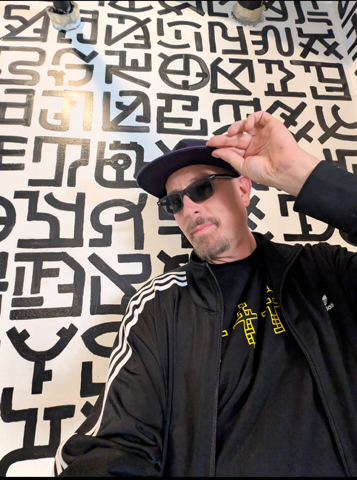
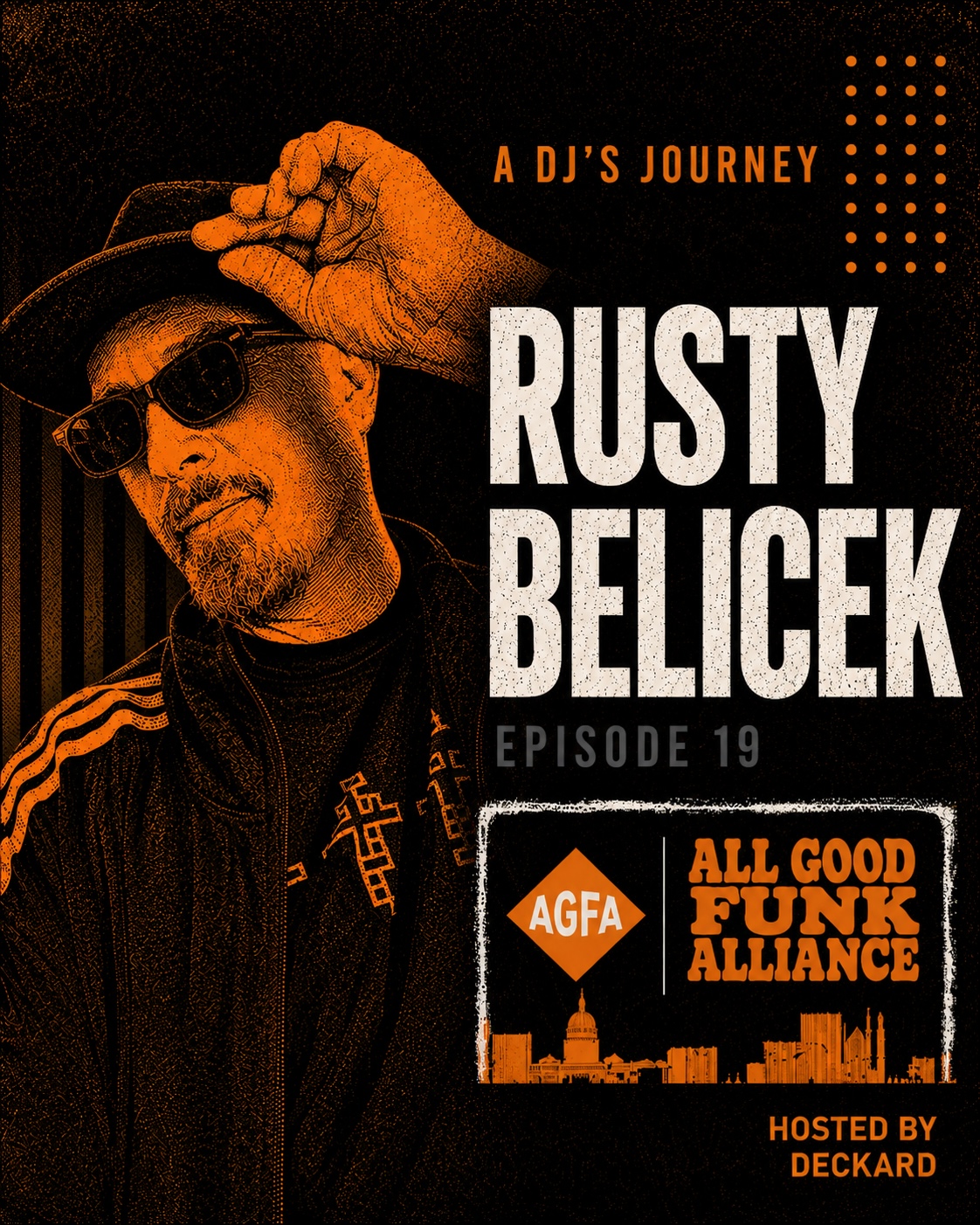
Rusty Belicek is a DJ, producer, and co-founder of All Good Funk Alliance alongside Frank Cueto. Growing up in Oklahoma in a Seventh-day Adventist household with no secular music allowed, Rusty discovered hip-hop at age 11 through a Slick Rick cassette found in a parking lot — and that tape set everything in motion. After moving to the DC area via his stepfather's Air Force career, he met Frank Cueto at NOVA community college, and together they built AGFA into one of the defining acts of the mid-tempo breakbeat and nu-funk movement.
In DC, Rusty held residencies at 18th Street Lounge and became the go-to opener and closer at U Street Music Hall, supporting acts from Nightmares on Wax to LTJ Bukem. He co-founded the Funk Weapons label, released music through Fort Knox Recordings, and helped build the DC park party culture that drew crowds of all backgrounds with classic funk and soul. After giving up touring to raise two kids — pivoting to wedding and corporate DJing — Rusty moved to Tahoe, where he now works at a hardware store four days a week and uses his three days off to produce music, run a Patreon with monthly mixes and mashups, and prove that limitation is a productivity engine.
Fort Knox Five (Steve Raskin) appears in Episode 13. Rusty confirms Raskin's account of the DC label family, adds the WMC falling out with John H, the studio sessions where FK5 moved them from Cubase to Pro Tools, and the shared mastering engineer (Holmes Ives, who also mastered Thievery Corporation). The builder-and-navigator dynamic in AGFA mirrors the Raskin/John H split in Fort Knox Five.
Qdup appears in Episode 4. Rusty confirms at 20:39 that he got Jason (Qdup) into wedding DJing — a detail Qdup referenced in his own episode. Together, these two episodes complete the DC community triangle.
Plump DJs (Lee Rous) appears in Episode 15. Lee told Deckard at 6am after their first US gig that London had a scene but not a community like San Francisco. Rusty confirms this from the other direction — went to Fabric, “didn't feel the community vibe at all.” DC and Northern California had genuine community. Both episodes also explore the builder-and-navigator dynamic in electronic duos.
Damian Harris appears in Episode 18. Both episodes explore giving up one version of a career for something more sustainable — Damian leaving Skint, Rusty leaving touring — and finding that the constraints created better work.
Read Full Transcript ↓
Welcome to another episode of a DJ's Journey. My name is Deckard and this episode I am thrilled to have on Rusty B from All Good Funk Alliance. Welcome Rusty.
Hey, thanks for having me, brother. Appreciate it.
Absolutely. Excited to have you on, excited to talk about your journey, excited to talk about the funk music, all of that. And let's dive in. So tell me about music for you growing up. When do you remember the first time music grabbed you?
So it's actually my very first memory and it's sitting in my mother's bedroom and she had a small TV and is when they first played Star Wars on TV and I remember the soundtrack really captivating me John Williams, obviously amazing like just just The movie was great. Obviously, I Star Wars, know, everyone loves that movie, but the music and the sound Really just captivated me. I was like, what is this? What I wanted to know more and I was really into that soundtrack. I loved it. And same thing for Frank, my partner in All Good Fun Clients. His first musical memory we were talking about was Chariots of Fire. And his dad had a piano at the time and he learned the melody and would have his sisters bang out on pots and pans to make the beats and do everything. So both our first musical memories are actually a soundtrack, which is pretty interesting. I never knew that about him. You know, it was something I asked recently and I was like, wow, we both have kind of a similar beginning.
from movies.
And then from there, my sister and mom had a record collection. And I wasn't really captivated by most of what they had, but my sister did have Off the Wall by Michael Jackson. And that was something I just listened to over and over again when I was, you know, in the house listening to music. And that led me to buying my first record, which was Thriller, when that came out. But I was really into that. then, was in and out. My parents would listen to, my mom would listen to Motown. And so I would enjoy the Motown stuff. I didn't really love Dire Straits and the rock stuff she liked, but I kind of get it now. But in my area, kind of like you, I was captivated by Duran Duran early on and that kind of stuff.
early 80s.
Yeah, yeah, yeah. That's, mean, all that synth pop stuff was like, this is cool. It's different. It's fun. Yeah. Bybie and then, you know, punk rock for me as well. And Fugazi, Bad Brains, Black Flag, along with like, you know, just whatever else. I listened to The Cure, Depeche Mode was big, New Order, and rap. Rap was a big part.
Right. What was your first concert you to, you remember going to?
With the very first concert I ever went to was at a state fair in Oklahoma. That's where I grew up was Gerardo Rico Suave was the song It wasn't really a concert concert it was this kind of a thing at a fairground But the first one I actually went to that was a big-ass concert was my sister dragged me to the Seed the Grateful Dead with Edie Burkell as the opener and I was I was like not into
Rico Smafe. Yeah. Okay.
that music at all. But E. Brickell and the New Bohemians actually like rocked it out. was like, was like, Whoa, I really like this. This is good. And then, you know, to see a Dead Show, I mean, it's different than listening to them live or their albums, obviously. So I was kind of I was like into it. I was sober. I was straight edge at the time. And I was kind of like
Yeah.
offended by all the weed smoke around. I was young. My sister was a weed head, but I was not into it at that time. But I enjoyed it. I this was really cool. And Jerry Garcia was captivating. And the drummer, can't think of his name off the top of my head, Mickey Hart, right? He did this whole drum section that was like, oh, this is cool. It's kind of tribal-ish. It's drummy. It's fun. And yeah, that was exciting. It was a fun, good concert.
When did you, were you playing any instruments at that point?
No, was, mean, I've always said I was tone deaf, but you know, I've done some tone deaf experiments, you know, later in life and like, you know, I'm not actually tone deaf. I'm just lazy probably. ADD-ish, you know, did never focus on anything. You know, I did have the Casio keyboard that everyone had with the sampler, you know, sample your fart or whatever and play it. Yeah. Yes. Yes.
The SK-1. Casio SK-1. Yeah, yeah, yeah.
And we actually still have one. My kids played with it when they were younger. But I was more captivated with actually just taking music that was made and doing pause edit tapes and making my own radio shows and making my own edits of music early on with the two deck tape players. And even recording a radio up to a tape recorder and just from the speaker to the microphone kind of jazz. And in finding out, you turn it really loud and you got it really close, it kind of distorted. And I was like, that's cool. And then you could, you I don't know, it was different experiments I did early on. And that really kind of led to my love of sample music and that kind of thing. But I had a unique experience happen when I was younger. I lived with my dad in Stepmom at the time. They were Seventh-day Adventists, and they didn't allow you to have secular music or any music that wasn't church music around. And I had a tape player to listen to Bible stories on. And one day they took me to the grocery store and they're like, you got to stay in the car. I'm like, you know, because I always wanted to go in and pick something. I'm sure annoy them or play the Star Wars video game in the entrance. But I looked on the ground and I saw a tape. like, went out, scooped that tape up, looked at it. It was Slick Rick. The first Slick Rick out. And it's dirty. It's a dirty album. I was probably 11, 12 years old. But I took that home and listened to it every night when my parents went to sleep.
yeah, yeah.
And we just just captivated by the beats and the rap. I was like, know, Oklahoma, you didn't have a lot of rap at that time. So that was like, whoa, I love this. This is what I want to do. I get that point. I was like, I want to DJ and I want to get my own rapper. I'm moving to New York. Like I had this whole plan in my head. I'm like, I got to do something. And then, you know, of course, I were like there was like a break dance. tape that you got that came with a poster that showed you how to do all the moves. And I wanted to be in a break dance crew. And I thought I was, you know, I'm I'm New York. Like I want to do all this and no one in Oklahoma was vibing with that. So I had no one that really connected on that tip. So was kind of a personal thing that I loved. But yeah, it was, was interesting.
Right. That's awesome. You have that in common with having interviewed a lot of the UK breakbeat guys and that common story of we need to get some cardboard and go out and do this. I think it's so funny, but I guess it just shows just how influential rap was across the board. Everybody, every white or black kid was just sitting here going, this is so cool. This is kind of life changing in different ways.
Thank you.
So when did you go from the kid in Oklahoma with Dreams of New York to moving to the Northeast?
So my mom married my stepdad, Dennis Shepherd, he was great. And he was in the Air Force and ended up in Arlington, right outside of DC. So we moved there for a while and I was back and forth. I was going back and forth between DC area and Oklahoma. And my dad also moved into Leander, Texas next to Austin, Texas on a horse ranch for a while. So was kind of going back and forth between them, but that's how I found out about Fugazi and kind of that punk sound. I was getting into skateboarding and skateboarding had great music on it. Like you listen to music, you're like, this is cool. So you went out and kind of dug that music and there was like Sonic Youth on there. Dinosaur Jr. like all all sorts of great stuff. So was like that kind of influenced me in a big way. And there was hip hop on there and also, you know, like Jackson five. Just stuff you didn't think that was contextually used in a different way and you're like, oh, this is great. So that was a big influence on me as well.
And when did when did you end up meeting up with Frank? Was that in college before then? Yeah.
Yeah, so I can get into that. Yeah, we met, actually met. So I was, I was in the DC area and back and forth and then eventually ended up moving after I graduated high school from, I lived on the Air Force Academy in Colorado Springs. And after I graduated from there, I moved to Newport News, which is like in Southern Virginia. But I was going to Richmond a lot and then going up to DC in Baltimore and I ended up meeting a girl and we ended up getting married early on. But we ended up moving up to DC and I was getting into the rave scene there. But the rave scene was kind of like at that point where it candy ravers and cheesy and like wasn't very funky. So I was more into going to clubs and after hours and things that had more of a funk vibe. Or if I went to the rave, would be in the side room where the house and breaks kind of stuff was happening. But there would be, was Scott Henry and those guys incorporated breaks and stuff within to theirs. their sound. So, you know, the main room sometimes had a DJ that I was into. But anyway, we were both in those same scenes, but never really crossed paths. We knew friends and stuff. And then I went to community college, Nova, shout out to Nova and got into the music business program. And we both met. We were the only two people in that program that were not heavy metal heads like everyone else in there was like heavy metal. And that was their thing. And so we were kind of he was more on the techno trance. side, I was more on the hip hop and house side. But when we met, kind of like, you know, that's that was kind of how the early All Good Funk Alliance stuff started. It was like a blend of like his really high end trans techno productions with me, like, hey, let's slow it down. Let's add a break beat. Let's add these samples. Let's do this and that. And it was a slow formulation of All Good Funk Alliance. He had a project that we named Fixation that we put out on All Good Funk Alliance records. And no one bought that record. was a, you know, we ended up throwing away copies of that record. It wasn't that great. It was okay. But, know, it was just us figuring it all out. And then that's how we eventually started Funk Weapons and started putting out music under that label. And, you know, we were, we were super inspired by people like Bronx Dogs. A bunch of the sampley kind of breaky artists out there. Of course, you know, Cold Cut, you know, and early influences for us were like Orbital, The Orb, Prodigy. all that stuff like fed into our brains. And that's how we kind of came up with that. We wanted to do more of a mid tempo sound. And it was unfortunate it was never really given a genre within any of the stores. you know, they would just kind of shove us into like, know, miscellaneous or hip hop or, you know, it never really formed its own. know, some stores did. mean, there was Beat Street up in Canada, which would have like a section with our music. then of course, when Fort Knox 5 came out and Thievery and kind of that, you know, it was, it was pushed into down tempo, but it wasn't really down tempo. But as you know, there was a lot of down tempo records that had kind of up tempo tracks on there that were cool. Or there was even house tracks that would have like a weird mid-tempo down tempo song on the B side.
Right, right. Yeah. yeah.
I was big into the first KLF. And even when they were called the Time Lords, I had their single on vinyl and I was like, this is dope. Because they were ahead of their time. of course, Orb did a couple of ambient albums too as well. They did some weird shit that was just different. Excuse my language. But they did some stuff that was different.
Yeah. Yeah.
But yeah, that album blew me away because they're just mixing in Elvis on top of a train sound and some beats. And I'm like, how does this all work? that got me into, that was some of the stuff I started doing at first because I didn't understand beat matching. I still had the big rubber mat on my 1200s. And I didn't know that you're supposed to take that off and put a slip mat underneath that. I didn't understand beat matching. I didn't understand anything until I moved into.
Yeah, yeah, exactly. Yeah, you're saying, yeah.
was living with some DJs later on in my career. yeah, that to me was like, I can do this. I can mix in weird sounds and make it work. So that influenced me early on for sure.
So when you and Frank were, so you started the label first before All Good Funk Alliance as an act then, correct?
No, we were in Act before then. actually had records on Maxi. We had records on a couple of different labels that ended, but they were pushing us in the house direction. They wanted house from us. They didn't want this mid tempo sound. were like, you we would submit all sorts of stuff and they were like, they would take any of the house stuff, but they're like, you know, we're good on this down tempo, mid tempo thing that you guys are doing. But we kind of saw a future in that. we're like, that's we love house. And like we probably
Okay, you are. And did.
could have created a really good career if we just stuck to house and we're just like, let's not be open format, let's be just house. like, cause we had a name going for it. Maxi Records was kind of popping off at that time. They had Big Muff on there. They had a couple of great artists, Julius Papp, I think did a release with them. So it was, it was kind of popping in that direction, but we were, we were like, we like that, but we also want to do other stuff. And so Funk Weapons was more of that, that outlet to be like, Hey, let's do... this other stuff that's not house and see how it goes. The first release Pete sake blew up. I mean, it was before it's kind of before the Serato thing happened. And so we, you know, I remember our first check we got from that was like in the $15,000 range. So it was, it was a lot of money at that time. We're like, wow, like we can actually, you know, make a career out of this, but you know, as you know, Electro clash and electoral house and blog house came along and changed the whole game with downloads and everything else. So. And not that we, you know, we, we, we, we were into that, you know, we were, we were both final DJs. both DJed CDs. then, Frank was an early, early adopter of Serato and a controller. I was like, man, that's just whack. I don't want to play on a controller. I don't want to play that. And, and, but he showed me, you know, one day he brought it over. He's like, once you play on it for a minute before you judge it. I'm like, okay, you know, like anything, you got to listen to it or understand it before you can say you hate it or don't hate it. And I was instantly like, oh, I'm buying a controller.
Right.
And it was the best, really best acts controllers. But what a great machine those were. And that early Serato stuff was like just clean. I saw people playing on the SL1 with the vinyl and struggling to make that all work out, but I heard great sets that way as well. A-skills.
Yeah. Right. I'm still looking, yeah, yeah. And he, forget what that setup he has, but yeah, the vinyl, but then he's got the like the little effects unit or whatever on it as well. What was I gonna say? So going back though, so how old were you, I guess when, so you and Frank were deciding to do the record label. Like, this like you're going full time into music or were you, know,
yeah, yeah.
How were you deciding this to go down this road for a career or was it at that point?
Well, I mean, we both wanted it to be a career, but we were both working day jobs. like, you know, was, know, DC is not a cheap place to live where we were at. But I mean, he lived with his mom for a while and was like just, you know, making, you know, making music and doing his thing, going to school. He went to school full time. We both met in college. I dropped out after two years. He went on to American University and then he got his engineering degree from there when he left. And as soon as he got out of school, he jumped into his full-time career right away. And we were both DJing as much as we could. we were still, like I said, think we kind of had handcuffs on us a bit because there wasn't enough money to get us both out in places. The same thing happened with Fort Knox 5, where John H was going out and Steve was staying at home more. And it wasn't enough budget to bring both of us out. And so that was always kind of a caveat, you who's, you know, and we split off more than, than I think they did. mean, you know, Frank would go and do all the South American stuff and he would go up to Canada every once in a while. I did a lot of Canada stuff. We both went to Europe together. We did, you know, you know, a couple of different tours, you know, separately, but, you know, sometimes there would be a budget, you know, we did like the 10 days off festival in Belgium and we played a bunch of gigs in England together. So, you know, but he came home with a little money. It was more, you know, was more just to get it in and do it. But it wasn't, it wasn't like, you know, we're making a ton of money off of it. I did do full time DJing and production after I had my first kid. And now it was like 2009, 2008. I kind of started getting, but that was my wife at the time was like, I don't want you touring. Like you need to do corporate gigs and do weddings and stuff like that. So I did both. did.
Yeah. Right.
club gigs, a little bit of touring, and then I jumped full on into wedding DJing and corporate DJing for a while, just because it was good money. And it gave me the whole week off with the kids. I would DJ on the weekends and she would work. And so I had, you we never had babysitters, we never had nannies. We just watched them. We were able to just spend that full time with it. But it was, you know, it was also a sacrifice. I stopped going to Burning Man for those years. We didn't travel. We reduced ourselves down to one car. You know, there was a lot of sacrifices made, but they were
Right.
great sacrifices, like just getting to, know, cause kids grow fast. Like they're, know, before you know it, they're teenagers and they don't give it, you know, they don't want to hang out with you. But, you know, they were full time, you know, my, my love and passion for awhile. And it was great. I got to take them to a lot of cool things. I mean, they've seen, they met Kellis, they've, met Reggie Watts. They met some great artists along the way that, know, Tony from Trouble Funk, just, just different people. They were just incredible. crazy places with cool opportunities and were able to get involved and hear great music. mean, they've heard Rich Medina DJ on the Capitol. They've heard neat things, just all through their age. So they actually both have incredible musical ears. They'll come to me all the time and they're like, check out this song. I'm like, wow, this is really good. Or there'll be artists I've been into for years and my daughter would be like, I really like this artist. like, yeah, I used to play you them.
Yeah.
But you know, she's developed her own like very unique style and same with my son. My son doesn't love sharing music with me anymore because you know, he's like, yeah, you'll, you'll, you'll turn me off to it you'll play it so much or you'll get into it. But, you know.
Well, that's got to make you like proud papa though, you're hearing that they have good taste, not just that they're interested, but that they have good taste too, have a good ear.
It does, it does, and I'm actually really proud Actually, they both have really good heads on their shoulders. I'm very proud of them, obviously. They both remain drug free, drink free, and they're in a crazy environment up here in Tahoe. mean, it's not like this clean, know, mountain living can be rough, you know, and there's, you know, it's in any school system these days, they're vaping, doing all the things, you know, I hear all, you know, we're completely honest, I'm completely open about everything. I've told them about all the things, you know, I don't...
Yeah.
I don't hold anything back because I feel like that's where trouble happens. They need to know what the consequences are and what's out there. The traps, there's a million traps, being a young person and not knowing what you're doing in this field.
So, you mentioned, Jason queued up episode four, he mentioned that you had kind of gotten him into the wedding DJing and how that definitely helped pay the bills. And speaking as somebody who has a long career in tech, but myself going, my tech career is more of me working with AI and working on my podcast and automating my life than it is making money directly.
Yep. Right.
But I wanted to ask though, and we'll kind of jump back again in a second, but how did that feel going from being at a time where there was a real explosion of breaks from Big Beat and into the New School breaks and then where you guys fit in. And you're sitting on Breaks Pole Best Artist list.
Yeah.
You know, that's, that's, and you know, for me, especially my taste, you know, that that's amazing because I have so much reverence and love those artists so much. So, so what did that feel like as an artist for you to, like you said, making these sacrifices? what was that like at the time?
I mean at the time to be quite honest I was you know part of me was like heartbroken because I loved going out and touring and playing as much as I could but another part of me was just so enamored with these two kids and We you know we got rid of our TV. We got rid. We didn't really have we had dial-up internet we had really nothing in the house to like You know distract me, so I was just core focused on them. And being in DC, we have all the Smithsonian's and all the things you can go to for free and a bunch of parks. So every day was like, I filled it with activity. I got up and I'm like, Hey, we're gonna go hit this park. We're gonna go do this thing and check this thing out. And I did get to scratch my itch. I you know, I was playing for 18th street lounge, you know, I was, and they would give me a full night and, know, at first I would just do the, the inset or I do the opening set. then I, you know, I eventually got so, so, you into the game with them and they loved me so much that they were just like hey come just handle the port the back deck all night long or the side room all night long And that was really unique and fun and able to stretch all these itches. Cause they were like no top 40s, you know, knowing anything that's going to bring in the generic crowd, like have fun, experiment. So I wasn't limited to just playing like the Thievery Corporation, Down Tempo Sound. And I actually did incorporate that. I would play that early on as people came in. But then we would build up and play like, you know, those mashups, those fun stuff from small town DJs. Fornox 5 were giving me mashups that they didn't put out that were great. me and Frank were making just little edits and stuff that we could play inside there. And it was fun to just kind of develop, you know, into a more rounded DJ and doing weddings really, you know, that that will open up your mind to playing top 40s and like, how can I play this music I don't love, but make it fun for myself? So you're creating edits, you're finding cool remixes, you're finding ways to incorporate that stuff, but still have a bit of your personality in there because I didn't want to strip that away. And it was, I was able to scratch that itch. And then I was able to also, mean, you know, you guys would have me out like once a year or twice a year. And so those parties, space cowboy parties would be really fun and exciting for me. And then Robbie from Hush now would bring me out for a bunch of his parties. And he still books me a ton. Like that guy has been the biggest supporter of me personally over the years. So I have to give a shout out to Robbie. He's, he's, he's been great to me.
Yeah.
But then, you know, people that worked under him like Elijah who worked under him were still good friends and you know, just people that that I found within those those spheres are I kind of, you know, I still love and love playing for them. And yeah, I was able to do that. And then U Street Music Hall would have me, you know, they called me up. I'd be like playing another gig and they'd be like, Bonobos playing, but he only wants to play for two hours. And we have, you know, four hours to fill where you come, you know, play and finish for him. And you can't, you know, you get on after a headline or most people just roll out. like they're done. But I would cue in, I would get there, listen to what he's playing and then kind of keep that vibe going. You know, I didn't want to pretend to be him, you know, but I would play what, you know, he was vibing off of and then kind of build from there and keep the crowd. they're like, once they saw that, they're like, okay, anytime they needed someone to fill in or open up, I opened up for Nightmares on Wax, I opened up for LTG Bookum, I opened up for Rabbit and the Moon. I mean, just... The list is endless because I was known as a great opener and closer because I didn't steal the shine, especially on opening. know, as you know, back in the day, opening DJs, you didn't play all the biggest tracks. You built it up and then let that headliner shine. It's a different atmosphere now. I feel like everyone wants to get their one hour and bang it out as hard as they can. And I don't know, there's arguments to be made both ways, but, you know, I'm kind of old school in that way. I kind of like that.
Yeah.
build up of the night and like, you know, peaks and valleys, right? But it's all a peak, then, you know, it kind of gets boring to me.
Yeah, yeah, yeah. that's, that's, and I, was the first, one of the first things I noticed going to WMC in 2006. And that was, that was when really discovered electro coming in, you know, there'd been electro clash and now here was like Steve Lawler was playing these, all these, just dropping bombs, you know, but the lead up to it was. you know, they had I think it was Clive Henry from Peace Division and it was just this like really slow burn, you know, for like two or three hours, you know, and they were like, okay, you know, either he's doing that, you know, it's very intentional, you know.
Peace Division though, I forgot all about them, I'm sure I have, they were cool. They were like, they made some dope music, yeah. yeah, I love them.
Yeah, it's some really dope music. Yeah. So
I do want to step back to Winter Music Conference for a second. Me and Frank went there for many years and that's how we got our first record deal. Our first album came out of Winter Music Conference. We had done a remix for... I'm lunching out on it now. But we did a remix for one of their artists, Sunset Recordings, and then they ended up giving us a full album to do. Sun Vibes was the first remix we did for them with Swamberger. And we ended up working with Swamberger later in life. yeah, that Sun Vibes Swamberger release blew up. And that led to us getting our first full LP deal. And so those years at Winter Music Conference, this was of course before the internet and you could talk to everyone. That's where you really met everyone and really vibed in and like, that was a cool kind of community building. That's really where we first hung out with Fort Knox 5 and got some like one-on-one time with them. And me and John H. had a falling out at the last Winter Music Conference we went to and I didn't talk to him for about a year or two.
Yeah.
But it was kind of funny at the end of that winter music conference. We're like, hey, we want to come back next year. Let's all room together and do something. And Raskin was like, yeah, let's do it. know, everyone else, Rob was cool with it. And John Ange was like, no, we're OK. We're good. Like, you guys do your thing. We're doing our thing. And he was kind of. It was a little bit ego-ish at that point and a little like had a head on him at that point. And I was like, you know, he's whack. But I love Raskin. I loved Rob and I love the whole crew. And eventually, you know, we started hanging out their studio and they really influenced us on making really clean sounds. They got us from Cubase to Pro Tools. so and using their same mastering engineer, Holmes Ives, who did all the mastering for for Thievery, for us, for Fort Knox back then. So that got squashed over time. But I just want to step back and tell you that small story. As far as GoGo goes, so GoGo is a regional sound. It's very percussion heavy. And it was influential. mean, a ton of rap artists use GoGo beats as a bed for their music. And Pump Me Up was a big song within New York in the New York scene. But Kid N' used them. A litany of artists used go-go sounds to make their own sound. And the big artists were a rare essence, Trouble Funk. Brain farting today on go-go bands. have all the vinyls. Vinyl, I should say. But yeah, I have a bunch of their records. But yeah, that sound is just a regional sound from DC. And it was very segregated. Like if you're a white person, you went to a go-go party, you were like one of three maybe. And those early go-go parties from the history that I learned were very raunchy. Like people get naked, people get crazy, and then there was also a lot of gang activity. So these go-go artists would start shouting out the different sets, the different crews, the different gangs, and they would get paid from that.
Yeah.
And so the more gangs they shouted out or the right ones that would make them more money. And so they would put out tapes, you know, shouting out those gangs. Same way as Too Short, I believe, did that later on the West Coast. But yeah, that was, know, go go is a very secular, like, you know, sound. then they got banned in the city. Like the city was like, no more go go. You can't do go go here. And that only recently got Pat like got taken away. So now they do go go shows again, but they're different.
Mm.
than those earlier vibes. DC, the youth has changed. mean, there's still a lot of love for Go-Go, they've also got into the trap sound. They got into the Memphis sound, the south sound. In New York, it was well. mean, all the sounds kind of infiltrated the scene. But yeah, it was very influential to me just because it was percussion heavy, funky, breaky. But another thing I want to mention is also Baltimore Club. Baltimore club. Have you heard of DJ class, DJ techniques, that stuff? We were going up to parties in Baltimore and on the radio they would play that stuff and the whole way like we would have it turned up like Baltimore club music the whole way up there. And then where a fever happened, that club had Baltimore club nights. And so we'd go on off nights and just go straight into there and listen to Baltimore club music. And that was very,
Right.
It was neat because they were very, I mean, there was a lot of, was, it was, you know, black people, white people, Spanish, but there was no like, you know, they didn't care. Like there's like come in and get partied, get, get funky with us. It was a BYOB place. So you, you, you brought your own beer. You brought your own stuff within there. it was kind of crazy. And then you would bring your beer in and they would hold it behind the bar and then you would tip the bar. They had a basketball hoop in there. and then they, had two rooms in that, in that.
to tip them to get your own beer.
club. it was kind of interesting. In the back room they would always be playing Deep Soulful House or they would have some guy playing like cool hip hop like, know, Mark Farina even played in that back room playing like mushroom jazz stuff. like, and that mushroom jazz series before he got into CDs when he was doing tapes back in the day was a big, big influence on me getting into break beats and down tempo and instrumental hip hop. I can't go forward without saying how influential Mark Farina was to me personally and DJ Spun his early sets and DJ Dan's like breakbeat stuff was was super like on on repeat all the time and then of course the Wicked crew in general like those guys just did things differently and we're super influential on us you know both Frank and I.
And were you playing so so you're playing at like 18th Street Lounge and I went to DC last year and I got to visit the new 18th Street Lounge and had a good time. What can you tell me about what did that feel like when it was in the heyday? You know what? What was it? What was a night out there like?
Right. I mean, you know, it was was hit or miss, to be honest, like that that club had a big like turnover turnover rate. Like people would come in, drink, do a thing there was because there's clubs all up and down the street. So you'd get it, you know, you'd have a different crowd every 20 minutes. So you had to really just you had to really learn to read the crowd and see what was popping, you know, that for that next 15 minutes and then switch it over.
Mm-hmm.
Um, there, there was, you know, if thievery were actually playing, know, what they rarely did, you know, they, you know, they were busy touring the world and making music and doing everything else. And they had their studio on the, on, think the fourth floor there. And so every once in a while they would, they would come down and peep down and check out what I was doing or, know, kind of, kind of say hello for a second, but you rarely, they weren't really in the community that much. You know, they, I know Raskin had mixed with them for a bit and, know, he did the Thunderball thing, which was, was really cool.
Yeah.
And, but yeah, we didn't really get to hang out with him much, but you know, Jason cute up would come in and, you know, Raskin and John H would be playing, you know, you know, we'd be like, we would check out each other's nights. and, that was always fun. Cause you're like, what are they playing? What are they getting into right now? And, but yeah, it was cool. It got better. Like it was a big turnover rate. And then this guy,
Right.
running on names right now. House DJ, he'll come to me and play the front room and he had his crowd come in and they stayed all night long. were like older black house crowd and they loved that room. And so that kind of formed like a balance within the club. People would kind of, they would come in and they would check out your room. If they liked it, they would hang out. then it kind of became, once they started doing more of a door charge, and I tell this for any club, I'm like, once you have a door charge, you do retain people better. If you're just free for everyone and you're free for them to leave as well and come back, but you know, typically they're going to rotate around if there's other clubs to go to.
Right. Well, you're assigning value to it, is good. Yeah, yeah. So I want to ask you about a particular song. And it's not just one of my favorite songs, but I put it up there on a Mount Rushmore with any song. And that's Swing the South. And there's a couple lines of inquiry I want to go down here. One is.
Absolutely. Yeah, yeah, yeah. So... cool. wow.
I didn't know how you and Frank, you know, work together. We, you and I have never talked about it. And so I went and looked up the credits. I looked up like on who sampled and I went, who did they sample for this song? And like, no, no sampling or at least none, none that's listed. And as far as, as far as I could tell on the credits, it's you and Frank. So I wondering if you could number one, tell me in particular about that song. And I'll follow up from there, but I, that, song to me is just a,
Right.
Chef's kiss, you know, perfection.
I love Swing the South. So let's get into the production side of things and how that all worked out. Frank was obviously a really great engineer, did all the computer work for many years, was really the main driver in the way that Steve Raskin is for Fort Knox 5. I was more the tastemaker DJ, like, I like this, I like that, I don't like this. I brought in samples. And I would, you know, sample stuff and bring it in for him. And we would usually listen to that and be like, it's good, but it's a sample. So what can we do? Can we replay it? So a lot of stuff we got replayed. would, you know, he knew guitarists or he eventually learned how to play everything. He can play guitar and he can play piano. He can play drums. He went to drum lessons for a long time, percussion lessons. And so he can really play almost anything. And so a lot of times we would start with samples and get kind of a bed.
Mm-hmm.
or how it was recorded. He wanted it to be recorded better and was always striving to make a really clean sound, which really resonated with our fans because they're like, wow, you sound like this, but you're much louder. so, yeah, Swing the South was, got to say, like 90 percent Frank. He kind of came up with the idea. I came in and I was like, hey, let's add more drum rolls. Let's do this. Let's do that. And my my role is always kind of like editing down things like he would he would have like an eight minute spread of a song and I'd be like this part's great this part's great let's kind of condense these down and do something less epic and and and I was always into this idea of ABC and songs so like you know some songs just have an A part and a B part and they go back to the A and then go back to the B I wanted to be like A part B part let's have a C section maybe a D like let's go you know let's keep changing it up and I love that as like It's more interesting to my ear. I've always appreciated songs that change up a bunch and do different stuff. So that was my push within the group. And on those early records, a lot of it was Frank driving a lot of it and me coming in and bringing samples and ideas and change ups. Or also, know, a lot of it, we did a lot of listening sessions. We would sit down and listen to the records that we got or music that we got for that week and be like, this is inspiring. Or, you know, can we do something like that?
Mm-hmm.
But yeah, Swing the South to me still is like bumps. Like that song's so cool. And REC as well. I don't know if you know that song. But REC was a song that's kind of got like Rasta vocals and stuff on it. And those actually came from a demo tape that Frank was given while he was down in the islands. He went to some wedding and like, I think the cab driver like gave him a tape and they had like, before the song started, he's like saying this random things and he sampled that from a cassette tape and then use that with an REC.
you
So we're always on the search and we built like, you we would build like these kinds of sample databases for us to use and figure out. know, and we got, you know, this, those sample CDs would be like 80 % junk. So you'd have to listen to all of it. And then you're like, Oh, this, this is a cool loop or this is great. But, you know, I, like I said, I was kind of tone deaf at the time. So the things I would give him, like we're out of key and everything. And he's like, no, this has got to change this key and this key. He really taught me a lot about.
That's cool. Yeah. Right.
that stuff, like making sure everything was in key and on time and worked really well. And I eventually got acid and started, and I also had an ASR X and I, and I would plug away and like I spent months and months like learning myself how to drive everything. And so, you know, once I eventually learned Pro Tools and I would go over and he'd be like, get in the driver's seat, drive for a minute. Like, you know, you can't always just sit back here.
Right.
So I got more more involved. you know, on our last album that we did, there's a couple of songs that are just pretty much straight, my songs that he went in and fixed and made better. Or I would do with Matt Doncy from the neighbor from Canada. And then I brought it. I'd usually be the one who brought in, like if we had a guest vocalist, I would, you know, I would, I would create those, those relationships and then bring them in. And then, you know, that was kind of my, my role within it. And then of course, you know, running the record label. pushing the sound, know, doing all the promotion side of it. He hated doing promotion. He doesn't like, he didn't, he didn't want to be on this interview because he's, you know, he's, he doesn't like talking about himself. He's very humble. He, you know, he loves our history and he knows that I'll do it right. But, You know, when you initially wanted to do I saw three, he was like, no, thank you. he's like, I get nervous about it. get my head, you know, so I'm like, you know, I get it. We've been best friends since we were 18 years old. So we really love each other in a brotherly way. mean, I love that guy to the end of the world. And even if we weren't doing music together, we would still hang out all the time. He's a great person. He's just a great, great person. I love him.
That's awesome. That's interesting on the division of labor, how it's changed over time and how you guys operated. And I wanted to share a story also because it's important for my DJing. I don't think, I've never told you this, but so I think this was probably around 2000, I'm kind of guessing here, but I think maybe around 2013, something around there. And...
If
In the San Francisco scene here, of which I'm a part, there's a lot of good DJs. There's a lot of breakbeat. There's a lot of, you know, a lot of people that want to throw down when they get on. We were talking about that with WMC. WMC, for anyone who's never been there, and this is not like, this is not Ultra Music Festival. This is WMC, which is for the industry people.
Yeah.
You will go to nights and at least the time I was there, everything was just, it felt like everything was just so, you know, the DJ you saw in the front room or the side room, maybe it was a big DJ who's usually, you know, used to playing for their own big crowds, but on that night they were playing a supporting role. And so they're not, as you said, they're not upstaging that, you know, the, the, the main room. and. So I discovered from my, my mentor and best friend, Mitch bait DJ MB shout out to Mitch. he's telling me about coming back from this trip to Whistler and he knew some of the same people you'd, you would know from up there too, like Matt, the alien and, yeah, I mean the, the, Whistler, the Whistler, the Whistler scene was just sick to go up there from Seattle and, and drop in and, know, whether we were playing or just hanging out, but,
What a legend. Not the aliens. is such an amazing, amazing...
Anyway, long story short is he comes back and tells me, dude, I got this trove of songs. And it's like, it's not quite big beat, but it's kind of happy and it's got a breakbeat to it. And it's like somewhere in between. And he was telling me how for him, it just kind of opened up this new avenue, of like, you know, extending your, your music map. And so he sends me these songs. It ends up being almost all, almost all your, your guys and stuff, all good funk Alliance tunes. And that was, so that was my real, and I probably, I probably had heard some, you know, I probably heard it here and there, but it was at a time where, so I was, I was tasked with playing a friend's birthday in the daytime. He's very specifically wanted a non night time gig. And so I'm kind of sitting there at that time going like, I'm not really a house DJ. And I play a lot more house now, but at the time I was really like, where am I going with this? And.
wow, that's awesome. right? Right.
your music opened up, it's not down tempo, it's like you said, it's hard to classify because it doesn't conform to a lot of just a house genre or whatever, but you could play swing the south in a house set, no problem, right? So the light shining from above moment was when here I am playing atmosphere to open this birthday party and yet I've got like six women that are dancing.
Right, right.
And it was just it was this warm, hooky, kind of funky, soulful sound. And it just yeah, the light turned on. I was like. OK, I don't need to be the guy that's always, you know, like playing the biggest, hardest song or whatever. You know, there's this there's this whole other avenue. And that's so that really opened up to me. And I might be wrong off on my years there, but like Ali B with his Shit series.
Right.
That was another one where I just went like, you know, that's where I understood the term new funk. So you were, were, thank you. Thank you for, helping expand my music horizons on the DJ world, because that really informed to this day, how I stopped from thinking of myself as a prime time, this DJ to I'm going to play whatever I'm going to play whatever. You know, like, Hey, what vibe do I want to help create with this room? Let me read the room and we're going to create this vibe together. So thank you. Yeah.
That's really awesome. I love that. That means a lot. that's one of the theories I've always had is play for the women in the room and then everyone else will follow. I've always focused on like, OK, are these girls vibing off of this? if I can get them happy and they're into it, then boom. You got everyone else. I've never really played for the macho guys and like, you know, let's play really heavy stuff. mean, you've heard me many times. I would describe myself as more vibey.
Yeah. Yeah. Yeah.
than anything else. And I'm still that way. I'm like, you know, I'm playing a party this Saturday and I'm like, hmm, what do want to play? And I'm like, you know, I put together this banging set because there's a bunch of other DJs that are kind of banging there. And I'm like, eh, I'm not loving it. Like, I'm like, I'll have banging sections, but I'm like, I also want to like break it down and play like, you know, something at, you know, 105 beats per minute. like, out those ways of transition between all that has always been like kind of my strong suit. You know, I've given I've gotten a lot of props for being able to like switch up from this sound to that sound and like keep the dance for going because a lot of times you can slow down into a rap song and people are like going to the bar like I'm out of here if you can kind of keep that energy and keep that vibe and you know, and I've always you know, I've always believed in like Dancing behind the decks enjoying it myself. Like I get into it Like I don't I don't just sit there and you know, that's not everyone's vibe But that's always been kind of like what I'm about is like, you know, I came I came from the dancer side first I was a raver. got into clubs early on. I was going to gay clubs when I was 14, 15, just because I wanted to hear, you know, that was that was my industrial era. And of course, you know, they would play Susie and the Banshees. They play all sorts of stuff. like that was like super influential to me is like that that sound in those. Yeah, Front 242 was big and skinny puppy.
Nitzer Ebb, Front 242.
All that stuff I liked. I met a guy in Richmond who was running his own night at a gig bar. And I would carry his records in and just watch him DJ and kind of figured out how to beat match from him.
You and-
and then he gave me a whole crate of records, but was like all the records he had given me weren't house records. They were all the records that were mid-tempo, down-tempo things that he wasn't into. So that also influenced me as well, because that's the only records I had. I only had mid-tempo, down-tempo records. So I got known as an after hours DJ early on because I would play these after hours. But I would mix in my Bloody Valentine. I would play the Orb. I would play, you know, I would play the Prodigy, but slow them way down. play my whole thing from... for a while was playing house music, but I would play it all on minus eight. Cause I was like, I want to hear everything at like 114 118 and like, you know, I like it kind of slugged out.
You were one of those guys, like in the local DJ scene, you'd probably be like, this guy, this rusty guy, he doesn't play anything quite how anyone else plays it.
Yeah. Right, right, right. Yeah, it was, it was good. It built, it built me up and then, you know, eventually got some residencies built off of that and got some cool opportunities from it, but nothing really popped until I found Frank and we got records out. mean, as you know, having productions out for any DJ or anyone wanting to get into this game is a big part of it. Now it's even bigger than it used to be. And if you do really want to do this, I highly suggest just, just start digging around, just start getting some cheap, you can get free
Yeah. Yeah.
free plugins, can get free equipment, free software, and just start copying the music that you like. Try to make the song that you're into right now, try to remake it, see how far you get. That's the best thing is imitate for a minute and then start building your own style from there.
Yeah. I'm gonna jump for a moment because I want to go, I think this is where we first met, I believe was on the dance floor at Funky Town at Burning Man.
Hell yeah, I think so, yeah.
I think that's where we first met. So I wanted to ask you, what is your personal connection there, for those that don't know? Well, actually, I'll let you tell since you're closer to the Funky Town tribe. But maybe you can tell me when you first went there and kind how you became part of that crew.
Um, so anyway, I started to go to Burning Man, it was like maybe 2006, 2007 early on. And it wasn't really those big sound systems. There was like a trance tent on one end of it. I believe Green Grill Lounge were just playing out of the back of a truck. Um, and there was like a, I forgot what they were called. They were like a small crew and they did a party right on, you know, right where the main center is. Is that called the Espenard? Or it's like right in the center of everything.
Yeah.
But they did this mobile party that they set up and they had me DJ it the second year I went. And they had like these CDJs that weren't CDJs. were like, you you press the button and it played like a half a second later. And the mixer was all janked up and it was terrible. I was like, there's no way I'm going to, I was playing CDs, but I didn't think I would actually be able to play on it. And I was like, seriously worried. And I got on it and like within 30 minutes, like. I mean, it's a crazy crowd. Everyone's around and I'm like, wow, like this is popping off. My friends are like, there's a Czechoslovakian crew filming you. they're, you know, they're filming me. I'm like, I'm blown away. I'm like, this is kind of wild. This is really cool. was my first party. I played at Burning Man and you know, from there, like, you know, people had heard of me. I came back the next year. They're like, we'll have you at Opulent Temple. We'll have you here. Like me and Frank went together that next year, like played a ton of gigs and someone from Funky Town. had talked to John H and Steve and were like, hey, you should you should really come over and play with us. And that's where I first met you. first met Ali B and Brett Klein was a big fan of ours and he got us into there. He's part of the Funky Town crew. And so that was my my first party with them. And I was like, wow, these guys are cool. It's a different sound. We're able to do something different on the play. I felt like everything was so, you know, it got it was so hard and heavy or it was dubstep later on. But that was a really, really fun party. Another great party there was I played with the Lauren Bass Nectar before he was really known as Bass Nectar. And we played this like weird art car out in the middle of Plywood before there was a billion art cars. like, he crushed it. He played like really, I mean, know, sad what happened with him later on. But at that point, he was a nice guy from all I knew. played everything. Like he would play another one bites the dust. He played some crazy rap song. He played a song from us like
Yeah.
He was a really eclectic DJ before the dubstep. I mean, I really feel like that whole sound is based off of Tipper. I think Tipper kind of invented that vibe and glitch hop, but kind of incorporating drum and bass sounds to slower tempos. And I think he was a big influence on that sound and that direction before I went full on dubsteppy. Yeah, back to Funky Town, those guys were great. And it was great meeting you. I remember hearing your set and being like,
Yeah. Yeah. Yeah, yeah, for sure, for sure.
this is different. This is cool. Like he's not playing the the generic kind of Burning Man sound.
Did you end up, what did you take away from Burning Man as far as, mean, there's a lot to potentially take away, as a producer or a DJ, did you kind of go back from like a week at Burning Man and find yourself reinvigorated, hearing new sounds, anything, or was it just a great place to go and commute and party and get the music?
Thanks for watching! That's a good question. I like that question. I was always invigorated when I got back, but it usually wasn't from what I heard. It was more of the vibe of everything and the way that people really let themselves go and dance. It's part of the reason why I moved to Tahoe, because it's close to Burning Man. Our parties here are very Burning Man-ish. Same with San Francisco. I feel like it extends amongst the Northern California.
Mm-hmm.
vibes I mean even if you go up to Humboldt those people get down like they get down they dress up like I love that whole dress up aspect of it which I'd never really seen DC like you know we went from like I'm sure you talked to Raskin like people were wearing suits you had to wear suits and hard shoes to get into clubs for a minute they didn't allow sportswear God forbid you put on a baseball hat like no you're not getting
Yeah. Yeah. Yeah.
But, you know, it got better over time. But that's what I loved about Whistler. Like the first time I went up there, like everyone was dressed up and I met this guy, Chili Tom, respect to Chili Tom. He's passed away. He's a great artist, great DJ and was a big part of that scene. But he was he was he had this thing called the tickle. And it was a Canadian thing. You open the tickle, you had to wear something, you know, you had to put on a boa and put a bra on over your stuff like, you know, and it's more about like not taking yourself seriously. Right.
no, have us out here.
And like Burning Man's about that too, is like, don't take yourself so seriously. It's fun. Like, let's go have a fun time. Let's be silly. Let's be irreverent. I mean, you know, people get on bull horns and yell all kinds of crazy stuff. I got into the bull horn thing for a minute. Oh yeah. Like my camp would have like you know, bull horn and I would be on that thing yelling at people being snarky. it's, you know, I've, I've changed who I am at this point. I don't, I don't love making fun of people, but I would make fun of people just because I thought it was funny. But it was in general.
Yeah. Yeah. You did. I was- Well, I was saying that what
You like Evan, Everyman from, I'm sure you maybe met him before, but he's like a comedian, DJ, actor. He was in the Barbie movie as a cop. like every time I see him, he's like breaking me down like four different ways, telling me my pants are wrong or something's wrong or my set sucked or something. He just always razzing me and I just like, I love it. I'm like.
Okay. Yeah.
Thank you. It reminds me of the East Coast. East Coast, East Coast, they don't, we don't, you know, still to this day, like, you know, last time I was there, I was hanging out with some of my friends and they're like, you know what, we love you, but can you please like not talk with your mouth full of food? You've done this for years. We've never said anything, but it's gross. And so it was like, okay, noted. You know, I can be like, let me cover my mouth when I'm just going to say something for 10 seconds, you know? So, I mean, I love that kind of raw honesty and you know.
Yeah, as well. Yeah.
They would check me. If I was messing up and partying too much or whatever, I would be like, hey, buddy, cool out. Why don't we do something different? we're like, OK, cool. I appreciate that. I don't really see that happen so much. I see people mess up within the scene and it's kind of forgiven in weird ways. And back East, it's not tolerated. If someone's creeping or being weird within the scene, they get ejected. There's people within our friend group that...
Yeah. Yeah.
are no longer in it because they displayed bad behaviors.
Right, right, yeah. Well, there's kind of a vetting with the Burning Man camps too, which is, know, you've got more people to kind of watch your back, which is good. I have a question for you, and it has to do with you playing for, opening for James Brown.
Absolutely. yeah, yeah, yeah, absolutely.
And what I'm really curious about, so I'm, we mentioned T3 Corp and I'm good friends with Trapper who's their tour manager. So I've spent a fair amount of time, you know, going to their shows and just, just hanging out and just. catching the sound checks and getting to see Ziggy Marley, watching him sing his dad's songs and his kids and wife just sitting in the first row at sound check. I'm just like, I can't film this. This is so amazing. All I can do is just enjoy this. So when I heard you played for James Brown, I thought a couple of things. One was, do you have any good Green Room stories?
Right? You Hahaha.
And the second one, well, go for that one first.
Well, yeah, let's so let's just step back how it all happened. Me and Frank, you know, this is a vinyl era. We're playing vinyl everywhere we go. And there was a DJ named Lovegrove in in the Baltimore, D.C. And he was the head curator of Cloudwatch and they did these side rooms at all the raves. So while everyone was bringing in the big rave trance DJs, they were bringing in DJ Food early on. They were bringing in like, you know, a lot of Cold Cut, were ringing Orb, they were ringing a bunch of people early on that were not main room guys and like kind of trip hop, you know, that kind of vibe. And so they vibed on us for being, you know, you know, formulaic at that point. And so I would play, we were just playing different like events for them, but usually opening up, right, or playing a side room. And then when it came to James Brown, they're like, you know, he was like, I couldn't think of anyone else. First off, you guys are called All Good Funk Alliance. Second, you you've opened up for many of our things. We know that you can kill it. And so we were given that opportunity. We were super stoked. And the way it was set up, was, I can't remember what the club was called. was in Baltimore, but there was the stage. And then above the stage was this little booth that had windows on each side so we could look right down upon the stage and see like the whole, we would see everything right there and then see the crowd. and vinyl era. I was in the pre-planning sets. I learned early on. I played with A-Skills and I saw him play at the Hi-Fi Club and he crushed it with playing just the best set I've ever heard. I'm like, how do you do this? How are you so good? And he's like, I plan my sets. I practice. I practice, but I don't plan. So I'm like, let me start planning. And so that was a big cue to me to planning if you really work your set out right and you know the vibe. You can go off your plan, obviously, if it's not working out, right? But it's good to have an idea of what you want to do. So I had a basic idea structured out and included a couple of classic hip hop tracks and stuff like that. And we get there, and as soon as we get on the play, the main guy comes up and he's like, no hip hop, no James Brown. He gave me couple of Nolan Collins, a couple of things, and I was like, I'm sorry, I'm just going to play what we play. And so we proceeded to play our set. and it went off like they loved us. But the whole thing with James Brown is and this is this is like how he does his thing is he doesn't do it go in the green room. He has his band show up. They set up everything. They start playing and they'll play for like 45 minutes, 30 minutes. They play for a minute. He'll show up in a limo. Open the door to the limo. Open to the door. We watch this whole thing happen. He comes into the hallway. He gets in the hallway. He stands there. Manager says something. He's given a briefcase. opens the briefcase. It's full of cash. Lots and lots of cash. He closes the briefcase, brings it back out to the limo, hands it to his girlfriend or wife at the time. She was, I think it was his final girl. I mean, she died shortly after this. Hands that off, go straight to the stage. No, no stopping from nothing. Gets on the stage, busts out the splits, gets into like every song you can imagine, kills it. He's directing the guys, doing everything. At the end of his show, He bows right back out to the limo, opened up, out of there, gone. And this is like commonplace. That's how James Brown does it. So no, we did not get to meet James Brown, but we did get to meet some of the bandmates at the time. And we were, his manager came up to us and was like, wow, that set was great. You guys were amazing. We come back, we want you guys to open, like made us really feel good. I mean, you know, he didn't have to do that.
You then
So that was you know, it was a really special time We had all our friends like there was a section in that booth where your friends could actually come up and hang out So, halfway through one of our friends dumped a whole Cup of beer into the records But everyone was back there with towels and they're sitting there wiping the records off and I'm like, okay I need this one next and make sure it's clean. So that was that was you know, it's kind of you know I kind of I've told this to a couple people I'm like When you have random accidents or weird things happen at a gig, sometimes that makes it better. Like it's weird. I don't know what it is about that. You you have an early night hiccup with the sound and then, you know, somehow it magically gets better and you're like, this is so good. You know, so I don't know. There's little mistakes and things. Absolutely.
Yeah. Yeah, throwing out of our comfort zone sometimes. As an artist, that's a good thing. you, did you and Frank, did you have a moment before you went out there? Do you remember, did you guys say anything to each other?
Oh, yeah. Oh, absolutely. We both looked at each other like, wow, this is really special. Let's soak this in and enjoy it. And I was always the main DJ. So Frank was like, I'm nervous. You start out. You lead. I will jump in once I get less nervous. So that was kind of the discussion we had. And then I pretty much planned the set. But he went in and added records that fit in the vibe and would work. And he had a great collection of just classic funk and disco and soul. Like he would go out with Dr. Delay and they would go record shopping. And he still has an insane collection of like funky breaks that we still like will be like, oh yeah, I remember this Royair's coffee, you know, the soundtrack. I just rediscovered it recently. And he's like, oh yeah, I had that record. I played it many times. I'm like, yes, I remember now. But you know, one of... One of our big things is like they would do these park parties in DC and we would show up and all the other guys would be playing house and knowing, you know, just playing house in this park, no one cares. Me and Frank would get on and start playing classic funk and soul. And next thing you know, all these people just fill in, you know, old black people, homeless people, everything just, you know, loving what we were doing. So we were always like kind of the headliners of those things that they would have us play last or. when they needed it to be the best time for it to get going. But yeah, so we used all that knowledge within those kind of sets for sure.
Nice. And then jumping to where you are today, I still see you rocking it out. I love your clips on Instagram. I know you're still still DJing. Are you and Frank still making music as of now together?
That's a great question. Not so much anymore. I mean, we did, we've done a couple of edits and remixes for different artists, but as far as the All Good Funk Alliance name, it's more of our DJ name now. I mean, we still, still gonna, you who knows, you know, things change. There's times that we've taken a couple of years off and then came back and did a full EP or now. But he's focused on his side project, which is Vested Soul. I highly suggest anyone that likes all good fun clients check out Vested Soul. His stuff is really good. He's gotten really great into programming. do you know Oliver DJ U-Turn that stuff? And their music production is very French touchy, but just amazing, like full sound, really rich chords and melodies and like just a beautiful sound. And Frank's kind of taken on that ideas, but more incorporated with like a bit more funky percussion, I would say, and a bit deeper. Not as like main roomish, but very, very cool. Like I love this best in soul stuff. And that's, and I'm still like. I'm pretty involved with him when he does a release, like before he puts it out, he'll send it over to me like, hey, what do think of this? What do you think of that? And I'll send back a list of notes, like what I think he should do differently or how he should change it up. And he takes some notes, other notes, he's like, no, thank you. I'm just going to do this. And, you know, nine times out of 10, he's right on. Like I listen to his stuff. Oh, this is so good. I love it. And I'm not just saying this because I'm his friend and partner. mean, if I didn't know the guy, I would be buying all the songs. I'm doing a project called Late Night Workshop, is like sample based edits kind of fun stuff. I also have a artist I work with and she's a great musician, Irina. And we do some stuff together. I've kind of put it on pause for a minute because I just haven't been influenced in that side of things. I kind of got into doing these Instagram videos and doing mashups once the stems came out for Serato and are really good. and starting my own Patreon. So I have a bunch of stuff that's on my Patreon that I haven't put out into the world. And I even have like some solo projects that I've done that I'm like, I'll put out, but they're sample based. mean, they're not completely 100 % me. I mean, I do have a couple of 100 % me things that I've done, but I'm not like, I don't know, I feel weird about putting it out. I'll probably get there one day. I mean, some of it's been put out randomly here and there, but as far as all the funk lines, so we did do a Paul Sitter remix, which was really dope. It was with a... Andy from from Anyway, he's Ugly Duckling so ugly duckling is a rock group out of LA and Andy has moved to England. He works with the allergies a few part of the allergies And we have a great relationship with jalapeno records. I put out some some AGFA stuff that was just me and neighbor, but it was under the AGFA name
Yeah. Yeah. yeah, yeah, yeah.
with neighbor on jalapeno. We did a whole mix for jalapeno as well. Traveling for jalapeno. Yeah, and we got some ski whiff as well from going to England.
Right, right, yeah. Yeah, jalapeno, great, great, great funky stuff. Yeah. Yeah.
What I really did enjoy is though the next night we played with, we opened up for global communications, Jedi Knights. And that club was dope, like really cool. Those guys were great, like amazing set. And then down below that club was a two-step early, you know, UK garage night. And, you know, I snuck down there and Frank was like upstairs. He was like more dressed up upstairs. Downstairs was goalie. Like everyone's wearing Adidas wear and everything else. I immediately, it was like, I love this. This is cool. Like whatever's happening within this scene. So I never really got in. I mean, now I'm incorporating, like all of us are incorporating UK right now. I feel like, I mean, it's an influence, but I was influenced from early on, but I took that influence and kind of helped start the whole ghetto funk thing. was taught, Feature Klass came and stayed with me and I was like, you should take these, you know, slower mid-tempo sounds and incorporate German bass, because he was a German bass DJ as well. And so he took those ideas and he sent me some stuff and that was...
Right.
some of the early funk weapons stuff was ghetto funk. We did Baffanile and Beat Brigade, which is another label and that had some ghetto funk on it. And then the ghetto funk label started and they kind of took over all those artists and doing things, but they were much more managed than we were. I wasn't great at like doing the accounting side of it and everything. I ended up giving all those artists all their publishing, all their everything so they could release it on their own and make their own money off of it. Cause I just, I wasn't great at that. And actually pulled a lot of those songs off streaming.
Yeah. Right.
There's the vinyl out there of course, but you know not a lot of money was made from it
Do you have, and I dearly love that era, ghetto, and it was interesting to me as being, so to me it just totally made sense for multiple reasons. One was it was a change up. It's not like the other breaks disappeared. The other breaks were all still there, but if you wanted to go down to like 110, 115, 105 even, but it felt faster.
Yeah, well, how fun. Yeah.
And it was kind of like Big Beat. It was so very sample heavy, which I had zero problem with. I loved it. And you mentioned Feature Cast, who was absolutely for a stretch there was just, you know, and his productions were so amazing. His ability to utilize the original and then turn it into something else completely. Yeah, you kind of, you kind of took me back there to a little, little, time, time travel there for, for a few years.
Well, I mean, he is such a like to me, he's the king of ghetto. mean, and then he, you know, he's he's just such a genuine great person. mean, he stayed with me many times. I stayed with him. He's sober, straight edge, like just focused on music. He was a great influence on that side of it. And then just as a DJ. Did you ever see him DJ? He could scratch. He was like a DMC DJ.
I never have.
But you know, didn't over scratch like just the right amount in the same way Crafty Cuts or E-Skills does. to me, he was just like he was the first person I ever heard do that whole I'm going to play all this and then drum and bass at the end. Now it seems like even Sticky Buds, all those guys do that. He did that way before any of them. Like he went to Shambhala and influenced a whole crop.
Yeah. Right. Yeah. Yeah. I will put Matthew Alien up there in that. I watched Matt at Whistler. He was throwing down hip hop. And even just in the middle, it was at the break or something and it just dropped into drum and bass. Was that Tommy Africa's?
absolutely. Yeah, let's get Matt the alien his powers. That guy is a... man.
the entire place without skipping a beat starts just like pogoing up and down. And I'm just kind of like looking around, just going, what the hell just happened? And that was, that was my like, okay, all right. Matthew alien is going to throw, you know, everything but the kitchen sink in there and do it with, with style and panache, know.
Yeah. just what a legend. then Vinyl Richie, Foxy Moron. Vinyl Richie, that guy, mean, his Wicked Lester project. I put out a Wicked Lester song. But yeah, I I love that guy. Scotty's so cool. I'm like, who's mixing? I mean, well before I heard DJ AM doing it, he was mixing rock with funk and all sorts of stuff together. Yeah, and he still does.
yeah. Yeah. Yeah. And he was doing it on 45s. Yeah,
Like
yeah.
he put out a 45 mix recently of all rave classics. I'm like, I didn't know, you know You know too bad mice had a 45 out But he like he put a video out recently and it's just like him scrolling through all his 45s his rave 45s I'm like what all this is on 45 and you have and he's got it all BPM and keyed out to like he's got a little sticker and I'm like Vinyl Richie like what a G like that guy is amazing
Yeah. Right. Yeah,
Yeah, and from what I've watched a bunch of your podcasts, like that was a big influence on you going up there and like seeing those DJs. And I can hear that in sound, which is like you're not like you play breaks, but you don't just play like, I don't know. I feel like sometimes it can be plateauish and like just brrrr brrrr brrrr and you like you have you have a bit of peaks and valleys, which I feel is probably influenced from from those years.
Yeah. Yeah. Yeah. Yeah. There was a little bit of like a, party DJs, you know, like, like I kind of had my nose in the air a little bit going like, I'm going to take you on a journey, you know, not, not like these guys that are just playing one song and then, and then about two, three, four years later, whatever. And, know, this is part partially, you know, again, when I, when I discovered your music and went, the ability to change on the fly, you know, this is
Thank you.
I So yeah, yeah, that Whistler,
Right, right.
Not only was it just super fun, but yeah, it actually helped me later on when I digested what they were actually doing and went, okay, these guys are really bad ass and Czech like Czech you know, he was, I loved the stuff he was doing there. Yeah. Yeah.
Czech shout out to Czech man what a sick DJ like so fun and it just is like whole vibe like he's like fun just fun guy to be around and hang out with like and I remember spending time with stink mit Kate mo d she's like the one of the rappers for them but like they were you know I did a couple parties with her and she would come out and just rip on the mic and just destroy it and take it to the next level and then I was just like, there's so many in that crew that ended up like going really big places. You're like, wow. Like it's, it wasn't just a small insular scene. Like they're still innovating. mean, you know, still killing it. Librarian. mean, look at, look at what she's done with Basecoast and like, like, you know, just, those little areas. God. Yeah. So I was into their stuff. Tim and Dave, Dave sent me, like Dave was doing stuff on his own.
Yeah. Yeah, talented. Yeah, nice. Yeah. Well, like the ski tour guys and what else?
and hit those are like I still play some of those songs like you know the walk on the wild side thing they did and like some of the stuff they did before they were like ski tour well good I mean ski tour don't get me wrong yeah as far as tech house goes like I love what they do like I'll hear their sets this is fun neon steve is another guy that's from that era area area now that's super good like his presentations mixes are to be looked forward to and
Yeah. Yeah. Yeah, pre-ski tour, yeah, yeah.
something I dig into and like, it'll be like, oh, I haven't heard of this artist. Let me steal that, you know? So yeah, I mean, I'm still influenced by mixes and DJs, you know, constantly. I'm constantly on the dig. I that's, I told someone this recently, I was like, I live by the ABD, always be digging policy. Like I'm always, I'm always digging. Like I'm looking on YouTube. you know, I'm in Beatport. I, you know, I still, play records, I have vinyl. I'm still buying records. hitting thrift stores and, last night I was going through records and I'm like, I totally forgot about this troublemaker song or, know, just weird things that you put in your record collection and totally spaced out on over time. So, yeah, it's amazing.
Right. Well, I'm going to be heading to New York in a couple of weeks and I'm excited to I've already I've already like I looked up and like, okay, I got to research some record stores around West Village where I'm going to be. So I definitely do a little digging while I'm there.
Yeah. Oh, it's well, mean, the thing is, like there's their prices. mean, some of those stores, prices are crazy, but there's stuff that I like. I've never seen before or after that. Like I was like, you know what? I want to pay up for the, you know, what I call the proto garage era after disco before house. There's a whole era of records in there and cash chief, you know, you know, a bunch of stuff that was like. You know, dance music and it's it's so good because it's it's just like timeless stuff. like, you know, lot of it got sampled and reused and, you know, I'll hear other people reusing those ideas. But I'm like, so I even heard a you know who DJ K. Trinada is? K. Trinada, he doesn't go by DJ K. Trinada, he goes by K. Trinada. But he put out a set of him playing in an elevator recently. He got famous off a boiler room mix, but he plays a couple of those Proto Garage songs within his set and like works them with his stuff and.
No.
I highly suggest checking out K.Tronado though. Like sexy, the sexiest music you can hear. Like he's, he and I, and I played with him before he was anything. Like I played to him at this closed sessions party and he was playing just on a controller and couldn't, you know, didn't really know CDJs yet. It just started and he played me, myself and I, I remember he played some Sugarhill Gang song, but also early house and like just, just a crazy array of music. I was like, this guy's just starting out. Like
yeah, you know what? No, I do.
He's gonna be something. I went and talked to him. I wish I could have photographed with him, but so many people that I meet, I don't wanna be like that photograph guy. Like, I don't know why. I have a lot of stories of like, know, great artists I've met and hung out with, but zero photographs because they kind of respect you in a sense if you just come to them as a person, as a fan. I mean, I got to hang out with Paul McCartney just because I was chill. And I was like, hey, let's, you know, let me talk to you for a minute. And like, what a cool guy. What a cool guy he was, you know.
Right. Yeah. That's. Yeah, and that's a cool moment. That's an awesome moment.
And the same with Alex from the Orb. You know, I spent probably an hour and a half talking to him, just geeking out on how he made stuff and like how he met Flood and how that whole thing happened and, you know, the history of it. And he saw my passion and was like, cool, but nary a picture or any, know, I pull my phone out or anything. So hot tip, you want to hang out with a guy, leave your phone in pocket.
Right, right. No, I have my own mo- I- 100%. At breakfast at champions, I was stage manager for both the stages for the space Cowboys and one of our headliners was Zetra. So I'm being totally sober, being in my adult mode, just make sure things are going smooth and...
Open the ears. Listen. Yes. wow.
Zach shows up and he I just mentioned to him, you know, I just said, Hey, you know, welcome to the party. You know, are you are you aware of who space cowboys are kind of the party within the party? And he just kind of pauses and he looks at me and he goes, No, but I want to know because context.
You
Context is important and I just went this is awesome and He had a he had a guy that was setting up his you know his gear So while he you know, he's got his you know His dude is setting up and doing the own sound check and all this Meanwhile, we're just sitting here and I'm shooting the shit and hearing some amazing stories about how Zach got started when he was like 17 and he was trying to impress some girl and you know, this is actually, Zach, if this gets back to you, I tried them on Instagram. I would dearly love to have them on the pod. Maybe we'll get them on here, but there's some of the stories Hugh was telling. Yeah. Yeah.
I love that. you have to. Yeah. Yeah. His history is amazing. what? I have a whole Z trip thing.
yeah,
Yeah, I first heard of him on Return of the DJ, which was a compilation of scratch music. And there was like one song on there that I would play all the time because I was like, I love this song. And then he put out Uneasy Listening. And that's like one of the first mashup things that were ever out. Like I didn't really hear a bunch of mashups before. You know, they're called Blins. They weren't even called mashups at that time. Everyone called Blins back then. But he was like, you know, that Uneasy Listening with DJP, he was playing like Kansas dust in the wind with like electro funk on top of it and I brought that CD out to Burning Man and We would play that in a camp and people would be coming off the street. What is this? What is it? So it was the most requested thing like we would just play it over and over and over again because it was like okay This is amazing But that led me to being like wow this guy is like just on a different level and then I read how they made that thing they used a four track and then you know built all the levels together and
Ha ha ha. Yeah.
built it over time, it wasn't live. I thought it was live, like when I first heard it, I'm like, how are these guys doing this live? I'm blown away, like this is crazy. But, you know, it was just a great production work and super influential. I'm sure like it was well before DJ AM was doing the stuff. They were like, you know, bomb shelter DJs, I believe they were called out of Arizona. Emil was another part of their crew. But yeah, he was just amazing. and Radar, DJ Radar was a part of their crew as well. Until he went to LA. z-trip did but yeah just what an amazing like he influenced me early on and then i saw him a couple years ago with a skills they did an a to z set at boogaloo in la and i remember just being floored i was like wow like everything they're playing is so good his time like i'm not a big guy i don't get on the mic a lot i'm not into the microphone but he's his microphone presence and his crowd control is just next level i mean i've seen him do these like rock stadiums And he's on there scratching rock breaks and yelling at people like, what a performer. Like that guy is like just on this, like I'll never reach that level. But I love that because it gives me something to want to be. thing when I hear a cut chemist, every time I hear a cut chemist play, like, I go back to the lab and I'm like, okay, what can I take from what I saw a cut chemist do and like add that into my thing. I have all cut chemist's stuff. have records signed by him. I've met him a couple of times. I toured with Charlie Tuna for a bit in Australia, though he never remembers me when we see him again. I'm just another white funky DJ, I'm sure. He's like, But he's cool. mean, those guys are amazing. yeah, like that, that Cut Canvas Charlie Tuna show is amazing. If you can see them, go check them out. That's so good. I can't, I can't say how great they are. And Jurassic 5, let's not forget Jurassic 5. I mean, you know, I'm going to mention a billion things, but yeah, Jurassic 5 for sure.
I happened to catch... Yeah. Yeah.
yeah, I consider him a master records like there's a couple of those guys out there and like he's just he's just a master. He's just so good at what he does and you can tell his passion like and that makes anyone good is like, you know, as you know, that passion like really you can hear it. You can hear passion when it's when it's true passion and love of the art and music and dancing. Those things really shine. You know, when someone's into it just to be kind of like the guy, I can feel that too. It's okay, but it doesn't move me in the same way. I'd rather hear someone play really good songs poorly than play really clean and play shitty songs. I don't love hearing clean mixing with bad music. It's not that great.
Yeah, amen to that. All right, so we're in our homestretch, Rusty.
Right.
So I want to give you a chance to go ahead and promote that or anything else. And I did want to ask you, you used to have three labels or imprints. Are all three of those still going?
No, no, no, I'm so bad at accounting and like doing the right things that I decided that wasn't my forte. So Frank started Super Hi-Fi. And so anything I think should that should be signed, I sent to him. And then jalapeno records, I'm good friends with Trevor. So anything that I like in that department, I'll send to him. There was my friends who did home breaking records up in Calgary. Neighbor of nose guys, I would kind of push things towards them. Yeah, just I'm more of an artist. I'm not so great at that side. Now I could probably get into it you can do AI and do all sorts of stuff to. So who knows? I have I've been toying around with now the vinyl is coming back to like, you know, doing some small press records and doing something, something within those realms again. But yeah, you know, and when you have kids and you're focused on just trying to live and survive, it's like, how can I really fit in a label? and really make music and DJ and do all the things I want to do. So on that tip, I'm going to pull back. But as far as Patreon goes, I do have a Patreon. It's Rusty B, AGFA, Funk Weapons. You can look up any of those three names and it'll come up. I don't make a ton of money off of it. I have a very small subscriber base, but I don't have mine is more I do a mix a month and then I do like two mashups or an edit. And then there's another tier that has like
Yeah.
more edits and mashups in there that I put out. I do have a loyal fan base, the people that have started with me are still with me almost a year later. And it's a great way to force yourself to make something. I force myself every month to make a mix. And sometimes they're not the best mixes. I listen back at it, I'm like, ooh, that wasn't so great. They didn't have the best, it has great parts, it great meat. And so, and then, you know, some of the mashups aren't the best, you know, some of them, you know, and, but I, I'm always reformulating. I'll go back and be like, I like that, but it could be better. So let me try it again and I'll release it and I get some great feedback off of it, but it's more of a, it's a more of a push for me to just do stuff. you know, I, I, I have a day job. I work at a hardware store. a manager. do the inventory control for them. And it's great. I have a great position. I actually didn't think I would like being at a hardware store, but you know, it's kind of, you know, it's kind of fun. It's, you know, I'm not gonna lie. I have four 10 hour shifts and then I have three days off and it affords me time to do music. And it's, you know, I get up early. I bring my kids to school every morning and then they go to work. And it's, it's a good, it's a good foundation for me. I've had those times where I was just DJing and producing and sometimes I would slack off. wouldn't, you know, I wouldn't quite get into the studio as much as I do. Now when you have limited time, you're like, okay, I'm to force myself, you know, because I, I'm I'm a big proponent of practicing in, in, even after a 10 hour shift, I will step in there and practice for 30 minutes or just listen to your stuff and be like, what am I vibing off of right now? But I highly suggest anyone, even if you don't have a great fan base, just start a Patreon and you can slowly build into it. And then it will force you to put music out. It will force you to do stuff. And if anything, what I do is I take the best of that stuff and then I make a mix and I'll put that on sound cloud and that mix will not.
Yeah, make the most of it.
like I, you know, the last one, the best Patreon thing I put out, I'm like, I was out the other day. I'm like, I actually really enjoy this. This is fun. I like every part of it. It was fun to create. And I added new things in there that weren't on the Patreons, but it was it's kind of, you know, I'm always I'm also always digging and I love podcasts. I love listening to your podcast. gives me ideas. There's also tape notes which I listen to. I just listen to one with Fred, Fred, everything. Oh, it's Fred again. Fred, everything was the house artist from back in the day. But it was cool to hear.
Yeah, yeah, yeah. I get those two confused sometimes and I'm like, damn it.
I know we're old school right? I say it all the time, people are like, Fred everything. I'm like, okay, it's Fred again, I know. I mean, you know, I denied it. I wasn't totally into him. then like, you know, I've slowly like, I understand his genius and what he's doing.
Yeah, yeah, yeah, I know. It's hard, right? Yeah, I understand the genius more so than I actually like everything that he does, but I recognize that what he's doing is like, wow, that's pretty bad ass. don't always like to listen to the end result, but sir, hats off. OK, very last question. You mentioned some names already. Who do you nominate to be on the podcast?
Thank you. yeah. Yes. Who would I nominate to be on the podcast? Good question. feel like I've listened. Man, that's a hard one. I would love to hear the Bronx Dogs, DJ Regal and his other partner within Bronx Dogs. He ended up doing all sorts of projects based upon it. was his name? DJ Touche. Touche. Yeah, he was, he was. Yeah. And also I ski with.
Tiché, yeah. Wall of sound and right? Yeah, what else do you do? Yeah.
Yeah, yeah, UF for sure. Feature cast Lee would be amazing. Trevor from Jalapeno Records. mean, he's got great stories. He's worked with everyone. Those guys in England are really good. There's DJ Raoul from Belgium, Swirl People. And, you know, there's a whole story from Belgium. mean, know, Soul Wax. Too many DJs. mean, you know, that that would be a dream interview session, right? But those guys are so cool, so influential and like they look like two business guys up there just crushing it every single time. Those guys are great. And as far as like if you did Australia, you know, they have some great artists that were down there trying to think of like some early guys. I can't think of their names on top of my head. But yeah, there's some great guys out of Australia.
yeah. Yeah. Yeah, yeah. They're crazy talented. Yeah. Yeah.
Dynamo productions would be cool. Yeah.
Finally, All right. Well, if you, I might ask you to open up your Rolodex if you have any intros you can make, otherwise I'll hit up their Instagrams.
Absolutely, yeah. I will think of more. The DJ I was thinking of from earlier was Sam the Man Burns who passed away, but he was a house, influential house DJ in DC who would play the front room at 18th Street ESL. yeah, just an amazing guy, amazing community builder and DJ and legend there. So I did not want to forget to say Sam the Man Burns is like... one of the big guys from DC that blew up. yeah, shout out to my brothers Fort Knox 5 queued up. We had a great community. We still do. I still see them. I hug them. They're my brothers. I love them. And you guys in Space Cowboys are amazing. I love playing your parties. Everyone I feel like is kind of family now when they go and hang out. And I still have a great relationship with Man Cup Chip. And that guy's my brother. yeah, shout out to you guys for doing it. And this podcast, great. I'm going to keep listening and keep supporting.
Yeah? Yeah? Alright. Thank you, and please thank Frank and I appreciate you speaking on behalf of yourself and Frank today for All Good Funk Alliance, and I think we did it. I think we're good.
hell yeah, hell yeah, hell yeah, keep the funk alive.
Keep the funk alive. All right, thank you.
All right, take care,